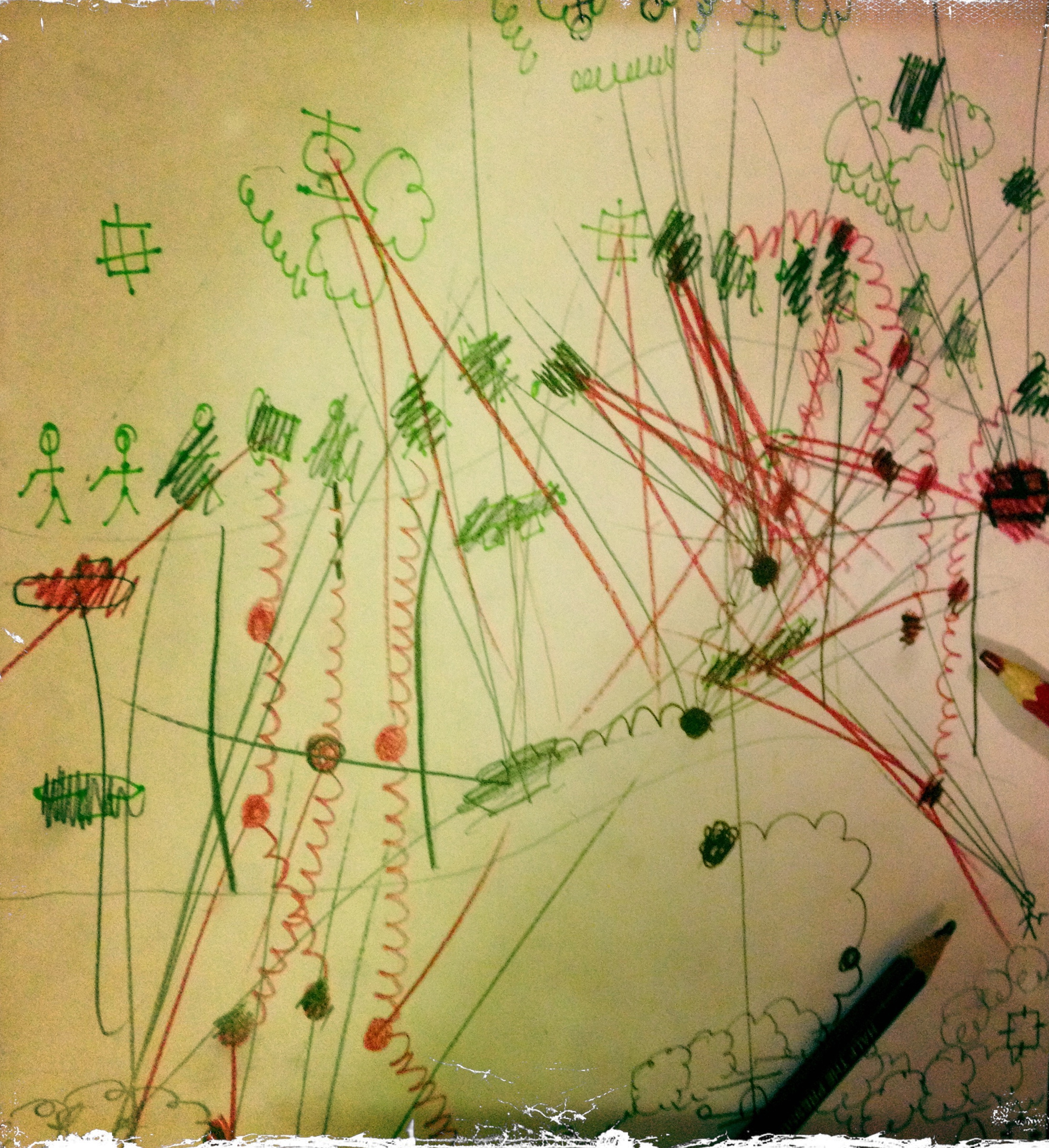
Good Bug Bad Bug

snails

In the SAKGP today at East Fremantle Primary school I spend time in the garden.

Things happen at a slower pace in the garden. After all things don’t grow in front of your eyes. It takes patience to grow stuff. Soil needs to be nurtured and enriched. Weeds need to be pulled. Time needs to pass. Nor do they die and disappear in a puff. Although that’s what it seems like for the beetroots that have struggled against the onslaught of the bad bugs – snails and caterpillars and slugs. Their leaves have been stripped bare. Now just stalks remain.

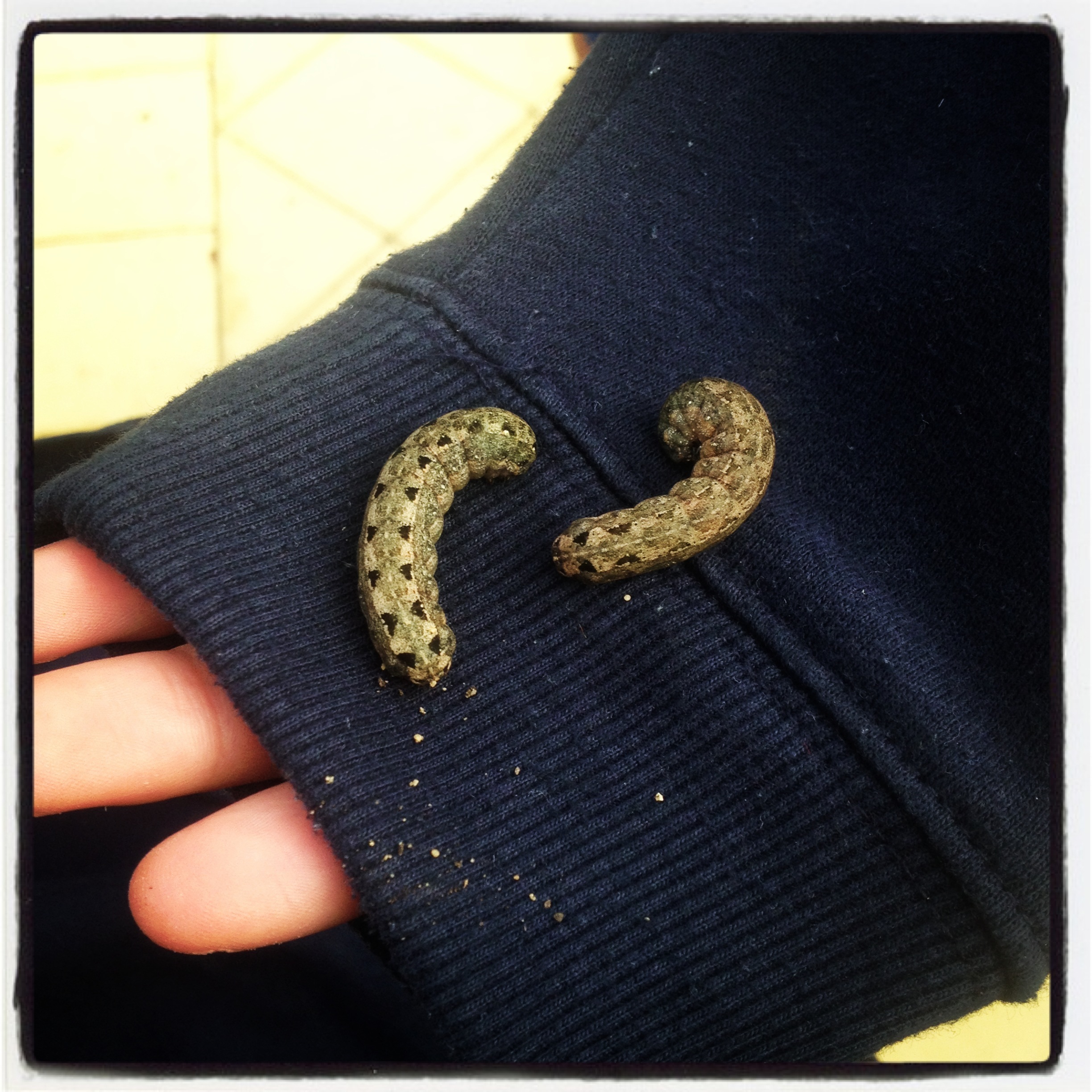
Today war has been waged against the pests. The army of blue uniforms are out searching the leaves and the hidy holes of the grubs and collecting them in the bucket. Garden Specialist, Katy, has the disposal job, since the kids are not keen on destroying the molluscs. They come over all Buddhist when talk turns to the final elimination. Especially after naming them Curly and Whirly, Creepy and Sebastian.

Still. It’s kinda nice to see kids that don’t take pleasure from stomping on a snail. Doesn’t it say something?

Too much personification – the adults warn. Then comes discussion of whether snails go to heaven. How philosophical a morning in the garden has become. But it is too late. They have been slimed by them and had them wriggling across their palms. The snail trail zig zags its way across a blue wind cheater. The kids are really inspecting the snails – the way they move like mini tractors across the dirt. It makes me recall the book about the movement and munching of a snail written by a bed ridden Elizabeth Tova Bailey over a year where she lay listening to the sound of one eating. In her close observation of the creature she grew attached and, through her attachment, came meaning and solace and understanding. Some are mere babies, the children say, and I imagine a snail secreted home in a pocket, named and stroked, to a bedside table, to become a new pet.

But gardening requires the tendering of the plants and that means the beasts must be got rid of, so collect them, they diligently do. On the way to the bucket of death the kids marvel at the way the molluscs have eyes on stalks that swivel about. How cool would that be? Seeing round corners, under desks. The kids have their empathy and imaginations dialled up high today, suddenly brothers to the creepy crawlies. Many kids may never have taken the time to get so close to a snail. What kid these days spends time in dirt and poking about the garden? Some may not have had the courage before to feel the suck of a snail to the back of your hand. But when everyone else is doing it, it becomes okay, to feel, to prod, to explore. And besides, this is school work – we are supposed to be getting our hands dirty.

There are not enough good bugs in our garden. The lady bird is revered. She is carefully pointed out and then left alone, despite the desire to pick her up and feel her little bug legs march across your skin.

The worm castings are diluted in watering cans and each plant gets its three-second drink of the extra good stuff. The time in the garden has gone quickly, despite the relaxed pace. Less frenetic than the kitchen, its results are slower and take more time to notice. Snail pace. But we have hunted and gathered today from our very own garden and delivered up the reddening capsicum and now it joins the salad of spinach leaves and very soon will be belly-side. Before any pesky snails get to it.
caterpillars


Letting the day slip away…

study

There is guilt of course.

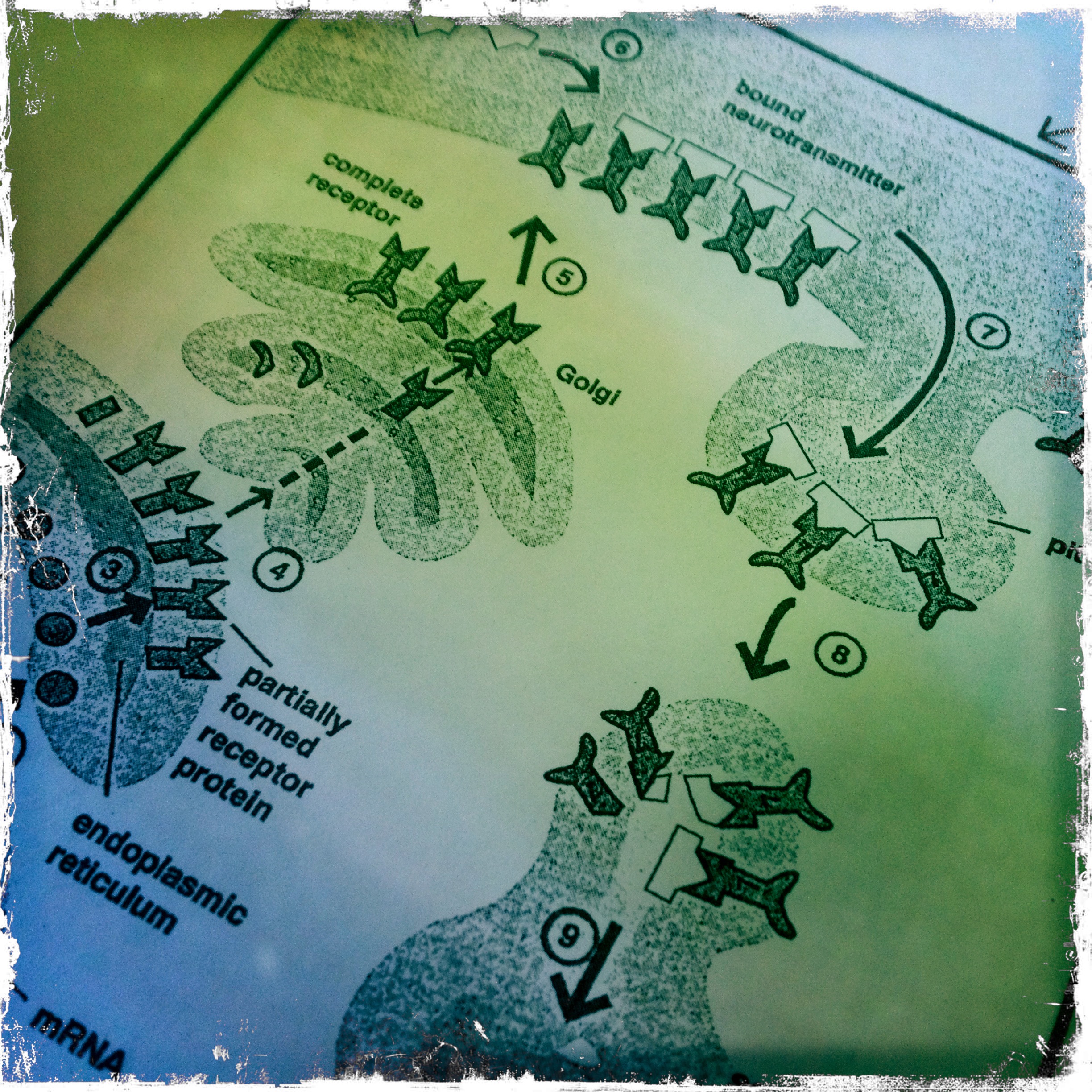
There is a lime green file. It is full of pages of neurology and psychopharmacology. It is mind bogglingly hard to fathom. When it starts to grind down to the DNA in the cell and the enzyme RNA polymerase I feel something slipping in my brain. I read and reread the same sentence. Neuronal stutter. Like the old Holden EH clutch that my mother’s foot fumbled with at the hill by the prison going to visit my Dad in hospital as a child. How she dreaded the hill. Even as children, in the back seat, we felt my mother’s dread of the hill. Sitting on our hands on the sticky blue vinyl. Her anxiety a wave of heat. Please turn green lights so she doesn’t need to ride the clutch and do a hand brake start and risk rolling backwards into the car behind, or else konking out.

The green file notes try to make analogies that are easier for the brain to grasp. For instance, it cutely describes neurotransmission as a “pony express.” But somehow I can’t quite make the jump from molecules to horse riders and it just makes the whole thing harder still. I am learning that the brain is not a collection of “wires” (I am not sure I ever thought it was) but rather is a chemical “soup”. The neurotransmitters are swilling around, turning on and off the genes in cells so that axons grow and stop growing. Make connections. Stop making connections. I don’t think it’s quite that simple, but that’s how I am imagining it. This is today’s take home message. Brain = chemical soup.

I learn that 90% of the neurons made by the foetal brain commit apoptotic suicide before birth. The discoverers of the process who named it apoptosis wanted the word to rhyme with the messy process of cell death called necrosis and used the Greek ptosis meaning “falling” and apo meaning “off”, just as autumnal leaves fall from a tree. Even in science humans search for words to be beautiful. Cell death = falling petals. In apoptosis the neurons just shut themselves off and disappear. No pus. It seems only the strongest and fittest neurons survive and thrive in our adult brains. In the adult brain there are still changes being made all the time but they are not as dramatic as those of the foetus or child. An adult brain is like a well-established garden where the neurons, like roses, need pruning and shaping, but, please, no major landscaping.

Even in science, or maybe especially so, we need to keep bringing it back to something more understandable. Something more concrete. Gardens and cooking. Houses and sheds. Nerves as having branches, brains as full of soup. For who can imagine the inside of a cell with its mitochondria and endoplasmic reticulum. We need the mitochondria to be the energy power house, the nucleus the central headquarters. But despite its helpfulness there is still chemistry and molecules and who can really understand that everything living is made of atoms of carbon?

And maybe some where along the way I lost that neuron (or two) that was responsible for that little bit of understanding and that’s why it’s so hard. Perhaps when all the neurons were in a lemming-like mass walking off their apoptotic cliff there were a couple who really should not have leapt. They were the ones supposed to “get” the DNA and RNA and the enzymes and peptides. And as science is able to dig deeper and examine more and more finely we discover more and more detail. You think you have come to the end of something and then they explode it apart and describe it again at a more intricate level. Ad infinitum. When once seeing inside the cell seemed miraculous, now we can see inside the structures inside the cell. Just as space goes on for ever, can we continue to magnify and see deeper and deeper into molecular structure? We can explode apart genes so they become lists of proteins. We can see what receptors are made of. Like an artist who constructs a world on the top of a pin. Each cell is a world.

Doesn’t it blow your mind?

war games