In the Wood Pile


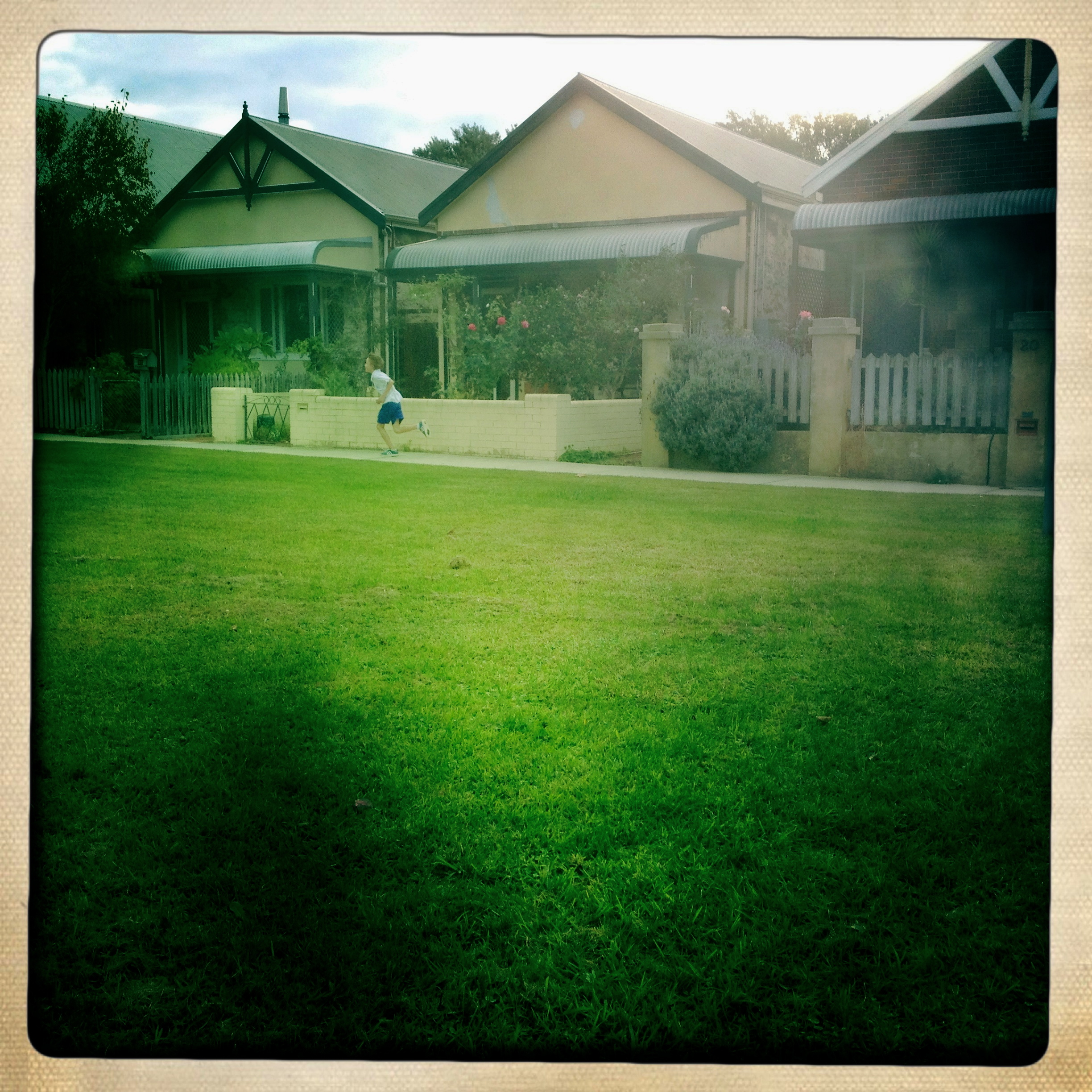
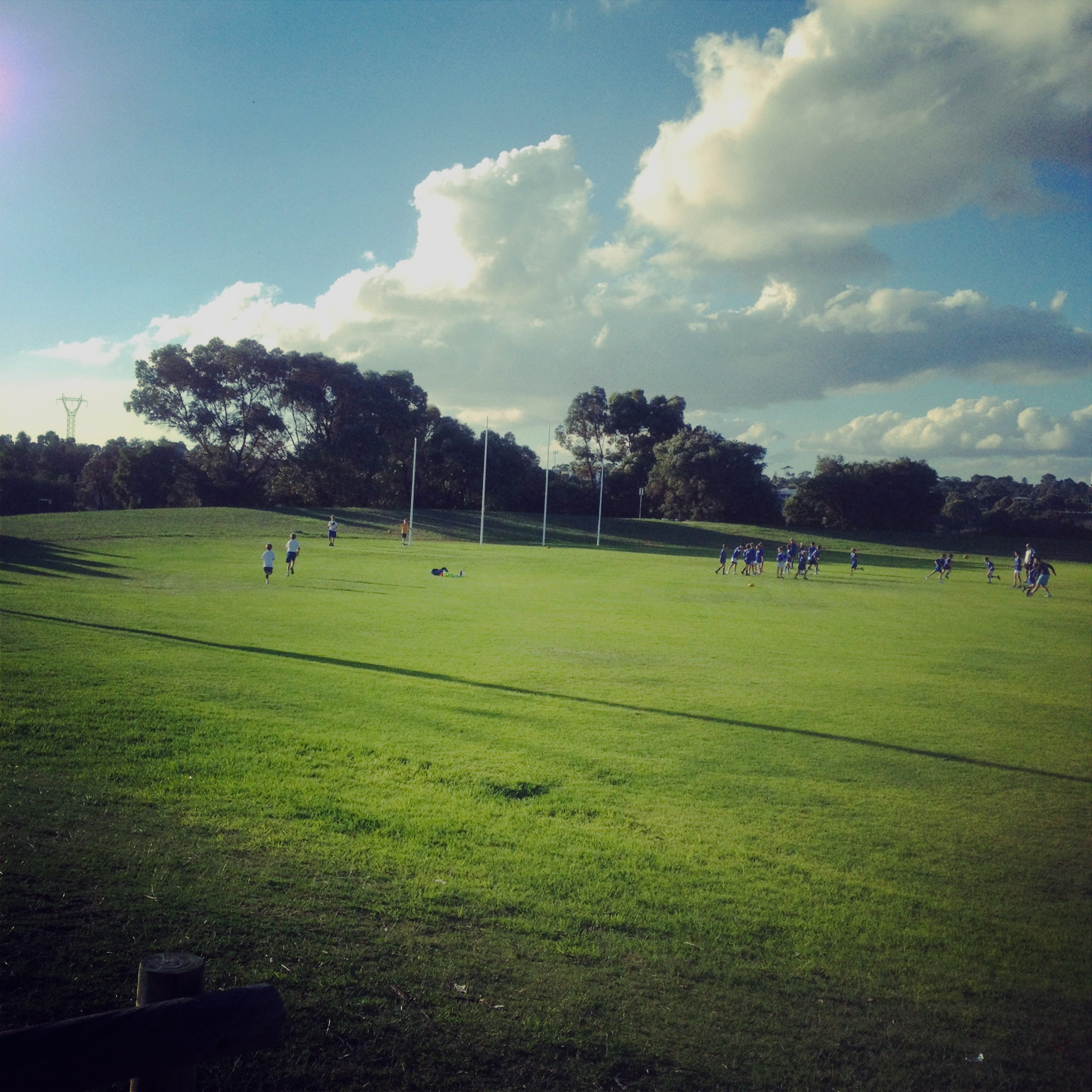
The neighbour has had some wood delivered and Charlie is helping stack the pile.

The day is crisp. The sky, cobalt blue. (Let’s be honest here, it isn’t cobalt blue, since that is darker, more intense than the colour of the sky right now – but there isn’t a great word like cobalt to describe the colour of the sky today… perhaps cornflower blue?) The air is still enough that the tin roof can be heard creaking. The four-year-old runs off at the mouth. A constant stream of questions and observations, intermingled with a bit of out of tune singing. His father knows he is around without looking because of the sound of him. Silence spells trouble or disappearance.

Thwack thwack thwack goes the stacking of the wood pile….

I remember the wood pile. Skinks darting through the dark crevices of the superbly stacked pile. Jarrah wood; so dark and red and rich. Part of me feels bad to burn it, like it is wasteful. But then somehow the heat of a fire, the turning outward of palms, the endless staring into the white-hot centre, the flicker of the orange flame, the sharing of warmth, feels respectful and communing.

I remember my father backing the trailer all the way down the long drive. My mother is standing to the side of the Holden directing. We duck out of sight, as my father can no longer muffle his swearing as the trailer refuses to travel straight and once again jack-knifes and threatens the corrugated asbestos fence. My mother threatens too, “I’ll go in side if you do your block!” Wood analogies fly. Wooden-headed man – my father.

In a worn-at-the-elbow jumper the father is standing on the trailer, atop the wood, and is chucking it off. Some lands straight in the barrow. Notice, he wears gardening gloves. He does it quickly. He has no reverence for the sacrificial wood. A block nearly hits the dog as it bounces off the growing pile. Then he wheelbarrows it to a place behind the garage, near the chook shed. It must be out of the rain. Standing on the trailer on top of the wood looks fun. I remember the shaggy ends of the saw-milled blocks. Like the tattered ends of a fringed beach towel. But not soft. I remember the pungent earth aroma of the wood. Some blocks have moist centres like the trees have been recently felled. Its life blood has not fully drained away. It smells of rain and forest still. But playing in the higglety piggelty wood pile, before it was stacked, was sure to end in a splinter. Parents should have known this. But no one said Do Not Play. Parents ought to have known the dilemma to follow a splinter deep in soft pudgy hands. But parents, new to being parents, have not plucked a splinter from a little person’s hand, and they know not the tantrum to follow. They have forgotten, momentarily, how much it hurts to have someone else attempt to remove a splinter. You will sear it forever into their minds with your hollers.

“Let me see. I can get it out. Just stand still. Give me your foot, your hand.” Maybe a child will let the parent have a go, the very first time it happens, not knowing yet the torment a parent on the hunt for a splinter can cause. But not after. After the digging about and the No-I-can’t-get-it-I’ll-let-your-father-have-a-try-exasperation, the wooden-handed child learns; No. Don’t poke it. A big, clumsy-fisted man can really make a mess of it.

“I have to get it out,” answers the parent. “It will fester,” is a well-rehearsed reason to have another dig around. But no amount of festering, whatever that is, will be as bad as what the parent is inflicting now and so the response to a splinter is a flat-out, “No.” Tears now and hiding in the dark corner of the chook shed at the sight of the mother striding inside to get the needle, since the tweezers won’t suffice. I will live with that piece of wood embedded in my palm for the rest of my life, rather than have you come near me with the sharp end of a sewing needle which you have sterilised over a flame.

And so after a splinter or two you no longer play in the wood pile. Not without your shoes on. Not without your father’s over-sized gloves, making your fingers useless. You don’t put your hand just anywhere and climb. You look first and deeply, rightly assess the possibility of a splinter. That pile of yellow builders’ sand – that looks the business.

Later as a young adult, in a rental house away from home, a fire is our only heating. Dogs too. A warm dog on the couch or even in the bed. A little blow heater under the desk for study when the fire has gone out. As the sun sets, the wooden house loses its warmth quickly. Draughts are many. We get a trailer load; half jarrah, half mallee root. The guy dumps it on the verge. That won’t do; that’s where a Volkswagen needs to be parked. I carry the wood in armfuls to the verandah, where it will be protected from the weather. I wear pink washing up gloves. Chips of wood find their way through my jumper and into my hair. Later, as a lie back in the bath, I find red saw-dust as fine as paprika in the shell of my ear. I learn to split the wood, just as my father had done. After all I have his old axe. The handle is worn and smooth. It is the colour of animal hide. How many times has it swung over his head and come down on the wood? It knows what to do. He cared for the axe. Oiled its sharp blade. When I should be devising cattle rations, I am outside splitting blocks. Feet firm on the ground, legs slightly apart, letting the right hand slide down the handle of the axe to meet the left as it comes down on the end of the block. The great swinging arc of the axe and the solid crack of the wood as it splits along its seam. When it is going to split it makes that sound. Pissed off at the mounting study I should be doing, I pick up the axe from its place by the front door, and take to the diminishing wood pile. There is satisfaction in chopping wood for the cool nights ahead.

But a splinter-free childhood is not my suggestion. Still play in the fire wood pile. Still chop wood if you can. Still stare into the centre of a roaring fire. Do nothing but stare. Build make-believe houses and cities and castles and walls from kindling and cut offs. Just don’t let your mother or father near you with a sharp darning needle to gently ease a splinter out. Best advice – get many splinters and be good at getting them out. Get good at gritting your teeth. Pretend it doesn’t hurt. You are the best person to prize out your own splinter.

What will you be when you grow up?

I am contemplating this. I am still finding my own path. It seems I want to be many things. Story-teller, for one. Of course there are some dreams that I must simply accept are out of my reach. I don’t pine for them any longer. Acceptance is a good thing too. I will never be a dancer, a zoo vet or a stage actress. I no longer contemplate my curtain call bow or my darting of an elephant.

When I was six there was no bigger joy than the sight of a creature. Any creature, save a rodent. I was in love with my chocolate Dachshund. It started out skinny, smooth and wriggly. Sam was lithe and athletic. When he grew old he had foul teeth and dreadful skin. I now know it was probably Idiopathic Seborrhoea, for which there is no cure, but back then, as a teenager, I researched what I could, to find a remedy for the greasy flakiness that afflicted him, and which banned him from the good rooms of the house. “That dog smells,” and indeed he did. But somehow it did not bother me. I still hankered to have him sleep with me and play with him on my bed. Bathing was the only thing that worked, and so I did it religiously, fervently, determinedly. If I could have cured the dog through diligent shampooing I would have.

Despite his smelliness, which made most people push him away, I still wanted to be near him. I felt an incredible bond with this dog whom I’d been given as a six-year-old. He was mine. He was ill-behaved in so many ways. He was, to a right-minded dog owner, somewhat unlovable. He was ferocious, through his lack of socialisation with any other dogs. Walking him, I needed to be on my guard, because if he spotted another canine he went berserk, straining at the leash and threatening to attack. He once fought a Rough coated Collie; hidden beneath the flowing Lassie coat of the large dog he hung on, till they could be prised apart. This was to be one of his last casual saunters around the block.

My parents solution to the problem was that I shouldn’t walk him, and so he became a yard dog, confined to his quarter acre and the rear of the house. He noisily patrolled his fence line and it was a brave or careless intruder to venture beyond the side gate. He could bite. And still, I loved him.

My love for him was the seed. It morphed into veterinary science where the love of dogs becomes worn down and whittles away. For day in day out the love of dogs is tested by unruly, boisterous beings. They are deformed and inbred. They are badly trained or not at all. They are child substitutes or are, in fact, human. They are scared witless or fearful enough to bite. They are held down, and they piss and poop on you, petrified. They are noisy and smelly and, of course, sick, and sometimes dying. Sick dogs come with stressed owners. Owners who want answers, like people do when their cars have broken down. A new battery?

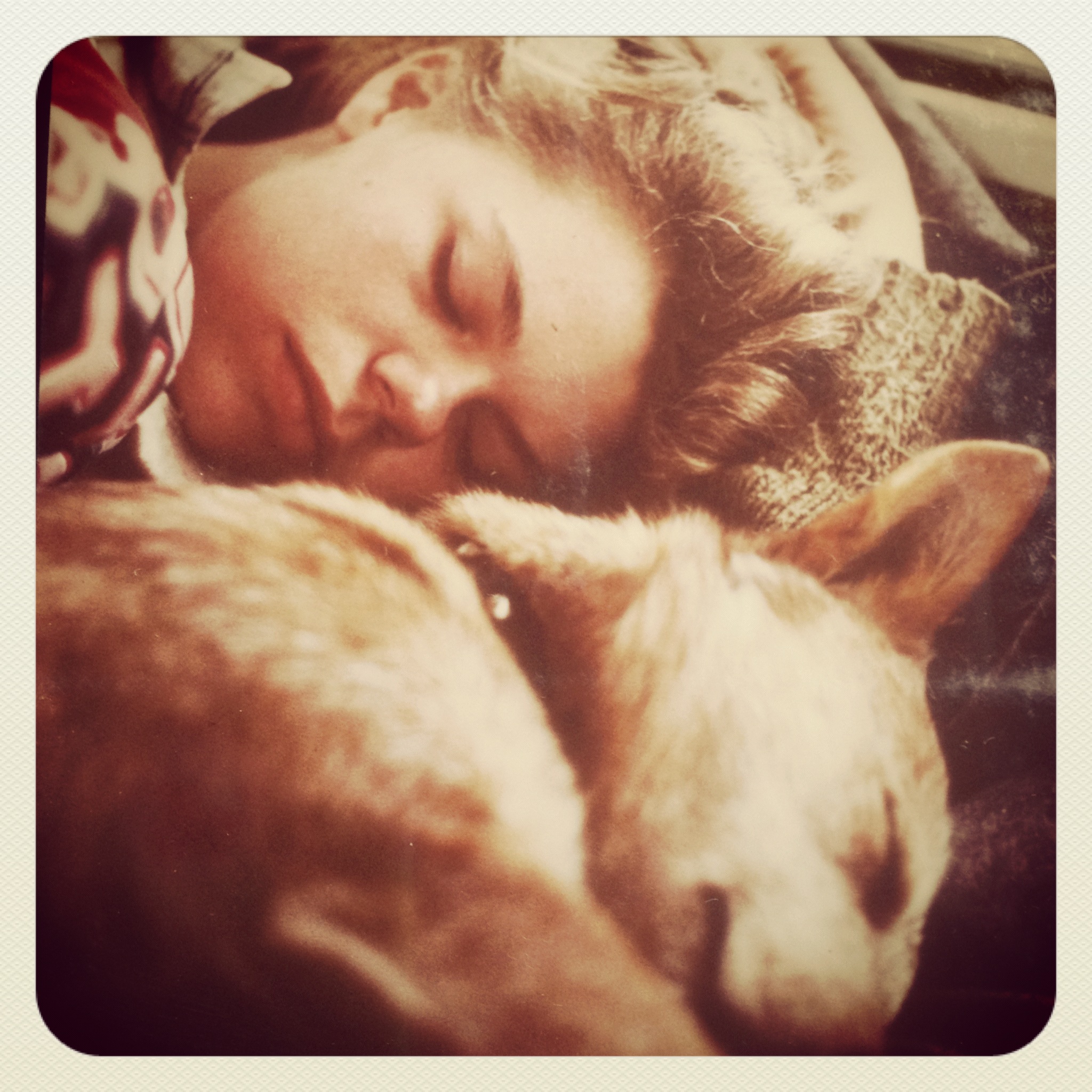
But despite all this, I cannot be without a dog. I need to commune with another species to be at peace. I need his soulful head to come to rest on my body. I need his eyes. What is it that being close to another species gives us as humans? It is, surely, incalculable, the way we are nourished by their presence. It is too magical to be able to be measured. Does it happen on a cellular level?

Because I am thinking of more study in veterinary science, it makes me question what my path is. I want to keep learning but am fearful of being mediocre, of just scraping through. Not trying might be the surest way not to fail. But still I have enrolled, because it is something I keep coming back to. The love. I am sure it is corny and inanely wet, to go on like this. I can feel the finger-in-the-mouth-nausea rising in the vets who will read this. Get over it. You are not six anymore. Still wanting to cuddle and hold?  That’s your motivation? Yes. I just like to be around animals. Especially ones not sick. I like to watch healthy dogs eat at the rate of knots. I like to watch fit dogs run and cavort. I like to watch tired dogs (and dogs not tired at all) sleep. I like to watch dogs dream of chasing cats or baling up the postman.

And then I want to write about what it is like to feel the dog’s coat beneath your fingertips. I want to write about watching the dog that’s been a companion for years die, as a viscous green liquid is injected into his vein. Nora Ephron, screen writer and director, said that every house where teenagers reside needs a dog, so at least there was one being pleased to see you when you came home. Greeting is what they have perfected. Joy too. Random silliness. We all need, yearn for that unrestrained love. Given so freely, truly with no strings attached (except, let’s be realistic; maybe feed me, walk me, pay my vet bills).

And then I think of Jasper and how his future might unfold. I keep a look out for him, at what he likes to do now, knowing that a seed might be trying to find its earth. His soil is teaming with life it seems. One day a soccer star, the next an AFL legend, a Wimbledon finalist. The next he is writing stories of an evil meat lover’s Pizza slice, AKA Mr. Pizza, and a humongous battle between chef and inanimate food. He is a master of the sound effects of explosions and gun-fire of all kinds. He is drawing cartoons of skate boarders taking to the skies. He hates dinner table talk of vomiting and diarrhoea, or any procedures of any kind on animals. He has an intense and burning love for his own dog, but he’s not moved to cuddle all things covered in fur. Rightly, he seems to know that loving his own dog does not necessarily destine him to veterinary science. He abides school, only just. If anything he appears to be a story-teller and so that could take many forms. But perhaps that’s what we all are, just trying to find the tale in which to tell our story…


Writing advice from Ray Bradbury…

In Ray Bradbury’s introduction to the 50th Anniversary Edition of his book Fahrenheit 451 he says;

” The novel was a surprise then and is still a surprise to me.

I’ve always written at the top of my lungs and from some secret motives within. I have followed the advice of my good friend Federico Fellini who, when asked about his work, said, ‘Don’t tell me what I’m doing. I don’t want to know.’

The grand thing is to plunge ahead and see what your passion can reveal.”


To me this is the essence of how many creative people work and the advice I too have received from Australian author, Sue Woolfe, in a workshop she gave to writers. She told the assembled bunch of awkward story-tellers that they “need not to know and need not to care” where their tale was going. Write and find it as you write it. Let it reveal itself to you.

Now on a yellowing piece of card I have this advice above my writing desk.

Even though it was writing advice maybe it is just plain good sense; PLUNGE AHEAD with life…

Once upon…a kitchen

Once upon a kitchen….start of the stormy season. The yard is awash with decaying brown leaves. The verges are all tatty. The already very messy Australian landscape is even more dishevelled. Eucalypts with a bad hair day. Wind has wreaked havoc on the saplings that were valiantly growing beside the house. Its top is knocked off in the 120km/hour winds that has gotten hold of its canopy and whisked it.

I am on at the Stephanie Kitchen Garden at school. Cooking can happen despite the weather. Maybe because of it apple pie sounds the perfect choice. The white board tells us we are cooking melanzane parmigiana, bagno cauda, preserving lemons and finishing up with apple pie. The season is right for preserving lemons. They are given away for free outside neighbour’s houses and in fish shops. So much better than the store-bought kind whose waxy skins cannot be grated and whose flesh does not deliver juice. Atop the bench the fresh ingredients spill from the wicker. Fancy eleven years olds that know that strange purple gourd = eggplant = aubergine = melanzane.

I have three lads to corral. A bit like dogs with storm phobia, they are feeling the barometric pressure fall, and are all fidgety. But perhaps they are just eleven year old boys needing to stay on the hop. One has braces, another lanky and thin, and the last with a crew cut, except for the rat’s tail strand of hair that tickles the back of his neck. Wash and dry the lemons. Cut them to their bases in quarters but not all the way through. Fill their centres with salt. Pound the coriander seeds in a mortar and pestle. Rat’s tail wants to taste everything despite it just being salt, or coriander, or lemon juice. I tell him all the salt he is consuming is not good for him. He continues grinding it into the cupped palm of his hand and tasting it with the tip of his tongue, like a horse on a salt lick. Delicious, he says. Braces measures the quarter cup of honey and places it on the bench. He is keen to do everything. He will not miss out on life. Rat’s tail picks up the honey-laden cup, with goo spilling down its sides and then drops it on the floor. Meanwhile Lanky is squeezing the lemon juice we need. Braces is quick to get a cloth. The honey is wiped up. Don’t tread in it, I warn. I notice the largeness and puffiness of their sneakers, their feet already the size of men. Rat’s tail is still busy testing and tasting everything. He wants to know if he can eat the cinnamon quill. The large jar is stuffed full of the lemons and salt, coriander, cinnamon, honey, juice and water and set in a large stock pot to bring to the boil. They must fill the pot and then lift it out of the sink together. Rat’s tail keeps testing the temperature of the water with his finger. He is a real poker and prodder. A finger in the pie of life. The type to open the oven door too early. The type to discover something new because of his curiosity. He could also be the type to jump into a murky pool, not knowing its depth or what lay at the bottom. Lanky is the one to do most of the cleaning up. When the other two have skedaddled, he is still at the sink, scrubber in hand.

Meanwhile the eggplant has been sliced and crumbed and the homemade tomato sauce spooned over it and then the grated cheese is placed on top. It is under the grill. Another group is covering the wedges of apple with cinnamon and sugar to make the filling for the pie. The pastry has been rolled and cut. Another group has dissolved the anchovies in the warm olive oil, previously crushed and pressed at school. They have steamed the cauliflower and potatoes and cut the other vegetables into dipping sticks that will be plunged into the sauce.

We will eat at the long table under cover on the stage of the assembly area. The weather is not allowing us to eat at our usual table in the sun. Kids who have previously thought they don’t like eggplant or anchovies are finding it not as bad as they thought. But Rat’s tail still holds his nose while he consumes his melanzane, just incase. But finishes it, he does. Of course there has never been a kid who does not like apple pie fresh from the oven. Has anyone ever had an allergy to sugar?

At the end of the day, as the storm front approaches, again the wind picks up. Jasper and his mate give out notices to take home to parents, saying the school could be closed tomorrow, if the storm results in building damage or loss of power. There is general excitement and joy at the prospect of this. Literally leaping. On twitter the storm is brewing fear. Someone retweets that the university is evacuating at five. I think I will move my car from its position under the widow maker. In our cottage, over a hundred years old, we feel very protected from the elements. Knowing it has stood so long gives us great confidence in its strength. It has hundreds of years ahead of it, if it is to become like the homes of the Europeans. In Spain we once lived in a 600 year old house on a street barely wide enough to drive a car. The walls were constantly being plastered over so they grew thicker and thicker. Damp made the plaster periodically fall away and crumble, but there was always more whitewash to be found. So in my Fremantle house I feel safe from the storm. My limestone walls move not an inch. I hear the rain on the tin. The dog positions himself bang in front of the gas heater; legs splayed heater-hog style. I hear the wind outside and see it across the oval whipping up the trees. Once upon…a storm.


Neighbours

We live on a dead-end. At the end of the road is a park. Three federation workers cottages, built-in 1905, border the grassy reserve where the council has planted paper barks, and then tried to kill them repeatedly by ring barking their base with rampant whipper snippering. They struggle on. The houses have seen many young lives grow within. The wide jarrah boards of the hallways have been indoor cricket pitches. The verandahs have been taken off and put back on again. There is a limestone wall and beyond that the playing fields. There are drunks and homeless, dog walkers and legitimate park users. Over the years the park has seen a lot too – a murder even and much fornication. But we have the mown lawn in front of our houses mostly to ourselves. It is the playground of our children and our hounds. Murphy snorts amongst the fallen fig tree leaves. In the winter I find the last of the sun and sit in it while Jasper kicks the football to himself. The paper barks are his goal posts. He is Ablett, Ballantyne, Betts. Always kicking the winning goal in the dying seconds of the game.

We are awaiting the arrival of other children back from school. Keep a look out Mum, Jasper suggests to me. They will be meandering slowly down the hill.

For the children of our neighbours have become a tribe. Three boys and three girls, including a baby who knows not what she is in for yet.

We are the neighbours. Four couples. Some are nudging forty, others closer to fifty. We all work but some like it less, and do as little as possible. There seems a lot of time for ukulele, banjo, Mad Men, coffee bean roasting, Breaking Bad, foreign language lessons, Pilates class, cervical disc extrusion surgery, banana bread making, vegetable growing and the deep and discerning discussion of the pros and cons of all of the above. At the end of the weekend we converge in the shared space of the red cement driveway. The last house on Shuffrey is part of our tribe. In its front yard it grows the vegetables. Corn has been replaced by Broad Beans. In the summer the large Lemon Scented gum provides shade. Now we seek out the winter sun and try to stay out of the wind. Men are pulled away from their cleaning car meditation and women emerge from the house. No-knead bread has been left to rise. A thermomix is making the béchamel sauce, without the need for stirring. School clothes are flapping on the lines. The mini has been detailed with stickers since her paint job. She now has her Mayfair title back above her bumper. The late seventies BMW 635 is being prettied for sale. The dogs are let out. Stan and Murph have some rambunctious play-fighting to do. I have returned from work in a strikingly unpolished and dirty Subaru. Sometimes there is tea and cake. More often there is beer and wine. A high chair in the driveway; and the baby can be fed spag bog here too.

Sally is arriving home after the young girls’ ballet class. From the cavernous insides of a Prado peel two giggling soft pink prima ballerinas. They have ballet flats and leotards and each has a sparkle on their cheek for their good pas de deux today. Marshmallow pink tutus. Their different shades of blonde are pulled back into identical pony tails. Boys erupt from around the side of the house. They have shooting equipment. Numerous Nerfs. Jasper is the eldest of the tribe, at ten years old, and the ages flow down from there. It is as if he has five younger siblings. He has a younger brother, three years below, and then the twin sisters and another younger brother and finally the baby, crawling. Jasper is the one making up the games, climbing the walls, jettisoning the missiles, putting the tennis racket on the car port roof. The next boy is not far behind. The girls form a tight bond. They like to draw and create. They like to change outfits and help their mothers. The boys are busy spying on them, hiding from them, escaping from them, teasing them, making them cry. The smallest boy, finger nails painted sky blue, would like to keep up with the bigger boys, but they are often too fast for him and sometimes he is left standing in the driveway, wondering which way they went, holding his well loved Tiger and pondering if perhaps he should play with the girls, who after all, are closer in age and not as quick. It is his dilemma.

For us – the parents of the single, oldest boy, we are gifted a bigger family. Jasper has siblings. Almost. He has someone to kick with, to boss, to look out for, to take care of, to be bossed by, to trade with, to be burdened by. He has someone under the duvet with him on the couch as they all watch Robots into the night. Someone snuggling up, someone pushing a bare foot into his ribs. It helps assuage the guilt over not providing him with siblings of his own. He has the neighbours…and the very best of dogs.

Maurice Sendak on ageing…

In the New Yorker May 21, 2012 Mariana Cook writes of her photographic session and interview some years later with the elderly writer Maurice. Looking at the photo of him and his dog he says,

“I am in my bathrobe in the forest with my dog, Herman, who is a German shepherd of unknowable age, because I refused to ever find out. I don’t want to know. I wish I didn’t know how old I was. This is far more than I expected, far more than I need, far more than I desire. I didn’t think I’d live this long.”


Thinking of ageing, I read a tweet by Alain de Botton. A parent with their child: ‘it will take at least 40 years till you’ll understand what I am feeling for you now.‘ How true is that! It has taken me this long to really know what it might have been like for my mother and father to be parents. It requires the experience of parenting your own child. I have much more empathy for my parents now and the choices they made. When I was a child I thought their decisions were unfair, that they didn’t understand me, that they didn’t let me do, or have, the things I wanted out of some kind of spite or mean-spiritedness. To think they were merely trying to do what I do now. And sometimes struggling.

Crushing and Pressing

It is nearing the end of Autumn and the weather should be turning cold but it is Fremantle, Western Australia. The sun does not disappoint. We need the rain. We will have to wait. So in the mean time…

Lee has been out collecting olives. With the help of children and parents, the orchard at Booyeembarra has been raked. These trees are only a few years old. To think they can live for centuries, even thousands of years. Their trunks will become gnarled, their branches thick. For now they are mere babies, but already they are bountiful. Despite the sandy soil or perhaps because of it. The branches have been rattled and the olives have been collected in large, colourful plastic tubs. Kilos and kilos of them. Aubergine purple. Firm fleshed. Tips of green.

In the schoolyard they will be soaked in a large wheelbarrow filled with water. Children will sort the sticks and leaves from the olive fruit and, washed clean, they are poured into the crusher.

Taste if you dare; the raw olive is unbearably bitter. I bite into an olive. It has soft white flesh with a pale buttery look, but its flavour is acrid and foul. How the ancient civilizations decided something tasting as smooth and fine as olive oil could be extracted from something so utterly rank is a mystery.

From the community enter Pete – he who has an olive oil making machine. He brings it to the school and sets it up on the sun drenched bitumen. He has a bushman’s hat. And a big smile. He instructs the children on the process. He has taken time out of his life to volunteer at the school and, in his giving, he is getting too. Afterwards he says how much he had enjoyed the day, was heartened to see the children so enthralled in learning, and how the experience has made him feel the planet is in good hands. All this; just by being with the kids.

From John Curtin Secondary College two interested teachers have crossed the road to help. Perhaps it is a chance to be away from the pimple-faced teenagers and relax in the easiness of the bright-skinned pre teens. To less grunts. Where boys are still happier in shorts. Girls still content with tied blue ribbons in ponytails. No lip piercings or tongue studded students giving them hell. Here in the Stephanie Alexander Kitchen Garden project they are learning too. In the sun to boot. Everyone is keen to unravel the secret of the olive.

Encircling the old cement troughs the children huddle around to hear how it’s done. The boys are perched on the window ledge peering down into the small vat. They are all eager to see what the small machine can do. They jostle and push to keep their space. They are jammed up close to one another. There is no personal space. It could be a nit field day. First the washed olives will be crushed, seeds and all, by the grinding machine. Like gravel in a mixer. It is noisy. The resultant pulp is given a tasting. Pete encourages everyone to have a try and cheerfully they do. Ohh man. Spitting. Screwed up faces. Gross. Next, the resultant paste must be mixed for forty minutes. This malaxing the paste, allows the small oil droplets to combine to form bigger droplets and is an indispensable phase. Waiting must be learned too. And outside in the sun with your mates, it is not a bad thing to do. Good things take time. Creating requires patience. Next the pulp is pressed, squeezed till its oil is set free. It is a slow process. The children imagine doing it by hand as once it must have been done. In large containers this liquid is then left to settle and to the surface rises the oil. Green and golden. This is scooped off by the spoonful and tipped into the coffee filter paper lined-funnels to collect the first press oil drip by slow drip. Into brown glass bottles the first spoonfuls of oil slowly collect. Maybe at the next kitchen garden the oil they use will be the one they have crushed and pressed today.

Okay so it isn’t fast and it isn’t easy, but it is completely magical. The oil came from the inedible tasting olive collected free from a park down the road and washed only an hour or so before.

Last week’s gardening crew is in the kitchen making the simple pasta that will be eaten for lunch. Today it is Linguine with lemon, basil leaves and Parmesan. They have zested and grated and squeezed. They have been surprised by the deliciousness of a combination of simple, peasant ingredients. It is earthy. It is fresh. Of course olive oil stars here too.

Then again seated at the long table, the sun ever-present, elbows tucked at their sides, more because of the tight confines than the request for good manners, linguine is eaten and olive oil runs down chins…


Stephanie Alexander Kitchen Garden

This is my first day as a parent helper in the Primary School Stephanie Alexander Kitchen Garden project. I have signed the declaration assuring the school I have no criminal convictions against children. I am allowed in their vicinity. I arrive early. Sun is flooding the north facing verandah and striking the stainless steel bench tops. I read from the white board the menu for today. I am thrilled to think this can happen at school.

Lee is in charge. First names are the norm in the kitchen. We are three mothers and the school Chaplin – about to instruct 29 or so children from the grade 5/6 class on how to get the meal on the table. Jasper is in the group but I can sense he wishes his mother was not volunteering. I remember the embarrassment I felt at my mother signalling across to me when she was on canteen. I remember wishing I could sink through the bitumen to not have her see me and blow me kisses. Luckily for both of us he is not assigned to my group. The menu consists of soda bread, green salad with fennel, broccoli and potato soup, and for dessert, apple sponge pudding.

The kitchen bench has a wicker tray overflowing with the fresh produce. Wonderfully green and fragrant. Fennel bulbs will be shaved with a mandolin slicer. Something even I am afraid of. More greens than most kids see in a week. As yet the produce isn’t grown from the school garden but purchased from the Fremantle Markets. Behind the kitchen, the elaborate garden beds constructed from limestone have been completed and a small section of the class will be assigned to work in it, while the others cook. Then at the end we will all come back together to eat.

The long narrow kitchen has four workstations, colour coded.  The deceptively colourful plastic-looking scanpan knives are not plastic at all and are indeed very sharp. Lucky their first lesson is in how to chop safely. Part of me, that overly anxious bit, imagines cut fingers, bleeding hands, burnt skin, scalds…There is a lesson for mothers here too. One helper will be assigned to work with 5-6 children on one dish.  So in effect there are little hives of kitchen activity huddled around each workstation. Someone has never peeled the tight brown paper-like skin of an onion before. For the first time a girl realises, with tears in her eyes, why she sees her mother crying at the sink whenever she slices onions.

I have been given the job of the soda bread. I have six boys. One makes pizza dough at home. One is keen to do the weighing of the flour. We divide into two groups of three and a couple go off to bring back to our area the utensils we need. You need to know what a sifter is. You need to bring back baking trays and baking paper. Can someone get the bicarb soda? What about the salt? There is commotion. But it is good commotion. A bustle of activity, of sorting how we will do this and who will do what. There is excitement at the idea of producing edible stuff.

For a good while we cannot work the electronic scales to weigh the required 500 grams of flour, until a teacher’s assistant goes off to get an old-fashioned scale from the classroom. Pushing the buttons less often may have helped.  Eventually we have two bowls of 500g flour, 2 tsp. of bicarb and 1 tsp. of salt and the boys have sifted the dry ingredients together. Get your hands in it, I suggest. They are amazed at the texture of the flour. It’s so soft. Do you remember the first time you felt flour? It is finer than sand. It is light like air. It is clean. Now we need 400mls of buttermilk. Ewh it stinks, says one. Make a well and pour it in and then mix. What with? Your fingers. Get in there. That is my instruction. It is a god-awful mess of sticky goo. They have their hands in it and they have almost as much on their hands as in the bowl. There is laughter. There is flour. How this goop will turn into bread is something none of us can believe is possible. But somehow two loaves are constructed. They are very different in consistency and look despite the supposed measuring. They go into a hot oven and then the boys must clean up.

This is new to them. They need a bit of help to work out how to get the caked on flour mixture off the bench. Wetting a cloth is not something they have done before, it seems. They need prodding to wash the bowls. Come back here. This isn’t clean. But the mothers are not to do it.

There is something quite liberating about standing back. Lee has instructed us that it is their job to do the cooking and the cleaning. We are simply their guides. We can leave it to them. Some are setting the long table outside with the cups and plates and bowls. Others are filling jugs of water. Others are still working on their dishes. I look across at Jasper, on task at the  apple sponge making. He has a navy blue apron on. His hair stands on end. He catches me looking and smiles despite himself. A group of three girls stand around the saucepan of soup, each with a wooden spoon watching it cook.

Our soda bread slowly transforms itself from a pile of gloopy slop to a browning rustic loaf. The kitchen now has an aroma; of bakery, of country kitchen, of Grandma’s. The boys are outside and are called back to come check on their loaf; to tap its brown underside and hear whether it sounds hollow. We all agree it is done. It has been some kind of magic. It must be cut while it is hot and it is a difficult job for the boy who does it, but he manages and carries a board of steaming bread outside to the long table.

Lee serves the soup. They love their food. The food they cooked. They love the compliments their friends are giving about their part of the meal. You can see a sense of pride and achievement for something created and then enjoyed as a group. The boys are eating green leaves and saying  – leave us some salad! Some people want more soup. Everyone wants the dessert. It is sooo yummy. It is a small but delicious meal and healthy too.

One group is also assigned the cleanup but everyone must deliver their own used bowls and utensils back to the kitchen and help stack the dirty dishes. The dishwasher is used for almost all of the washing up and the job is over quickly and the kitchen spanking again ready for the next group.

There is time for a cup of tea and then the Year 7 group will arrive and we will make it all again.

And what have the children learned? They have learned to work cooperatively, to create a dish that from its raw ingredients is nothing like the end result. It is chemistry at work. It is biology. It is maths. They have learned about healthy eating and even some table manners. They have talked about the memories that the sharing of special food evokes. They have learned to get their hands dirty and then to clean up again. It is culture and it is fun. Perhaps it will create a happy memory of childhood that later an adult can remember; and what could be better than that?


Gorgeous Boys into Good Men

It is Tuesday afternoon in the middle of May. Time to collect the boy from the entrance of the Fremantle Arts Centre where we meet after school. I am always early and I look at my phone while I wait for him. The Virginia creeper has turned crimson. I take pictures with my phone of clouds and edit them with Instagram. The dog waits patiently too, on the warm bitumen, moving only if he has sat on a trail of ants. His nose is wet and twitching. Waiting for the smell of his boy. Sometimes he is tricked by the shape of another person coming down the hill and he gets up, prematurely, and starts wagging his bum. Then he realises it is not his human and flops back down. Then the familiar slap of his sand shoe. Then maybe the whiff that only a dog can sense. The smell of him hits the Murphy’s nose and the wag becomes sincere.

“How was the test?” It was NAPLAN today. Persuasive writing. The question was; Why cook at home? He was happy with his response. His kicker was that if you got really good at cooking you could become a contestant on Masterchef.

We have football. “Get your boots on.” I have his mouth guard. I have his things ready. It’s what I do.

After footy he is hot, even though it is getting dark and he has lots of bare skin. We arrive home and he is going to go over to the neighbour’s because I am off to a talk by Celia Lashlie; On Turning Gorgeous Boys into Good Men. From our car parking spot outside our fence we can see three dodgy types by the stairs that lead onto the park. Jasper says, Drunks Mum. My neighbour will give Jasper dinner and then Graham will pick him up when he finishes work at 7pm. Jasper is eager to get to the neighbour’s and play with his mate and wants to go over straight from the car. He wants to dump his boots on me. He wants me to hand him the house keys so he can race ahead. But I want him to wait for me, so I can lock my car. After all the drunks might be watching. Also I want him to put more clothes on. “No you cannot go over in your footy shorts and that top. Come inside and change into long pants and a wind cheater.” We have our familiar to and fro. He gets shitty with me. I persist.

It is so mundane and so well-known to mothers. We hate the sound of ourselves, but can’t turn ourselves off. I am thinking why can’t you just do what I want you to do.

He does some storming around but changes into jeans and a sweater and is over the fence and at the neighbour’s. Barely a good-bye. I think, well at least he is warm. I have half an hour before I need to leave to go to the talk. Long enough to heat some left-overs in the microwave, switch off the lounge room light and sit but the window and watch the drunks on the steps by the park. They are twenty feet away but it is as if they are in the next room. Hey, she yells. I sit in the dark with my Malaysian curry left-over on my lap and watch them while I eat. I am forking food into my mouth, and peering from my blackness through slatted cedar blinds, into the growing dusk and cooling night at three drunks on the steps, as if I am watching the television. Hey. A man sits half way up the limestone steps and in front of his splayed legs on the step below is a woman. Prancing about in front of them is a younger man. He is spider-like – perhaps he has sniffed something. He is leaner and taller than the other two. He wears black jeans and a singlet top. He could be in his late teens. The man seated is in a red t-shirt and he has pale skin and a three-day growth. He looks mid thirties. The woman is of an indiscriminate age – somewhere around her twenties or thirties. She has smudgy makeup and a pudgy torso. Her body has lost its youthfulness. She wears black leggings and a low-cut black top that reveals her cleavage and sagging breasts. Hey. The man she has wedged into has his hand across her bare front but is not really fondling her, more just drawing her back into him. Making sure she stays put. She cranes her neck back and around and they start kissing while the lanky man drains some liquid into the funnel of his mouth from the silver bladder from a cask of wine held high. Red shirt is sucking the face of the woman and lets his hand with the cigarette hang down near his side. Lanky man comes round to the base of the steps and eases the cigarette from the hand of red shirt. The couple break off from kissing and yell at one another. Hey. They have a phone between them and are holding it out from them and looking at it. I guess they’re taking a photo. The woman has a green and black checked cap on. Lanky man takes it from her head and she yells at him. Hey. Some tinny music plays from the phone and lanky man dances around in front of them. The couple go back to kissing. Lanky man squats down and watches them, swaying a little on his haunches.

I have to go.

It is getting dark.

The talk is at a posh boys school, full of other western suburb parents of teenage boys. Most of the women are blonde.

Celia Lashlie tells the audience of would-be perfect parents that we need to let go. Over two hours of stories she tells us that we need to help boys find their own intuition and learn to access their own feelings by not riding over the top of them with our mother-need to fill in the empty space. If we ask them a question about how they feel we might need to wait two days for them to answer it, but leave the space for silence. There was a lot of knowing laughter as she held a mirror up to us mothers. Descriptions of women nagging men to put out the rubbish could easily have been from my house. In our desire and want to keep our boys safe we take away their ability to look after themselves. She told the fathers that the boys would walk over broken glass to have themselves seen by them. Fathers; see your boys. She told mothers that we stood atop a box of love. As she illuminated us to ourselves there was that spine tingling feeling and that moist eyed awareness that what she spoke of was wise and true.

When I got home the drunks had gone. The steps were empty and cold, the silver bag deflated and left. I wondered about the parents of the drunks. And who do they parent now?


from Lauren Groff’s short story “L.Debard and Aliette”

In this story, “L.Debard and Aliette,” published in The Altlantic, and set during the Spanish Influenza epidemic of 1918 in New York, Lauren Groff tells a gothic tale of love and loss..

“Before them sits a girl in a wheelchair. The swimmer’s glance brushes over her, and veers away when he sees her wizened child’s face, the diluted blond of her hair, her eyes sunken in the sickly white complexion. A nothing, he thinks. That he looks past her is not his fault. He doesn’t know. And so, instead of the lightning strike and fluttering heart that should attend the moment of their meeting, all the swimmer feels is the cold whip of the wind, and the shame at his old suit, holey and stretched out, worn only on the dark days when he needs nostalgia and old glory to bring him to the water.

….

And so, Aliette does something drastic: she unveils her legs. They are small, wrinkled sticks, nearly useless. She wears a Scottish wool blanket over her lap, sinfully thick. L. thinks of his thin sheet and the dirty greatcoat he sleeps under, and envies her the blanket. Her skirt is short and her stockings silk. L. doesn’t gasp when he sees her legs, her kneecaps like dinner rolls skewered with willow switches. He just looks up at Aliette’s face, and suddenly sees that her lips are set in a perfect heart, purple with cold.”