F Scott Fitzgerald

F. Scott Fitzgerald’s “List of Troubles” (from his Notebooks)—

List of troubles

  • Heart burn
  • Eczema
  • Piles
  • Flu
  • Night sweats
  • Alcoholism
  • Infected Nose
  • Insomnia
  • Ruined Nerves
  • Chronic Cough
  • Aching teeth
  • Shortness of Breath
  • Falling Hair
  • Cramps in Feet
  • Tingling Feet
  • Constipation
  • Cirocis of the liver
  • Stomach ulcers
  • Depression and Melancholia

This list was from a blog I follow called biblioklept

Karen Russell on what makes fiction work

What, in your opinion, makes a piece of fiction work?

I think that different pleasures work for different readers—a friend of mine won’t read anything that’s not a cardiovascular sort of page-turner. I tend to care less about plot, but I’m a sucker for humor and strangeness. I love weird or funny or beautiful sentences; Joy Williams could write a microwave-oven manual and I’m sure I’d love it, because the sentences would be tuned up like music. And I do think that great fiction, even when it’s comedic, has an urgency or an inevitability to it, a sense that the writer absolutely had to write this particular story in this way.

Check out the full interview in the New Yorker

Operating Theatre

I am in holding zone awaiting my surgical procedure. My surgeon comes past to tell me there is a slight delay. There is a back log in recovery. We women in our forties are lined up to be spread apart and peered into. There is a dairy cow feel to it. But no elbow length gloves. We pretend it is dignified, but really we are just another biological system that needs to be understood.

I watch the ceiling as I am wheeled in my bed and now I lie looking up. The white cotton blanket has the smell of a large commercial laundry. I am good at being in hospital. I know what will be done here. There is nothing to surprise me. The delay is not unwelcome. It is not unexpected. In hospital everything is wonderfully out of your control and to surrender to that feeling is strangely comforting.

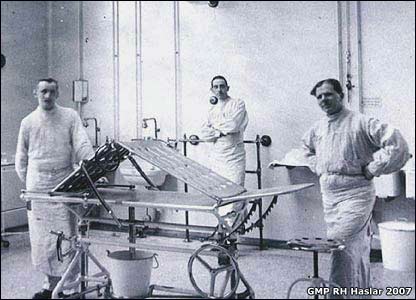
The theatre is gleaming in every way. Spanking white white walls. The operating lights are a dark shiny blue. In the corner, on a stool, my surgeon waits while I shuffle across to the table. The operating table. He has his head in his phone. His down time between patients. Perhaps he is signalling his late arrival home. His legs are crossed and I notice his knee high white wellingtons. It gives him the look of an abattoir worker. Someone expecting to be splashed upon.

For now I am in the hands of the anaesthetist. Equally attired. Everyone is costumed up, including me, but, I suspect I am the only one without my undies. Like the courtroom with its wigs and robes, the operating theatre has its look too. Scrub tops and pants, hair caps and shoe covers. Even the word theatre; what role, what performance will be on today. How will we all play our parts?

Who is the villain, the hero? I have the bit part. Non speaking role. Who else converses with people as they lie on a slab. Leaning over. No wonder there is a power play between doctor and patient. No one else sees you like this. In a ridiculous gown that has no buttons. Splayed.

We only have a few moments, the anaesthetist and I. Soon I will be away from them all. In a space that is a void. He talks jovially about the Jackson Juice he is delivering. First he tells me there will be a short sharp pain. Indeed he is pushing hard as he delivers the anaesthetic. The theatre nurse is placing a mask across my face.


Young Guns

What is it about Boys and Guns?

So much pleasure from the finding of sticks that look and feel like guns. They scramble the dunes looking for the best bits of driftwood to make the most perfect revolver. The wood is metal grey, worn smooth by salt and sun. The wanted pistol moulds into the hand, with a snug trigger, a round muzzle and angled grip. In the end they have an arsenal lined up against a sandy coloured rottnest wall. Sorted into piles of mine and yours. Perhaps they could buy a bag from the store to carry them home in. Small hand guns, bigger rifles, bazookas, rocket launches.

At five in the morning two boys leave the chalet through their bedroom window to go back down onto the dunes to look for more weapons. Get an advantage on the enemy. The sand is night-cool on their feet. Shiny black King Skinks scuttle through the undergrowth. Parents have midnighted their room with the heavy curtains drawn tight. When the small boys get up the older two will have an advantage. Better guns.

ps Check out the stick guns

Rottnest Recollections

Jasper – skinny, ribby, already sun burnt by the weakened sun on the first day. Out under cloudy skies there is beach cricket. Wobbly driftwood for stumps. Rashies stretched to knee length dresses. Then a strange rain shower. Never before in November. Short, fast, but wet all the same. A hurried retreat to the chalets. Rain pock-marks the ocean. The children take turns to have a meltdown. Bolognese is being cooked all along the lane. Disobedient children have the law laid down; No quokka hunting for them. Evan asks if we intend shooting the quokkas we find. Smell the frying onions. Men playing twelve bar blues on the ukes.

***

Young boys go past on the shore with brand new bikes. In the salt water. Their wheels make a delicious noise on the hard, wet sand. They leave a trail as if pushed through setting cement. We raise our eyebrows. We all know it will be bad. Minutes later a clothed woman is chasing them down the beach. Next comes a father. Marching the boys back, wheeling their bikes now, one still manages to get it in the sea. Lap lap splash – a wave on the wheel. Then the father – “I told you to fricking keep it out of the fricking water.” – using all his will power not to swear as he passes us. Other adults. He has used it all up. He yanks on an upper arm, jerking the boy and bike further from the water’s edge, and then slaps the boy hard across the back of his legs. The boy is felled. An axe to a tree. To his knees he drops on the sand, buckling over. Wincing with pain perhaps, but with humiliation more.

***

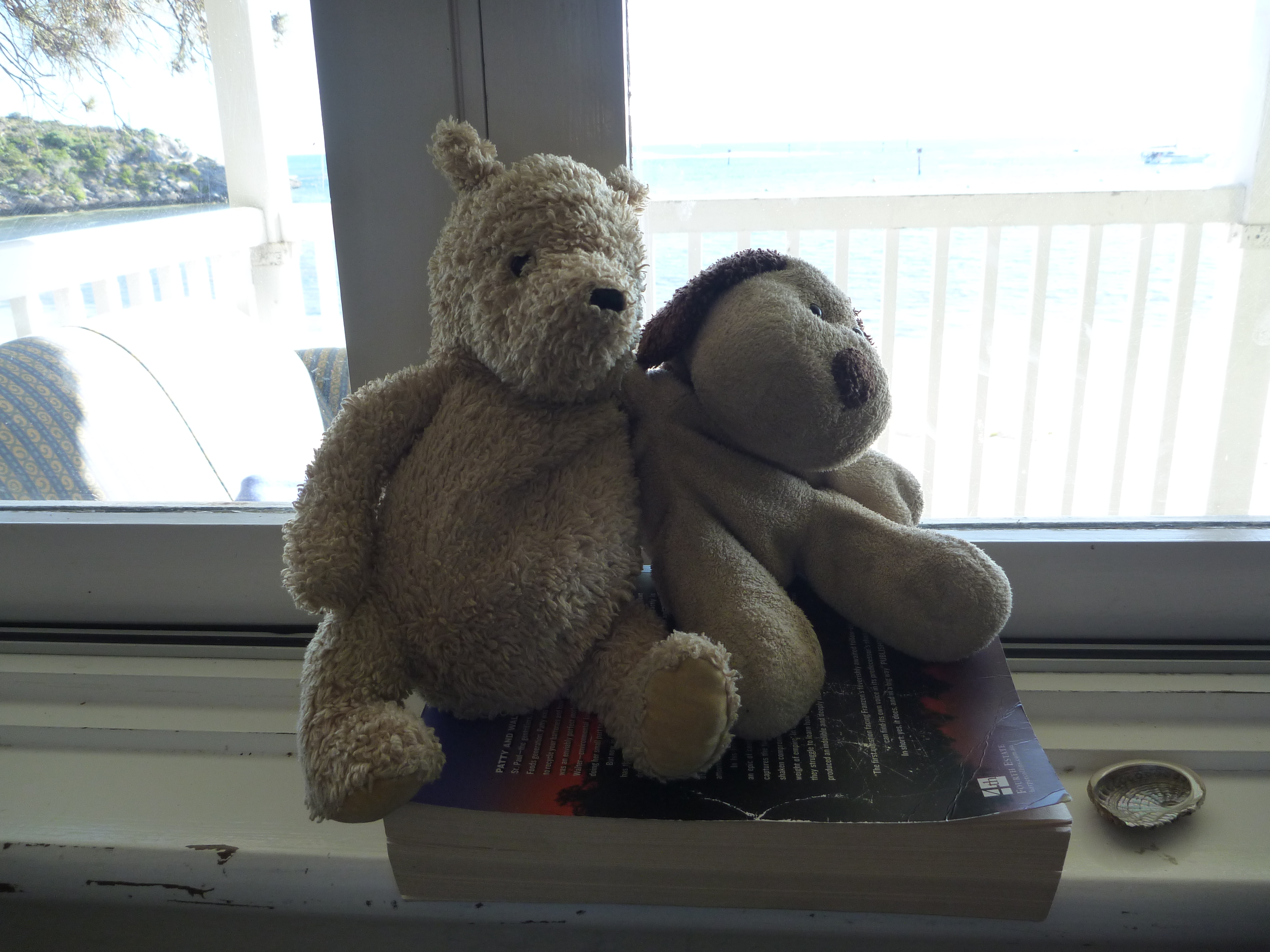
Sam is five. He has cherub cheeks. His eyelashes are pale tipped. He loves Star Wars. On the nightly Quokka hunt he tells onlookers sipping wine on their balcony – “Jedi Business. Go back to your drinks.” Tim buys him a soft quokka toy, instantly disliked by White Ted, but friends with the more amenable Blue Ted. White Ted is grounded for 14 days for trying to kill quokka ( Sam explains – bears eat meat and quokkas are meat ), but the bad bear won’t stay in his bag. White Ted keeps undoing the zippers and needs to be given to Tim in order to remain grounded.

***

White caps signal the increasing wind. The once peaceful, calm ocean turns to dirty rough water. On the horizon grey clouds stamp down like stained feet. Sam, pale face, stays back in the chalet with me while the others take on the head wind on their bikes. He is entrenched in war fare on Graham’s iphone, using his thumbs, dexterously, straw bale hair and strawberry blushed cheeks. He is pouting while he works; “what the hell”,  his expletive when war doesn’t go his way. Outside I can hear a father say, “keep swimming, keep swimming,” urging children, stick-like and freezing to continue on.


from “Ham on Rye” by Charles Bukowski


from “Ham on Rye” By Charles Bukowski;

“I was in the fourth grade when I found out about it. I was probably one of the last to know, because I still didn’t talk to anybody. A boy walked up to me while I was standing around at recess.

‘Don’t you know how it happens?’ he asked.

‘What?’

‘Fucking.’

‘What’s that?’

‘Your mother has a hole…’ – he took the thumb and forefinger of his right hand and made a circle – ‘and your father has a dong..’ – he took his left finger and ran it back and forth through the hole. Then your father’s dong shoots juice and sometimes your mother has a baby and sometimes she doesn’t.’

‘God makes babies,’ I said.

‘Like shit,’ the kid said and walked off.

It was hard for me to believe. When recess was over I sat in class and thought about it. My mother had a hole and my father had a dong that shot juice. How could they have things like that and walk around as if everything was normal, and then talk about things, and then do it and not tell anybody? I really felt like puking when I thought that I had started off as my father’s juice.

That night after the lights were out I stayed awake in bed and listened. Sure enough, I began to hear sounds. Their bed began creaking. I could hear the springs. I got out of bed and tiptoed down to their door and listened. The bed kept making sounds. Then it stopped. I heard my mother go into the bathroom. I heard the toilet flush and then she walked out.

What a terrible thing! No wonder they did it in secret! And to think , everybody did it! The teachers, the principal, everybody! It was pretty stupid. Then I thought about doing it with Lila Jane and it didn’t seem so dumb.”

Perfect Spaces

We all crave the perfect space in which to work and create. Graham has a thing about the long view. He claims to need to view the distance to feel good about the space he works in. I think Alain de Botton probably agrees with him. Our little Fremantle cottage doesn’t really have the long view. Watching a TV show last night a prisoner in orange coveralls looks out of his barred window at a magnificent Seattle view, water and mountains, and Graham says ‘good view.’ A good view is important to him. Is it because he grew up in Hong Kong, where he viewed a bustling life below from a high-rise? My childhood was decidedly suburban. No view. Hydrangea from one window. Hibiscus from another. Sounds of lawn mowing.

From our study window we can see the oval and often the noise that accompanies it is that of children engaged in sport. There are hollers and screeches from adolescents fighting for the ball. Sometimes the high school students, who are skiving off early, fan across it on their way to the town and the train and bus station. They grab one another by the bag strap and throw each other to the ground. There is a need to be physical and rough. A boy will run down the slope, keep running and then jump onto the back of another. The force will send the jumped-on to the ground. Greened knees. Socks are loose and grey bundled about their ankles. The public high school on the hill has amazing views of the port. From classrooms ships can be seen as they shuffle along the quay, pushed in and out, by the snub-nosed tugs. The red cranes, large giant Meccano, move the containers like they are blocks of Lego. The Catholic boys school is on the flat, their windows facing courtyards and the street.
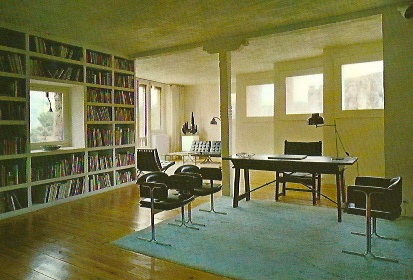
Here, in the Museo de Arte Abstracto Espanol in Cuenca, this space has it all; wonderful book shelves and out the window a cliff edged location allows for amazing views.

from “The Sisters Brothers” by Patrick DeWitt

There are many descriptions of brutality in this book, inflicted on humans and their equine companions. But however brutal, there is often great beauty and simplicity in the prose. There is a formal elegance to the text, a rhythmic beat to the language. In this part Eli’s poor horse, Tub, has his eye removed in the macabre way that was the norm for the time.

“The hand gathered the tools for the operation and placed these atop a quilt he had lain on the ground bedside Tub. He brought out a ceramic bowl filled with water and laudanum; as Tub drank this the hand called me to his side. As if in secret, he whispered, ‘When his legs begin to buckle I want you to push with me. The idea is that he falls directly onto the blanket, understand?’ I said that I did, and we stood together, waiting for the drug to take hold. This did not take long at all and in fact happened so quickly it caught us off guard: Tub’s head dropped and swayed and he stumbled heavily toward the hand and myself, pinning us against the slatted sides of the stable. The hand became frantic under the weight; his face grew red as clay and his eyes bulged as he pushed and cursed. He was scared for his life, and I found myself laughing at him, squirming around with not the slightest sense of dignity, something like a fly in honey……

Tub lay dozing and breathing, and the hand went to fetch a spoon that had been sitting in a pot of boiling water in his kitchen. Returning to the stable, he tossed the steaming utensil back and forth to avoid burning himself. His hands, I noticed, were filthy, though our alliance was so tentative I dared not comment. Blowing on the spoon to cool it, he instructed me, ‘Stay away from the rear of this animal. If he comes to the way that heifer did, he’ll kick a hole right through you.’ He pushed the spoon into the socket, and with a single jerk of his wrist, popped the eye out of its chamber. It lay on the bridge of Tub’s nose, huge, nude, glistening, and ridiculous. The hand picked up the globe and pulled it to stretch the tendon taut; he cut this with a pair of rusted scissors and the remainder darted into the black socket. Holding the eye in his palm now, he cast around for a place to put it. He asked if I would take it and I declined. He went away with the eye and came back without it. He did not tell me what he had done with the thing and I did not ask.

He took up a brown glass bottle and uncorked it, glugging the contents into Tub’s eye socket until the alcohol spilled over, levelling to meet the rim. Four or five pregnant seconds passed when Tub’s head shot back, arching stiffly, and he made a shrill raspy noise, “Heeee!’ and his hind legs punched through the rear wall of the stable. Seesawing on his spine, he regained his footing and stood, panting, woozy, and less an eye. The hand said, ‘Must sting like the devil, the way it wakes them up. I gave him one hell of a lot of laudanum too!’

By this time Charlie had entered and was standing quietly behind us. He had bought a bag of peanuts and was cracking their shells and eating them.

‘What’s the matter with Tub?’

‘We have taken his eye out,’ I told him. ‘Or this man has.’

My brother squinted, and started. He offered me his peanut bag and I fished out a handful. He offered the bag to the hand, then noticed the man’s outstretched fingers were slick, and pulled it away, saying,’How about I pour you some?’ The hand opened his palm to receive his share. Now we were three men eating peanuts standing in a triangle. The hand, I noticed, ate the nuts whole, shell and all. Tub stood to the side, shivering, the alcohol draining down his face. He began urinating and the hand, crunching loudly turned to face me. ‘If you could pay that five dollars tonight it would be a help to me.’ I gave him a five-dollar piece and he dropped it into a purse pinned to the inside of his coveralls. Charlie moved closer to Tub and peered into the empty socket. ‘This should be filled with something.’

‘No,’ said the hand. ‘Fresh air and rinses with alcohol are what’s best.’

‘It’s a hell of a thing to look at.’

‘Then you should not look at it.’

Lady Bird Lady Bug

As I wait for school to finish I watch ladybirds as they make a freeway of the wire fencing by the beach. They zimmer along its surface, paying no heed to up or down. Gravity has no pull on them as they motor their coiled highway. On my neighbour’s roses they munch their way through the aphids. Their numbers are flourishing on the lavender bush too. Red ones. Orange ones. Their little hard shell capes fan out and wings beat.

Ladybird ladybird fly away home

Your house is on fire and your children are gone.

We didn’t call them ladybugs. But ladybugs are what they are. Google says it is so. Not Ladybirds, says Jasper. How can they be called Ladybirds? Bugs not Birds. But both the neighbour and I know the rhyme and the way it went. The sound is familiar and right. Ladybird, Ladybird fly away home, your house is on fire, your children are gone.

My father loved the ladybird. The only insect he revered. A Good Insect. A worker, a helper to him and the rose bushes. He made us butterfly nets so we could catch the dastardly white cabbage moths that threatened to devastate his vegetables. Their wings so fragile, papered to nothing, their bodies minced by the catching of them.

He is in the garden with a Dutch hoe to rid the rose garden of the small, futile weeds. The soil is dark and like ground coffee. After the hoe, he uses the rake, making the earth furrowed. Neat waves wind between the bushes. The soil so carefully tilled. It is dark and wet, like chocolate sponge. It would be nice to be able to lie on the lawn with a book, but there are always jobs to be done. It is not safe to be outside and not engaged in work. The gum tree oozes chores. It is the season of the peeling bark. Bundled into crispy beige piles and forced into hessian sacks still smelling of wheat. Dragged to the back corner incinerator where dad is the only one with the matches. Ladybird ladybird fly away home.

Behind the Curtain

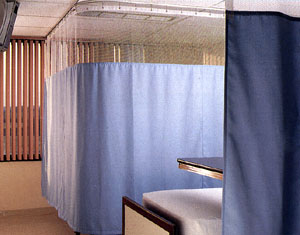
I am in one those curtained spaces in a doctor’s treatment room area. It is supposed to provide privacy. But it is a weird sort of private. One that presumes our only sense is sight. Like a face hidden from a baby behind closed fingered hands. Peekaboo. Because the willowy curtain does not stop the voices of the nurse and the patient in the next curtained space. Not contained or isolated at all. No secrets. Material, just flimsy wavy material. Bug ridden, no doubt, too.

Beside me a woman and her mother are having the elderly woman’s leg seen to. I need not see her, or the gammy leg, to have a full picture of what has gone on. She has just come out of hospital where she has spent three weeks being treated for cellulitis. I know this before they mention the diagnosis because I have had the condition myself and I can tell from her array of symptoms that this is what she must have had. She talks of the shivers and shakes when her temperature was up, her sense that she was dying, and the residual swollen painful leg that she has now and the reason for her being at the GP’s rooms.

She is telling the nurse that her stay in the hospital was her first since she had her daughter. I am thinking whoop to do. No wonder she knows so little about medicine, about her own body. Nothing has ever gone wrong with it before now. She has never been in hospital? And she is, I am guessing from her voice, in her seventies. I am beginning to be annoyed by her. Jealous I guess. A life lived without disease, without illness or disability and all that that entails. The daughter too seems unknowledgeable about the swelling in her mother’s leg, asking;

Are their fluid tablets she should take for the swelling? Then when asked about allergies to antibiotics the mother says No but adds she is just allergic to Penicillin.

The nurse places a clip that measures oxygen saturation on the woman’s finger and the woman says the nurse must be a technician to use all the equipment. So I am breathing? says swollen leg.

So what can they do about the swelling?

All you can do is elevate your legs as much as possible, the nurse suggests and do these exercises with your feet to keep the circulation going.

Oh the nurse at the hospital suggested those exercises too. And deep breathing. I have been doing them, although I didn’t know what on earth they were for, says the elderly patient.

When I spy them at the reception, the mother white haired and about seventy, the daughter about my age, I look down at the old woman’s bandaged leg to see the swelling. It is not bad. She still has a definable ankle. She can get a shoe on her foot. I do some deep breathing.