Back In the Kitchen…

parsnips

It is the second week of a new school year and we are back in the kitchen garden. The kids shirts are still stunningly white.

It is February weather in Perth. That means hot. Heat wave hot. Four days over forty in a row. No breeze at night. Withering gardens, brown lawns, windscreens that shimmer with heat. Hot bitumen basketball courts. So hot that recess sees kids choose to sit under the shade of an ancient gum rather than run about.

For this first week back in the kitchen there is a review of how to safely use a sharp knife. Claw grip, making a bridge across a vegetable. I must get Lee to show me first before I can instruct the children. I realise I am not a good example. How have I kept all my fingers? That mastered, we push on to halving and de-stoning the nectarines for our tomato and nectarine salad. The nectarines hang onto their hearts like drowning sailors to a life buoy. In the end we macerate a few and think of various creative ways to get the flesh from the sticky stones, all the while remembering to use our knives safely. Some nectarine flesh is consumed in the process. I warn too much stone fruit will find you on the toilet.

We need basil;  two students are sent to collect the herb from the blisteringly hot garden. There, cherry tomatoes are soaking in the sun, turning sweet. Salad leaves are wishing for some respite. I imagine the girls returning with their aprons, used like a basket, carrying the pungent leaves. Instead they come back with the prescribed twenty-four leaves, each individually plucked from the stem, in the palm of their hot hands.

Another child, sent to get a herb, comes back with a thumb pinch of the stuff. Yes I think we need more. Lots more. Go again. Yes I know it’s hot.

What is it with the kids and the picking of herbs? Like they are bringing back gold. Sometimes they are sent back three or four times.

Today every dish is about the fresh produce we have in season. We have tarts – puff pastry base topped with sliced figs, caramelised onions and grated cheese. Fig trees grow like weeds around Fremantle. Their gnarly tree trunks burst from limestone walls and rubble cliffs. This is their time – the beginning of the school year, as if designed to give sustenance to a tired child on a hot walk to and from school. The branches arch earthwards, making their fruit accessible to even the shortest of fruit-pickers. The purple, green fruit drop from the trees and are splattered on local footpaths. Soles are sticky with their juice. The white sap from the picked fruit stains your hands brown. If you have a fig nearby you know to break them open and check for bugs before you pop it in your mouth. Broken open, a fig’s flesh quivers like it is a nest of squirming larvae. Its warm, sticky flesh dissolves into sweetness. Figs; fruit of the Gods. But remember Lorikeets and rats feast on them too.

We have a salad of green with the added crunch of parsnip chips grown from our garden. Planted too close together, the roots grew deformed and twisted, and yet they still add a yummy texture and flavour to the salad. And besides, not many kids are partial to parsnips before they’ve tried them this way. In a purple plastic bucket, like the sacrificed tails of piglets, they wait to be sliced and then shallow fried. The humble parsnip turns into something especially delicious.

We eat our lunch under the shade of gum trees. The garden workers have been allowed to spray themselves with the hose since it has been that hot. A bee dying for a sip of water gets the table all riled up. Ravens wait for the food that will surely drop beneath the chairs. The table has been set with its checkered red and white cloth. After a year of kitchen garden there is already tradition and knowing. The children have collected flowers to decorate the table. The parent helpers and head cook are thanked and then we begin. Bon appetito.

Newbie parents are baptised in the ways of the kitchen. The cleaning group students have disappeared at the crucial moment when there are dishes to stack in the dishwasher and mountains of plastic glasses to stack away.

But success in the kitchen garden is measured not by how well we tidy away. ( Although it is appreciated and noticed.) It is about tasting, trying new flavours and making magical discoveries such as fig and feta, tomato and nectarine.

figs


New Beginnings

study file

It is a hot day near the end of the school summer holidays. It has been the usual. So much swimming. Chlorine is the smell of summer. Stretchy bathers that are wearing away. Rashies that sag to the knees.

A pile of notes has arrived for me from the Uni.

I am going to study.

I am in wet bathers at my desk. I open the package. Jasper thinks it is a present. It is of a kind.

It has modules in it. Wrapped in plastic and prepunched ready for a lever arch file. I can make a trip to Office Works. Legitimately.

I begin to read what they call Module Zero on the internet. It has taken me an age to get this far. For some reason (but no doubt something I was to blame for) I had created two logins and the one I am using has no material in its downloadable files. They needed to give me a new password and chose elephant. Why elephant I wonder? I access it. Module Zero. It is a pre module. It is something to think about before you even begin to study. Reading it makes my heart race. It is about learning and memory and what are the best ways to motivate you and how to remember and how to study. Left brain. Right brain. What about No brain? What I am remembering is the terror of University. The fear of failure. Yes like Pavlov’s dog the bundle of notes have triggered a learned response. Panic.

I tell myself to breath. As if from heaven, I am interrupted by ten year olds who must go to the pool or else they will die.

Here they spend time devising a plan to get ice cream.

Eating a proper lunch first might just be the only way.

It is too hot to be a spectator. I get in to do laps. But it is half hearted; since I have done all the laps I had planned to do this week. I can just get in the water and flop about. But habit kicks in and so I mosey on up and down. In the lane next door a man is swimming in his khaki knee length shorts complete with belt.

Mmm I think. He must be desperate to swim. Overwhelmed by the heat perhaps. Some kind of foreign tourist unaccustomed to bathing suits…

At the end of the fifty metres I am about to turn when I look across and see him sitting on the edge of the pool smiling broadly at me. Excuse me, he says. I lift my goggles to eye him. What length is the pool?

Clearly he is pleased with the completion of his one lap.

It is an Olympic pool, I say. Fifty metres long.

Everyone is so happy here, he says. So many laughing children.

Yes, I suppose so.

I have not thought about who is happy and who is not.

I hang on the lane rope looking at him and his smile. Something about him invites questions. Perhaps the way he smiles. He tells me he hasn’t swum in a pool before. Just the ocean. What do you think? I ask. Do you like it?

It is good for my legs because I am a refugee and I have been tortured, he says, still smiling.

Oh, I see, I say not seeing at all. I don’t know what to say next after this. I guess I am unused to having a conversation with someone after they have mentioned their torture.

I prattle on about the pool, about how it is heated and he can come here every day if he wants and it is always the same temperature. He tells me he couldn’t afford to come every day. Someone has paid for him today.

Well…

I wish him well. Have a nice swim, I say. I swim off and see him out of the corner of my eye keeping pace with me, a lap across. Sometimes he does a kind of dog paddle and other times an attempt at freestyle. His legs are all over the place but he makes it up and down and up again. Swimming like he has fallen off a boat and is swimming for his life. Saving himself.

As I swim more laps I wonder about his loved ones. Are they in Sri Lanka still? Does he pine for someone? What can he think of the pool, with its inflated crocodile?

Missing Jasper

from John Muir book
from John Muir book

Jasper is away.

A long way away.

He is across a very big continent. He is in a different time zone. He is not with either of his parents. It feels weird. He rings and his voice is so young. He is inquiring when he speaks to us. He wants to know whether we have seen movies and gone to out to dinner. We have instructions not to see Jack Reacher without him, but it is okay to see foreign films. He wants us to have a good time without him. Like he is worrying about us. The same way we are worrying about him. Mutual vexation. We try to be as descriptive as we can about the very ordinary things we are doing while he is away. There is a niggle knowing child-free time is precious and we should be doing more. We should be going out later than late. What drugs could we still take and fully recover from? But that need is gone, it seems. We should be doing more than seeing the early evening session of The Life Of Pi followed by Indian food. Home in time to catch the end of the tennis.

We have bought a new Kombi (new to us, but still forty years old) and after taking down the inside cupboards a line of rust in the roof is revealed. For a long time water has pooled here and eaten away at the metal. It is a rusty, gaping hole where there should be solid, comforting metal. Instead there is unsupportive air. She was supposed to be rust-free. We are disappointed because we liked the guy. After all he is going to live in Bali and teach Yoga and surfing. We trusted him when he said he had cut all the rust out. Why did we trust him? We chastise ourselves for being gullible. There was no way of seeing the rust. But.

It will cost a lot to fix. More than we imagined. And first we need to find someone capable and willing to do the job without ripping us off.

When Jasper saw the Kombi he fell in love with it immediately. Because it has a pop top. It is a place for him to sleep. It is up high, above his parents and a long way from creepy-crawlies when you are camping. It is the ultimate cubby. We were infected by his enthusiasm. Suddenly I am dreaming of travelling around Australia and home-schooling. I am thinking of abandoning the house, researching the dog-friendly camping sites and high-tailing it.

There is something about a Kombi that turns children into urchins. Suddenly they love the dirt and sticks and simple things. They no longer need ipads or game boys. The possibility of adventure, the thought of no showers, the snuggling under a fleece-lined sleeping bag on top of a still warm engine. What’s not to like…

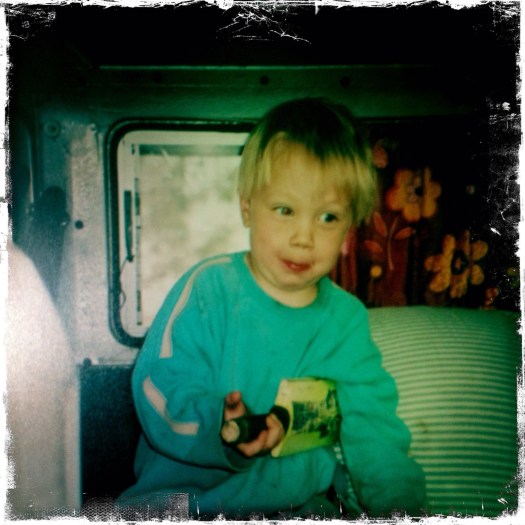
Jasper as a three year old urchin in our first Kombi

It would solve our high school issues. No need to decide on a school even. School of Kombi.

But it doesn’t stop me pouring over all the web sites for all the schools. I am researching scholarships and GATE testing. I am finding out the difference between academic extension programs and Independent Public schools. I am wondering whether Catholic education is suitable for heathens. I am looking up school boundaries and contemplating renting in Shenton Park just to get into Shenton College. I am trying to recall the name of relatives that have attended elite boys schools. Would their name help? I have a brick on my chest.

I go to the pool and swim. It is something I haven’t done in a long time. It got lost when my parents got ill. It was the first thing to fall by the way side. Even though it is only half an hour, it was a half hour I couldn’t seem to get back. It hid itself from me. Then it had began to take sneaky peeks at me from behind a sofa.Today I found it. Cornered it and held fast. Graham suggested coffee in town, but I stuck with the swim. I had trouble locating my bathers. Would the lycra have bubbled away? Would they still fit? Just. I couldn’t remember how much money I needed to locate in coins for the entrance fee. I know there will be new girls at the counter. Maybe they will want to see my concession. I feel more blind without my glasses than I use to. I will never recognise anyone who chooses to say Hi.

I feel my body, heavy and sluggish, over the first one hundred metres. The rhythm needs to be found. Muscle memory recovers itself. I don’t push it. I just roll the arms over. I am trying to rock my upper body more in an attempt to not hurt my shoulder. It is the kind of thing the over-forty swimmers need to do. I breathe deep and slow. With each lap serenity returns. Ah yes. The water. Giving back. Like the life source it is. A swimmer passes me and leaves a trail of silver bubbles sparkling like sequins flowing from a ball-gown. They are saying follow me into a space. Come with me hither. The ladies are doing their deep-water aquarobics beside my lane. Their bodies are round, festive baubles, reminding me of Christmas and maraschino cherries. They have yellow floats around their waists, making them buoyant. I think of The Life of Pi and the turbulent ocean. Of his swimming to the life raft. Of the tiger. So fierce, so beautiful. The cherries’ legs are working hard, like they are peddling an invisible bike. Above the water their heads model hats and sunglasses and their air is fogged by the cloying scent of their makeup and perfume. Even at eight in the morning. But it is good exercise and who knows when you may need to swim that little bit harder to reach the shore or the life raft. I just mosey along. Given the need to reach the raft I may just go down with the boat. My laps = No rush. Not going anywhere. Up and down and back again. Losing myself in the monotonous stroke and the motion. Not counting the laps, because it is too taxing and means I can’t day dream. Mesmerised by the blueness of the sky.


Rottnest 2012


Every year we go to Rottnest in November. It is our family tradition. We have done it since Jasper was in utero and before he was even thought of. In those days we had an imaginary child called Pee Wee. Somehow she skipped childhood and we never envisioned her at Rottnest. She was a gamine who grew up to be a singer in a jazz band and who lived a groovy loft on Manhattan. In our musings we were aging grey-headed parents who visited her there. But that’s another story. Instead we got a blue-eyed boy, who, like the real boy he is, comes with us on holiday, a forty minute ferry ride from home.

Arriving at Rottnest is like going home. You have stepped out of your Fremantle cottage to shortly enter your more primitive but better abode. This home has no messy desk, no laundry, no bills and, most of the time, no telephone coverage.

So much of every part of the holiday is soaked in familiarity. Do you remember the year I nearly fell off my chair onto the Dugite? What about the time Vinnie cracked his helmet smashing into the wall as he stacked his bike? And when Jasper caught his finger in the flywire door? Each year melds with the former so it can no longer be recalled what year it was and who was there. That time we stayed in the back row, with Troy and Jo and the boys were babies. Remember when we showed the Nordic Anja the flickering of the orbiting satellites. She had never seen a sky so black, so unaffected by city light. There is the routine of arriving at the ferry terminal early enough for someone to unload the plastic containers full of belongings and beach gear and still have time enough to drive home again and return riding their push bike, into the head wind, with the semis roaring by. This year Jasper is old enough to do the bike run too.

There must be enough time to sweet talk the ferry men into the delivery of the-above-allowable-safe-lifting-weight beach wheelchair in its bag. They have not denied me thus far.

Once arrived at the island there is the picking up of the key from the accommodation office. Invariably the unit is not ready, but they have taken to texting you when it is, and so we just go to the bakery to wait. Here donuts are bought. Not because they are especially good. It’s just what we do. Energy for the hill. Is the peacock that frightened Jasper as a baby still alive doing its dance? The seagulls that live around the settlement are the most brazen and will snatch a chip right out of your hand just as you are about to put it in your mouth. But this year I have learnt that seagulls mate for life, and some how knowing this makes me feel kinder towards them. Somehow I notice that they are in pairs when I have never seen this before. Before I thought of them as flying rats. Me; older, softer.

There is the ascent to climb on the way to the Longreach. The kids race off, well ahead on their geared bikes. No one is pushing a pram, or hauling a trolley with little ones. The way is known to the boys. Past the Police station, the nursing post, the oval, the Basin. This year I am walking alone to the chalet. I have a heavy load of extras under the chair and a bag on my lap. But it is not super hot and who is in a hurry anyway. The odd moth-balled quokka is about attracting the odd tourist who squats in front with a camera. To the boys the sight of a quokka is no more interesting than that of a seagull. The new attraction is freedom. Ahead of the parents. Gone.

The oval is dry, the grass cracking, and the sign still says the water used to reticulate the grass is unsuitable for drinking. The potholes in the bitumen remain.

The hill to Longreach is my test. One day I will falter here. One day I will not have the steam to make it up unaided. For now it is doable. Tough if it is hot and the chair is loaded. But still. Flies make a nuisance of themselves when my hands are too busy pushing to shoo them away. At least the glasses keep them from the corners of my eyes. I am slow enough to look up and see the windmill and marvel that its spinning is providing the island with its energy. A large black skink, like an expensive sunglass case, slithers through the scrub. I love the whoosh whoosh of the giant windmill blades as they rotate. They give the wind muscle. Cyclists whizz past going down hill, wind-smiles on their faces. I look at the bitumen as they pass, think about how sweet it might be to stroll up the hill, taking step after step in soft leather sandals, then put my head down and keep pushing.

Then the familiar Longreach Bay comes into view. It has a large section of light blue water where there is no weed. We call it the Big Blue. Yachts are anchored to moorings around the edge of the blue, but it is mid-week and there are only a few. The moorings are familiar too. There are ones that we swim out to as a test. There are ones that we have swum to and then whilst treading water in the deep we have gasped as beneath us the dark shadow of a stingray swims by. There is a descent now to the front row of Longreach chalets. I can get some speed up. I get my own wind-grin. Still the others will have been there a good fifteen minutes already. They will have brought the luggage inside. They will have chosen their beds, checked the fridge is filled with the groceries delivered by the shop and rearranged the kitchen table. Graham will have disconnected the tv and faced it, like a naughty child, into the corner. Single-handedly he will have manoeuvred the couch out onto the verandah and faced it towards the Big Blue. We always strung a hammock, but since a child died when a pillar collapsed, the authority that runs the island has banned this. On this holiday a worker erects a sign on the balcony saying maximum capacity of nine persons. Graham will have set up the sound system and might even be flopped on the couch with his feet up.
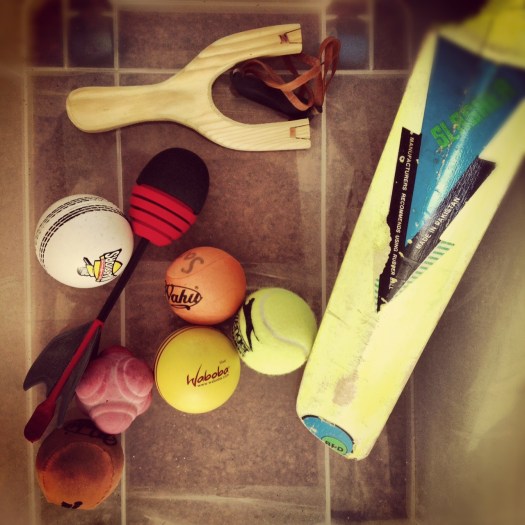
When I arrive the boys will have their shoes off. They will be jumping on the bed, climbing the door jambs Spiderman-style and exiting through the windows of the front bedroom. They will have scattered the cork tile floor with their belongings. Already Hot Wheels will be lost in the far reaches under the beds. It will have taken only a moment for them to turn feral. From now on they will sleep in beds full of sand, with black feet and salt-encrusted hair. They will wear the same boardies and t-shirts for days. They will reluctantly put on sun-screen and a hat. They will joyously travel to the shop several times a day for whatever it is the adults need, just in case they can wing an ice-cream or a sweet lolly.

Sometimes there will be a surprise in the chalet like a new coat of paint. This year there is a photograph of a sunset at The Basin adorning the wall.

Otherwise it is like returning to your own home. Few things are different. They have decided to give you more dishwashing liquid, but anyway I bring my own. The scrubber is still crap. Don’t worry I bring that too. The single tea towel is still inadequate. I have several. They have dispensed with the enormous stainless steel pot big enough to boil a whole crayfish. Shame. They still only give you one roll of toilet paper. Tight. Over the years the beds and pillows have improved but we still bring our own foam eggshell and our latex pillows. Because that’s the thing about Rottnest. It is a little bit of home. For the people who go there regularly, it is just an extension of chez-moi. We have friends who take their own elaborate coffee makers and their Thermomix. They make sure everything is just so. Someone might have the ritual of tying a red ribbon to their gate latch for the littlies to know which is their chalet. Someone else might set up a table for cards or scrabble or jigsaw puzzles. Someone might set up a sun shade on the beach and leave it flapping there all week, like they own a bit of Longreach.

You know it so well that you recognise the sound of the closing of the yard gate. It has made a groove in the sound memory of your mind. You know that at night the bathroom door will bang softly, but loudly and consistently enough to keep you awake if you don’t stopper it with folded cardboard. You know the sound of the metal latch on the front door, designed to stop it slamming shut in the afternoon gusts. You know which bay will be most sheltered for the direction the wind is blowing. You know one day one kid will be sunburnt and another will fall off his bike. You know that ice cream will make it better and it will come from the freezer so cold that you can’t scoop it out with a spoon unless you boil the kettle and warm the spoon first. Note to self – next year bring the Zyliss ice cream scoop. When one boy has forgotten a toothbrush and he is sent to the shop to buy one he returns with a toothbrush so old-fashioned that it reminds you of your own childhood. It has a handle of a single colour. It has no grip for your thumb. No knobs to scrape your tongue. It has no fancy bristles of different lengths or fading colours to massage your gums. It reminds you of when the Colgate toothpaste tubes were metal and to squeeze them in the centre got your Dad riled. It reminds you of communal bathrooms in caravan parks where your mother made you wear your thongs in the shower incase you caught something off the concrete. It is the simplest of brushes. He tells you that that is all the shop had in the way of tooth brushes. Nothing fancy.


Talus

When G moved in many years ago, the wooden shelf above the old Metters cooker held a handful of my special objects. I am not sentimental and I don’t keep stuff. He took over the shelf and it became his place for his eclectic array of old toys and figures.


One of my special objects is the talus bone from the hock of a horse. It is sculptural. It is smooth and hard. It has a groove, so that when the bone is held in your hand like a ball, your finger lies snugly there. It has no smell. It is inert and unchanging. No hint of rock or wood. It is heavy and yellowed like aged parchment.


I am lying in hospital, only weeks since car collided with tree and my own spine snapped like a mere twig.


A bearded man comes to visit. Like many before him he brings a gift. Others have brought flowers and food. He is not like others. He still wears tweed jackets with leather patches at the elbows. He walks with a swagger like his trousers are too big, his feet unknown to him.


I am not able to sit up. I lie alternatively on one side and then the other and finally flat on my back. The bed has a special name. Every two hours it swings into action, operated by a single nurse. It is a spinal bed, designed to prevent pressure sores while the patient is immobilized. When finally I move to the spinal ward the bed will be replaced with three men whose job it is to turn people without twisting their spines. They are called the turning team. I grow to love them. To drink I use a sipper cup like a baby and am fed spoonfuls of mush as I lie on my side. I give up eating.


He enters the ward and stands looking at me. Everyone does this. Inspects me. I am a prisoner to their gaze, strapped into my bed. In his hand, held down by his side, is the bone. Perhaps he thinks twice before parting with it. He holds it like a bowler walking to his mark. Before he gives it to me he makes me name it. Talus? The most beautiful of bones. The man is an anatomist. Structure and function is his thing. He is giving me a treasure.


He pulls up a chair. Even someone as clunky as he can sit, can walk, can move. It irks me. He hands me the bone and my finger finds the groove too. Something to hold, he says.


I will never work with horses. I will never work with cattle. But I can admire the design of nature and together we talk about the magnificence of the horse. My fingers can feel the bone. They can find its curves, its waves, its hollows.


We talk of the stay apparatus of tendons in a horse’s legs that allow it to stand for hours without becoming tired, the chordae tendineae in the valves of the heart, the cleverness and delicateness of any spine. You are still a vet, he says to me.


My eyeballs are aching. Tears amass behind the globes. How many tears can you cry before you can make no more? Did you know the tears of sadness are not the same as those when you have grit in your eye? But I don’t really know the bearded man. He is a lecturer. He is kind. He understood that vet students were not always intrigued by the curves of the liver and the way the diaphragm shouldered it. He stood at the front of the lecture theatre and performed, all the while hitching up his trousers. He tried hard to get us to love anatomy as much as he did.


Seated at stainless steel tables we worked on the formaldehyde cadavers of greyhounds not fast enough to run the track. The smell attacked your nose and made your eyes sting. Tears of the unsad kind. We rushed through our labs to get away from the fumes. We didn’t draw neatly enough. We didn’t take enough care. We failed to see the beauty in the talus when it was shown to us.


Now I see it. I cherish it.


Stay In Your Nest

It is windy. Not just windy. Howling. Pull-you-from-your-feet-windy. Umbrella-inside-out-windy. Skirt-up-around-your-ears-windy. Trees roots are holding on tight whilst their branches and leaves flail about. I am safe in my stone house. It has stood for a hundred years. Compared to weatherboard cottages I have lived in, I feel unflustered. You know the ones that creak and grind like they are about to be blown off their stumps. I cannot be swept up. Inside we huddle. After school television. Marinating chicken in red wine. So different from a week ago when we were on the beach at Rottnest, worrying about too much sun.

Storm-phobic dogs dose up on your Xanax.

I think of the Three Little Pigs. I think of their house of straw. Their house of sticks. All could be blown down by a Huff and a Puff. But not the stone house. Instead through the chimney, he came. Only to be boiled in the pot.

But outside the weather is fierce. And real critters must contend.

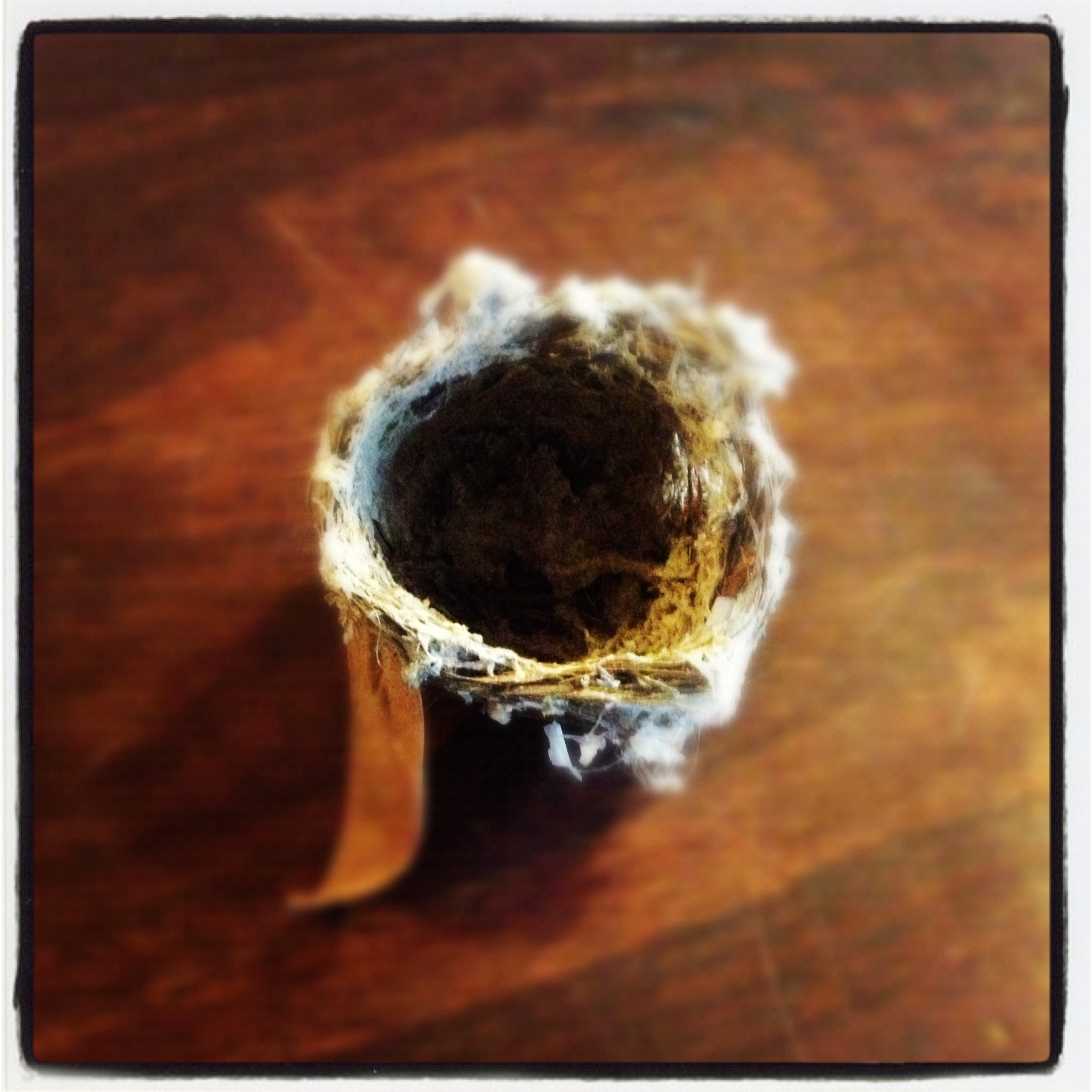
There is a Willy Wag tail nest in our Robinia. It has three pink-mouthed chicks in it. They are all greedy beak, stretchy neck. The Robinia’s pretty soft leaves are whisked into a green frenzy. A fluorescent green feather boa. Bits of her are torn away from the trunk. The babies in their nest must feel like a cork at sea. They are buffeted. Endlessly. What can their parents do? They fly back and forth with the insects they have caught. The red mouths gape open. Don’t lean out little ones!

I ask Graham, “Can you check the willy wag tails?” He looks up, searchingly. “Oh No,” he says, peering up. “I can’t see the nest.” He looks down and scans the garden. He looks up again. After all it is small and the tree is flinging about.

“No. The nest is still there.” He calls back, relieved. It is wedged into the fork of two skinny branches. It is deep and cupped. It is no flimsy structure.

Hang in there babies.

Missing

I think of her everyday.

I have a bookmark, made for her funeral, loose in the console of my car. As I drive to work and stop at the lights I handle the glossy card. The picture is of her on the phone, laughing. I imagine she is talking to a friend. Or perhaps she is talking to me.

She would be telling me about the Not Guilty verdict of Lloyd Rainey. Together we would scoff. She would be asking me to place a bet on a horse running in the Melbourne Cup. She would choose it because she liked the jockey or maybe the gelding’s name. She would be barracking for Obama.

I hold the card while I drive. Hi Mum.

I think of her everyday. I tell her stuff.

But it is different from when she was alive. Then, I was needed to do things. I had mandarins to buy. I had magazines to purchase. I had appointments to arrange. To drive to.

I grumbled to friends and family about the burden of the tasks. I felt smothered by her need to see me. Her joy, as a I entered her dimly lit room, only made me sigh.

To turn around now and say I miss her seems fickle. I feel unable to tell the people I complained to, that really it is simple, I miss her. I miss her everyday.

My life has a new rhythm without her in it. No nagging need to get this, do that. But. I miss her everyday.

No one is as interested in me in the greedy, consuming way she was. She had a need to know everything going on in my life. I, of course, hid it from her. I didn’t let her in. Not really. I kept it to myself. The way I do most things. From most people. Like a kid who shields their work with their cupped hand from the kid sitting next to them. Somehow petty. I wish I had shared more.

She would have been thrilled to hear about my recent trip to Sydney. She grabbed at stories. She gulped them in. She wanted my fulfillment. She wanted me to have happy experiences, with beautiful things. To stay in flash hotels and go to fancy restaurants. She wanted me to do the things she wished she had done, so I could tell her about them. I would watch her eyes fill with sparkle at the stories I would bring back from elsewhere. She could then have news for her carers and her hairdresser. She could be the entertainer then.

I imagine her sitting up in bed, watching the Presidential race. And Charles and Camilla happen to be in the country too. A feast of news. And Thank Goodness, no football. Her thin blue ankles on the plush throw rug. Her Hush Puppies by the bed. She will have a cold cup of tea on her tray. She will sip from it anyway. She will wrap the uninteresting biscuit in a Kleenex and put it with the others in the bedside drawer. I will attempt to ditch some older ones when she has her head turned.

I will give the flowers fresh water from the tap in her bathroom. I go through some letters she has piling up by the television and see what I can throw out. She will not allow any to be binned.

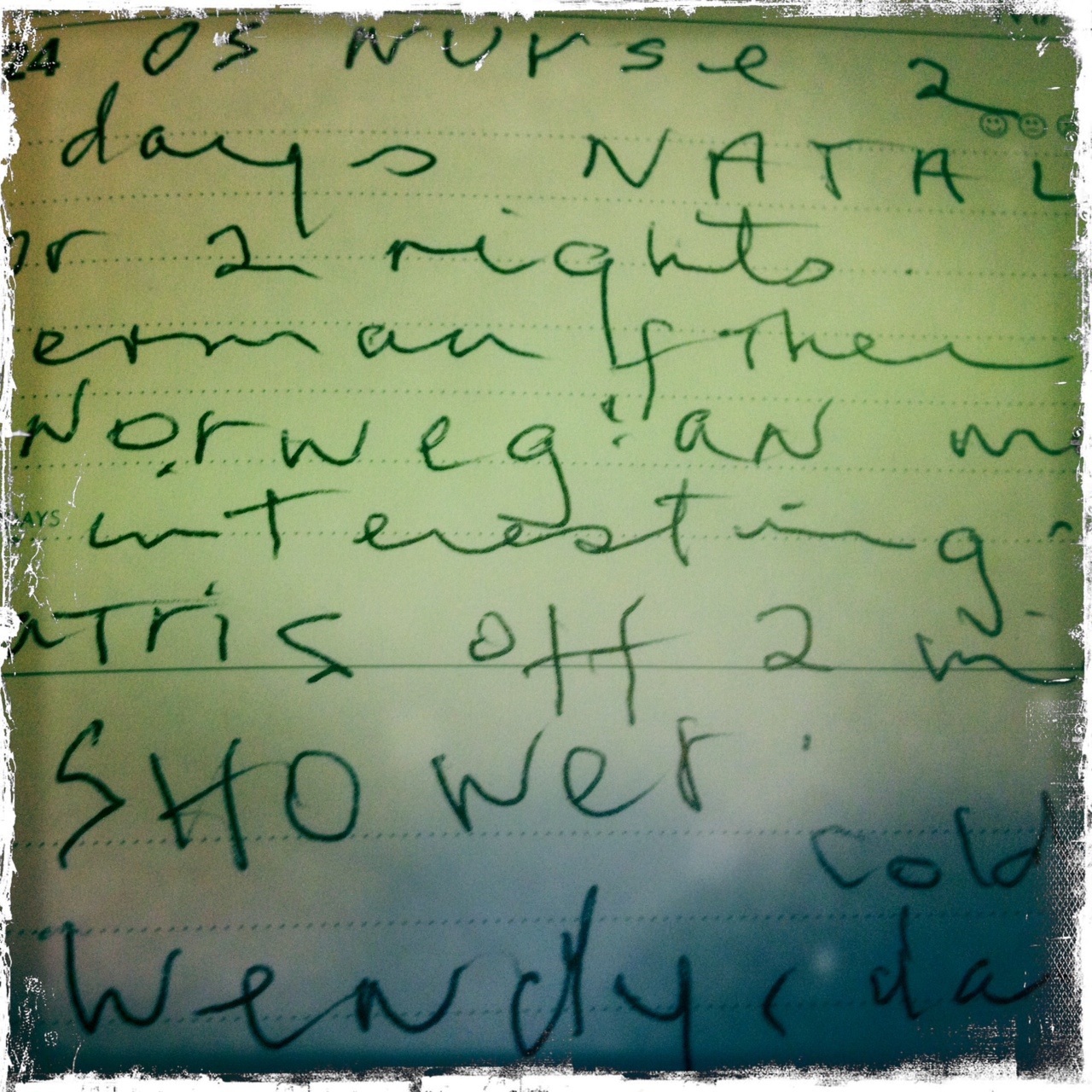
She will ask me to mark some dates in her diary. In here she writes which carer has given her the shower and who was on night duty. These are the things that are important to her. She will ask me to write when I am coming again. Is it tomorrow or the next day?

Halloween

Graham researches the internet for the makeup requirements of a zombie face. It morphs, as only internet research can, into how to do a half unzipped zipper face where the flesh around the mouth is exposed. Sixteen million other Halloween hopefuls have followed this google path. All manner of gory can be found – you just need to click. Someone else demonstrates how to do a face half-eaten away, a fake tongue half-ripped from the throat. You can find anything on the internet. Degloving injuries to get a plastic surgeon’s heart all a flutter. Graham is transported from his other unusual distraction of the moment; the construction of his own steady-cam from hardware found around the house, a skateboard shop and Bunnings. All for forty-five dollars. There is gluing, hammering, use of the oven. The guys at the skateboard shop know what he is up to when he asks to buy a single bearing for a gimble. Making your own steady cam – cool man.

A zombie face is made with a paste largely made of kaolin. A bit of kitchen sponge with rounded corners to apply. For a house of natural, blemished faces, unaccustomed to makeup of any kind, it requires the rapid attainment of a new skill and a trip to the discount chemist warehouse. The goo is plastered to the skin of the semi-reluctant ten-year-old model. But it is preferable to the plastic mask from last year, with its claustrophobic, I-am-buried-alive feel. The paste is grey blue. The colour of rot. Beneath the eyes black and purple eye shadow complete the putrefaction. The fake blood dribbles from the ears. He will not be saved. As the blood dries, it cracks and peels, lifting like decomposing flesh.

First we have piano lessons. It is Gypsy’s first time teaching the undead. Jasper plays a lullaby while blood congeals around the edges of his lips. His unmade-up hands are angelic and swift across the keys. Meanwhile his face continues to die a little. His teeth are too white, too perfect. Next time we will have to go the whole hog and get the teeth rotting goo. Sweet piano music from the fingers of a decaying boy. It is itchy beneath the mask. An instinctive scratch reveals healthy skin beneath the grey. A touch-up in the car will be required.


The River House


It is all about the water.


Seen from the house it captures your attention. Look at the river now. So smooth. Not like water at all. Some other kind of liquid…


At the bottom of the gently sloping lawn it runs. Sometimes it is gravy; silky and glossy. Insects skim across it, like miniature skaters on a polished rink. Sometimes wind kicks its face, turning it pitted and pocked. The breeze rakes it from smooth to furrow. Sometimes it is a deep suede brown like the leather of a farmer’s boots. It changes from moment to moment. Then it is sliced by a pontoon boat, singing its way down stream. A bare-bellied man takes charge with one hand around a stubby holder and the other on the steering. Women with their feet up, sun their freshly waxed legs. This is Yunderup, on the Murray.


From our jetty the boys can fish. They can snag their lines on the submerged bits of trunk and tree, unseen in the brown. The dog can teeter on the edge of the jetty as he strains to see what is being reeled in. His wet black nose a-twitch. A puffer fish. Flapping and fitful on the hook. Prey. The red dog is set to wonder; what miracles of life lie below the brown, waiting to be plucked by the silver line?


Only one fish is big enough to keep. Measured on a man’s forearm. The rest are returned to their preferred murkiness.  After the fishing is done the red dog still paces the jetty wondering how.


Three kids with boney knees. Two males, one filly. The boys are hankering to spend three dollars at the shop on bubblegum and war heads. Past dead verges and broken down yards to get sour sweets. You have to take Veronica.

But we’re going on our skateboards. We’re fast.

I’ll run, she promises.

A single shop half a mile away. Selling booze and dog food, tampons and toilet rolls, white bread and baked beans. After they’ve gone I start on the tea cake. No cinnamon. I google the shop. I ring.


Hi. Have you got cinnamon down there? She goes to look. Between the shake and pour pancakes and the vegemite.

I’ve got cinnamon sugar.

That’ll do. You’ve should have three skinny kids in the shop getting lollies. Tell them they need to buy the cinnamon sugar too.


I imagine their expression. What our money! On cinnamon.


Back through the fly wire they come, three little white paper bags full of their bounty.


You get it?


Jasper, scowling, hands me the cinnamon sugar saying, she told us you needed cumin for your cake. It made the adding up hard because we had sorted out how much we each got to spend and then we had to put stuff back because of your stupid cumin.


It’s not cumin. And it’s not stupid. It’s for tea cake.


Pontoon boats – like floating patios drift past the windows. These sinkable lounge rooms of cream vinyl and boomy stereo clink up and down. Aussie flags too. Then back to the stillness. Jangle. Settle. Jangle. Settle.


On the far side of the river a couple have carried down two deck chairs and placed them on the end of the jetty and sit looking out. Like movie watching in their media room. Their chairs have holders for cans of drink on the armrests. No need to bend down. They sit the same, with their legs crossed at the ankles, breathing in the river. The woman sprays a fog of mosquito repellant around them. A dog intent on the ducks takes to the water and swims up stream after the birds. As he gets nearer they take to the air and flap several feet ahead and then touch-down again in the water, out of dog-reach. The dog keeps on, till, exhausted, he heads for the bank and finds a way to scramble out. He shakes himself off and stands on the edge of the bank watching the ducks putter around.


The river moves about the base of the trees that grow on its banks. It laps at the bark, like a dog licking its sores. The trees drop their leaves and branches into her soup. It is a brown composting sludge. It smells of mud and worms, of algae and fish. It has darkness and depth. Something says it is teeming. It has a slippery bottom, a toe-squelching queeziness, to its earth. It takes away tree limbs and breaks them down to silt, returns them to their roots, to grow to tree once more.


It’s all about the water. It is ink. It is metal. It is silver and it is blue. It is milk and it is mercury. It is a mirror for the sky, reflecting the clouds. It is molten and grey, as the sun tucks away and the clouds take over. It is all about the water. Come look with me.

13 Things the Kitchen Garden teaches kids….

Bloggers do lists. And, although I don’t think thechookhouse fits the mould of most blogs, I am doing a list because it occurred to me that way. Not in the usual way, where an idea seems to drift down like a falling leaf, but in an arrow-fired-at-a-target kind of way. I am doing a list.

Thirteen things the Kitchen Garden teaches Kids

1. to wash their hands before preparing food

2. that produce from the garden comes attached to dirt that doesn’t taste good

3. to work together, or else end up with no meal

4. to clean up after themselves, instead of leaving it for someone else

5. to try new things – like strange tastes and vegetables

6. to use sharp implements and not hurt themselves

7. to have fun while preparing food

8. to create something that is shared

9. that tasting is one of the perks of cooking

10. to create a meal requires time, and work, and commitment, especially if you grow the produce first, but the end result is worth it

11. that making something from scratch has real value

12. to create, even something as simple as a meal, is the one of life’s great pleasures

13. you have permission to get dirty