The Stephanie Alexander Kitchen Garden Big Lunch…

It is the day before the Big Lunch and there are only a couple of volunteers in the kitchen with a handful of kids doing the mise en place. Lee explains to the kids this is what restaurants do to prepare. Today they are sous chefs. How grand. We mothers are kitchen hands once more. We are hosting a Big Lunch tomorrow for around fifty people who are coming to see the progress of our kitchen garden. We are on display. Our food will be on show. Our kids will be too.

Just as when you are hosting a dinner party, there are a few nerves. But we have been practicing all term. The kids really know how to make pasta dough now. They have it kneaded into their souls. They have been baptised with flour. They are pros at passing the dough through the rollers of the macchina per pasta and getting the tagliatelli just the millimetre-perfect thinness. They know how, after, they must use a pastry brush to cleanse the machine of flour. Never using water. Like old Italian Mammas they have mastered a soft touch and Lee has taught them not to overwork it, and trust me, it’s not easy for kids to stop themselves from pawing the finished product, or even the unfinished product.

Because being in the kitchen is about being tactile. It is about using all your senses. It is about trying new flavours. It is about experiencing strange textures. It is about using your hands and seeing what can come from them. Transforming the simple lettuce and peas into a silky smooth, green soup seems somewhat miraculous to all involved. The lettuce is sourced from the garden and heavily laden with rich soil. It is crunchy and fresh but not all that interesting straight from the plot. It is washed and washed again. The heart of the lettuce is removed and the leaves fall about in a sink full of water. One boy picks out the older leaves and they will go in the compost bin. Lettuce in soup? and a scrunched up expression.

After sweating down the spring onions and finely diced garlic in our own home pressed olive oil the lettuce and peas are added and allowed to wilt down. Finally the veggie stock is poured in. Once it has simmered for fifteen minutes we need to blend it and then pass it through sieves to strain it and get it truly silken. It is a long, slow process made sweet and meditative by conversation and the warmth of being involved in a shared task. But eleven-year-old boys are not meditative for long. They wander off to something that looks more entertaining – like the job of popping from their pods the broad beans.  They need to be herded back to their bench. Always there seems a scarcity of help when there is washing up to be done. Where is my Chef de plonge? But reeled in they can clean as good as the rest of us. The benches need to be clean! I need my lasso.

On the day of the mise en place there is not the usual sit down and eat for the kids at the end of the cooking session. Imagine not eating after all that work. They have a dejected look. Welcome to our world. That is how mothers feel often, I think. All that work and it is eaten by someone else. So they make the most of their tasting opportunities. Just checking the seasoning one more time! Another spoonful of peas goes missing from the pot. If they were chipmunks they would be filling their cheeks for the winter.

On the day of the Big Lunch many volunteers have come to help, along with a handful of children from Grade Six. These kids will be the waiters and the representatives of the school. You can see their chests puff up a little as they are told this. As they are given their instructions from Lee, just as the head chef would give her front of house staff the run down of the menu, they are all ears. Pony tails are retied. Hair clips repositioned. Dirty aprons are swapped for clean ones. Girls adjust theirs to be just the right (cool) length.

The art room has been transformed into an Italian cantina with red and white checked table cloths, jugs of water with added sprigs of fresh mint and recycled Italian tomato cans hold the serviettes and cutlery. It looks a treat. There is even a guitarist.

It is an impressive menu – dips three ways with crostini, pea and lettuce soup served in a shot glass, mountains of homemade tagliatelli with zucchini and thyme sauce, a green salad with pumpkin seeds and ending on sweet strawberry tarts with vanilla whipped cream. All served and made by children around the age of eleven. The guests were struck by the well-mannered children, the spanking stainless steel kitchen, the fact that such a small school had a hive of volunteers and, that in the space of six months, the Stephanie Alexander Kitchen Garden experience at East Fremantle Primary has grown into a beloved and integral part of the school experience.


Day Three of Dying

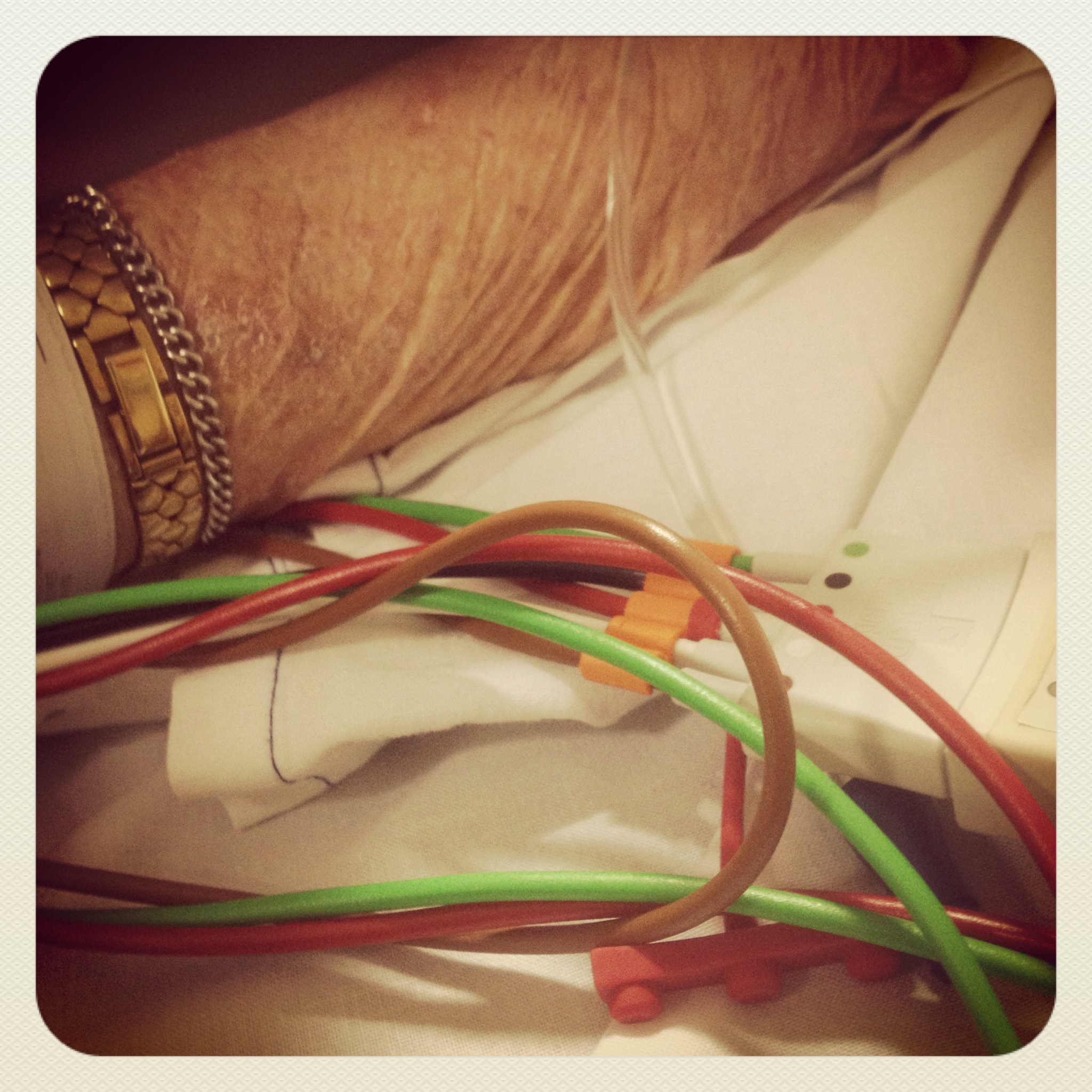
Her piano-playing fingers are swollen. Blue. It is not the hand I know. The one that has done so much touching, grasping, stroking, holding is in there somewhere, beneath the oedema. Today the memory of her bones are gone. The paper of her skin has turned to something like flesh. I think of Hansel and Gretel tricking the witch with their chicken bones instead of fingers. Too skinny,  the wicked witch would say. Not yet ripe for the cooking pot. What horror it made you feel as a child. Now I hold her hand, searching for the memory of it. Where have my mother’s hands gone? The image of them remains concrete. It cannot be changed. I hold it in my mind.

People who love her visit. They are shocked to find her non-contactable. June is there still, I say. The nurses said she could hear you if you spoke to her. I don’t know if this is true. To me she is asleep. And what do you hear when you are asleep? Your dreams. But this comforts those who visit. They sit and hold the puffy-not-her-hand and tell June how much she meant to them. They cry and say they love her. I give them some space to be beside her because they have only a visit and I have? How long have I to go?

Part of me feels as if she is on display. Some kind of exhibit. I am the museum guard. Making sure they don’t touch the artwork. Don’t nick anything. This is absurd. But there it is.

Maybe not having had the experience of being close to death makes us awkward. Our mind chooses other things to liken it to. I think of those red plaited ropes they set up in movie cinemas to make you form a queue for the box office. I think of those retractable barriers in airports that corral you into a zig zag line, heaving your unwieldy bag behind you. Even death has a form, a way of being. Form a neat queue behind the yellow line people.

There is sludge in the urinary catheter tube that leaves her body and fills a bag by the bed. It is not what is supposed to be in urine. The antibiotics are still not working.

Her lips are cracking. With a cotton-tipped bud I apply the lanolin. It is white and smeary. I like these tasks. I wish for more of them. I straighten the blankets. I smooth the sheets. I stroke her hairline. There is an inch or so of white hair now. Her hair is growing despite everything. She missed her last hairdressing appointment because of feeling unwell. She would hate the state of her hair.

Her tongue has some red blotches on it. It lies in her half-open mouth, flipped on its side, like a slug without its shell. Her breathing is slow and monotonous. It does not seem to be weakening. My sister will arrive tonight at 6pm. It’s not far off. Five hours.

At 1pm the nurse visits and they reposition her. We decide not to give June more morphine. She has been unchanged since her first dose and the nurse thinks that if she is dosed again she will not be alive for my sister.

I sit and watch her. I film her on my phone. I have captured her.

I write.

She would hate that I am doing all this. Recording such melancholia. She used to say, why can’t you write about happy things? She pushed away the deep and dark. She wanted lightness, frivolity, entertainment. She wanted Kate and Will’s wedding on the TV. She wanted a Silver Jubilee parade. She wanted baby pictures of the Danish Royals and for Molly Meldrum to pull through.

The silver chain nurse comes and examines her and gives her more intravenous antibiotics. We chat. When it comes time for him to leave he says, I won’t see you tomorrow. I answer, Oh.

I go through my mother’s address book for familiar names of people I should tell. I see a name Dossie. It is a name I know. Dossie this, Dossie that. But I have never met a Dossie. The number is a Sydney number. I ring it and tell the woman who answers that I am calling to tell Dossie some news. This is Dossie’s daughter, the woman says. Dossie died a couple of months ago and I wanted to tell June but hadn’t managed it yet. She is glad I called. Our mothers were close childhood friends. They played in each other’s yards. They put ribbons in one another’s hair. They had the same knee-high socks. They whispered through the pickets about boys. They stayed in touch for eighty years.

I am writing when I realise I have not heard her breathing and I look up from my notebook and spend a still moment watching the bed clothes. There is no rise or fall. I know instantly she is gone. I go closer. I go to the side she faces and look at her motionless face and watch it for a breath, for a sound. Oh. My first thought is that I was not paying attention. I should have been holding her hand. My second thought is of my sister. She has missed her. She is about an hour from landing.

Any moment now Graham and Jasper will be here to swap cars and go to the airport to collect Lisa.

I touch her forehead. I hold her hand. I watch her. My phone rings. It is my brother-in-law. He will be the first person to hear the words she’s gone. He is not expecting this.

Graham and Jasper arrive minutes later. Her hands are bleaching. No longer blue, but a deathly beige. Waxen. I tell them I will just sit with her till they bring Lisa. I will not tell anyone she has died. I want to keep it a secret for as long as I can. I want her to be like this when Lisa arrives.

I manage about forty minutes, just my mother and me, before a carer comes in with a cup of tea for me. I have to tell her June’s passed away. It seems wrong to not say. Are you certain? she asks. Oh yes, I’m sure. She is a little panicked by the fact that no one but us knows this fact and she must tell someone she says, and off she runs. Soon the doctor and nurse are in the room. I stand back. The doctor even warms his stethoscope on his own chest before he checks her for a heart beat. I guess it is automatic. We sit and talk about June. The doctor is sad. His sadness feels real. She had such a love for life, he says. I bet she gave a good party, he says.

I try to remember her parties. It is hard at first with so much death in the room. She loved celebration. I think of a surprise party she told me about that she had arranged for my father. It was for his fortieth birthday. We were only toddlers. She had no way of hiding from him the beer bottles in the bath, so instead she told him he would have to pretend to be surprised. And he went along with it. Faking astonishment to all their friends. She would have made devils on horseback and asparagus rolls. She would have worn strappy gold sandals and orange lipstick. The house would have been filled with the scent of Sweet Pea.


Day Two Of Dying


I go to Myer to buy nighties. They are crisp and new. They are cotton with a delicate flower print. The woman serving me apologises for no one being in attendance at the counter while I was waiting to pay. I say the garments are for my mother. I think about adding – she is dying. But it is something that is just said in my head, to myself. It is a whisper under everything that I am doing. Like the rattle of the tracks under a train. Monotonous and keeping time. Outside the department store the arts market is going on in the square. The sky is ridiculously bright and blue. How dare it? I buy a takeaway coffee. In my head to the barrista; My mother is dying. The coffee machine has only just been turned on. It’ll take a few minutes; Is that okay? My mother is dying. Will she wait while I get takeaway coffee?

They already have her in a new nightie. It is pink, with flowers. I don’t think it is hers, but I don’t say. I put my two newly purchased ones, tags still attached, in the drawer. Tomorrow she can wear one of mine.

How are you Mum?

Better, she says. You don’t look better, I think, but do not say.

I am so thirsty. Still?

I check the fluids are working. Yes.

The tips of her fingers have changed colour. They have a blue hue. Think violet. Her feet too. In her outgoing breath there is a gurgling, fluid sound. On the inward breath too. She wants to cough but can’t seem to manage it. Her throat is like a frothy drain. What does it mean not to have the power to cough and clear your throat?

Visitors come. We sit around her. I give her globby water. I am careful to make sure she can swallow it. It isn’t much and does little to quench her relentless thirst.

She starts guessing her ailment. Appendicitis? Am I going to theatre?

Have you got pain June? the nurses ask. No.

Then she asks for Panamax. It has been her cure-all for many years, since the demise of Bex.

We conclude she must have pain.

The doctor has written her up for Hyoscine and Morphine. The drugs of the dying. At 3pm she has her first dose of Morphine.

Once she has had these drugs the gurgling stops and she closes her eyes. This is the first time she appears restful. It is a relief. It is like watching a baby sleep. It is peaceful. It is how it should be. I feel like someone who is waiting for a bus, but who isn’t in the slightest hurry to go anywhere. I feel like a person who is sitting in the sun, with my legs stretched out and crossed at the ankles. I have nothing to read and nothing to occupy my hands. I might just watch the traffic go by. I might just let the bus be missed. I will simply sit in the sun. And wait.

It is not over and I don’t know how much time she has but it is different now. There is no struggle to cough. There is not thirst. There is just sleep. There is just waiting and watching. I guess this is a vigil.

Dust is beginning to gather by the wheels of the bed because we have shooed away the cleaner. There has been no Leonie with her turned down mouth dragging her noisy vacuum. There are no stray mandarin pips. No crumbs from biscuits had with tea. Just dust.

From the en suite bathroom comes the burping sound of drains being unblocked. I think of Rolf Harris and the noise he made with his Wobble board.

I look through her address book for names of people I should ring. I ring some of her very old friends. They too are old. Some are older. Some still drive. Some have recovered from worse, or so they say. But they know what I am saying without me having to say it. It is in the croak of my voice. The child like sorry. They say, Thank you dear for letting me know. Give her my love. They say it matter-of-factly. How else should they say it?

Do all the dying look the same? She looks like Dad did now. Gone is the originality of her face. It is a dying face now.


to be continued…


Rottnest Winter

Three women with a median age of fifty go to Rottnest. Essentials have been packed. Bewley’s tea, a stainless steel teapot, Borsin cheese, bottles of Pinot Gris, my preferred washing up liquid and scrubber, the Tefal pancake pan, the Global knife.

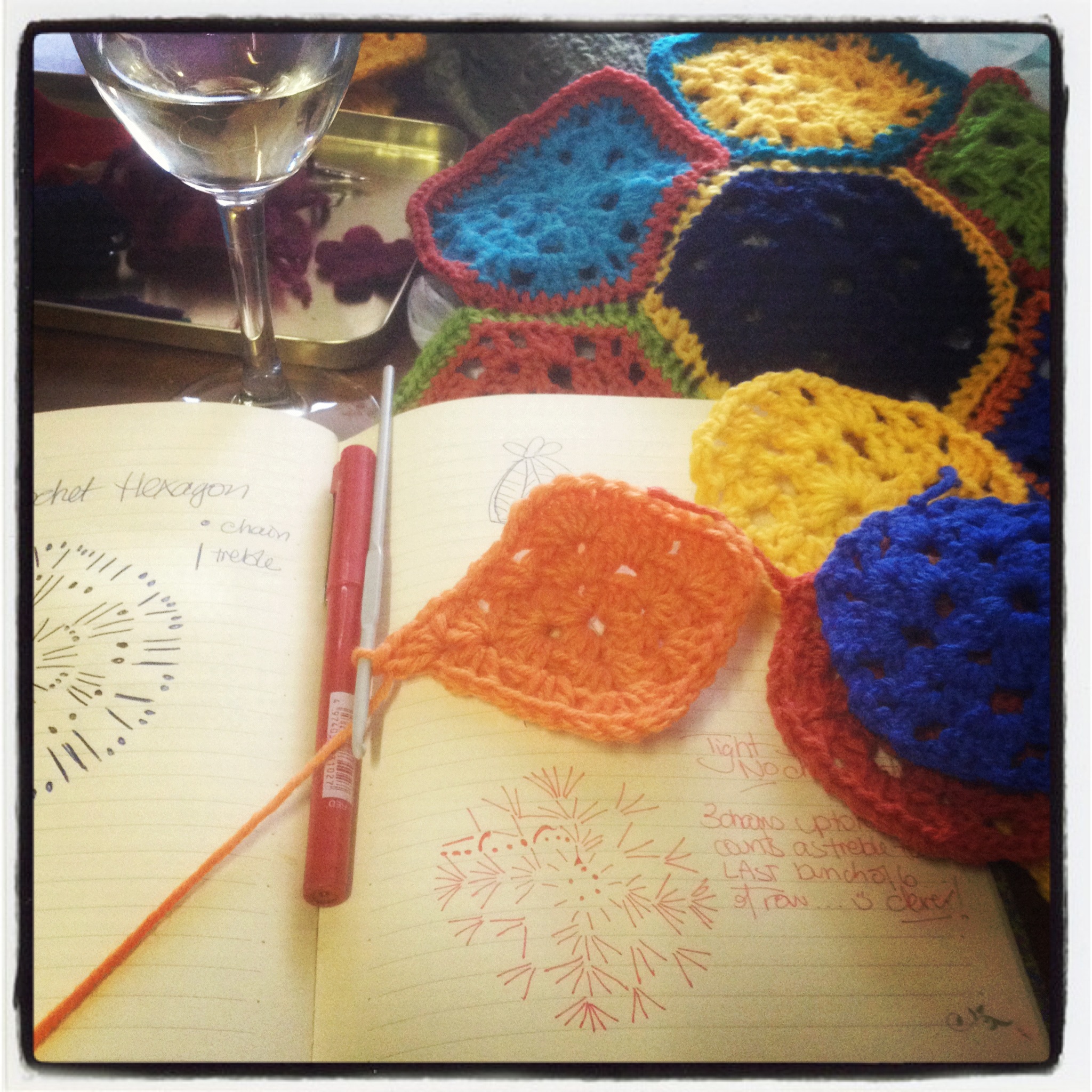
We take various half-finished craft projects and yet started ones. C. is the aficionado of all things textile and while A. and I are less skilled, we are no less enthusiastic. C. has hot machine washed and caused the felting of op-shop jumpers of various colours – a teapot cosy will be hand sewn and embroidered from these.  A mish-mash of wools are brought – these will form many various crochet hexagons for the purpose of ? That’s not the point. It’s the doing. The luxury of hours and hours of doing without interruption from the word “Mum”.

Children and partners have been dispensed with. Mine are overseas. C. and A. have teenagers and they have been left to cope, or else. Skill-up kids.

A. is making a blanket for her one-day house in Brittany. Little strands of sky blue wool mark the squares her partner has knitted. Like my knitting project, hers has mistakes – the odd dropped stitch, wayward yarns. We don’t know enough about knitting to know how to fix errors, so we just carry on knitting. One of C.’s tasks this weekend will be to show me how to pick up a dropped stitch.

In the South end of Thompson Bay, known as Nappy Alley, we three settle into our chalet. No nappy duty for us. Even the sound of children is something of an anathema. We have a room each. A. makes sure each bed has its plastic sheeted mattress covered by the blanket before it is remade for extra comfort. We have enormous bags with hardly a thing in them. I have brought a hot water bottle, but the weather does not require it.

There is time for walks, and even swims (dunks really) and more than enough time for craft. A. and C. even do a water-colour each and manage to play scrabble at the same time as knit. We cover our faces in papaya peel-off masks. It does nothing to appease the wrinkles. We exfoliate with loofas. For breakfast we have pancakes with thin slices of green apple and honey yoghurt. For lunch we have tomatoes and asparagus on toast spread with Borsin.

On the sunny patio we drink Pinto Gris. We attempt to nap but simply end up fighting with our blankets.

On the third day A. goes back to the mainland since her job won’t let go.

C. and I go to the shop for one more bottle of Pinot Gris and some smoke salmon to put in our fritatta. The shop is largely deserted, as is the whole island. We are at the counter waiting to pay. A middle-aged woman in front of us has purchased a souvenir plastic place-mat of Rottnest (the kind of thing you can’t imagine buying), but instead of exiting, she wanders back into the store. She is short and round with a full length black skirt and comfort sandals. She has a blonde bob and a perplexed look on her face. She shuffles, like the signals her brain gives her feet aren’t quite strong enough. We are both turned to watch her. She is that kind of person. Is she lost? Is she not sure how to exit the shop? We are both observing her and smiling at her ineptitude when we notice her large pink underpants appear from beneath her long skirt and fall, in an ankle-hugging way, around her sandals. What do you do when you see someone’s underpants slip down? You look away.

We leave the shop and sit outside on a bench to discuss the woman and her underpants. Fifty something with no elastic. We feel a mixture of girlish giggling and pathos.

I remember being a child at school with underpants devoid of elastic. What horror! Firm one minute – sprung elastic the next. A tight-fisted gripping of the cotton beneath the skirt. A staying at your desk as long as possible. A cursing of the inequality of dresses and skirts. A strange waddle on the way home. But your mother sorted it for you. Those one were chucked out. Stupid pants!

Miss Falling Undies emerges from the shop. Her dignity is recovered, but something has gone on in the shop afterwards. She has lost something? Money perhaps. She sits on a nearby bench with another woman, older and a potential big sister or even a mother. The older woman has white hair and a sensible perm. She has slacks on. She’s cross. The older woman is saying, This is why no one can be bothered with you… The underpants woman sits facing her looking glum. She’s heard all this before. She has no defence. Her bottom lip is pouting, her eyes cast down and she looks like a six-year-old being told off. No one can be bothered with you.

I wonder did she remove the knickers, ball them up, and put them in her bag? After all the skirt is long. Did she hoist them up in the cereal aisle between the Weetbix and the Nutrigrain? What kind of holiday is she having whilst being chided by a relative? Can she tell her rebuker she needs new underpants now?

I see a red post box and think how if my mother was alive I would be compelled to send her a postcard. She would like to hear the story of the woman whose underpants needed new elastic.


Day One of Dying

I go ahead of the ambulance that is transporting my mother back to the nursing home. Silver Chain has been arranged to come out and deliver the iv antibiotics. In my head I hear the parting words of the physician, she should recover from this episode.

I have confidence in his knowledge. He knows if someone in front of him is dying.

I give a heads up to the nursing home staff. June is on her way. Her room is readied, the bed turned down. Her favourite 100% polyester blanket with the pink love hearts is smoothed over. Sun has flooded her room. Light appears to have burnt off the illness that had pervading it. Here she will do as the doctor said. Recover.

I warn them that she will want to use the toilet. More than anything.

Seeing her in the arms of two of the most capable nurses, one on either side, assisting her to her bathroom, I feel able to go. I leave confident that on my return the following day she will be recovered.

I go home. I take Jasper to footy training. I stand in the cool evening air and watch ten-year olds run and kick and sling tackle each other to the ground. Mothers are talking about house prices and renovating vs moving. Jasper stays after training officially finishes to keep on kicking for goal. As it turns to dusk and he comes towards me I see his green and black stained knees. Anointed by winter grass. I sleep.

In the morning I go to the nursing home expecting; sitting up in bed, conversing, television on. Instead I enter a room where the curtains are still drawn. She has not recovered. No dirty knees. She looks worse. How can this be?

I buzz for the nurse.

What’s happening? I ask. Remember learning to ride a bike. Whose idea was it to start you at the top of a hill?  You’ve never gone down it before but once you push-off at the top it’s too late to change your mind. Did someone give you an almighty shove? Flying down. Fast. You don’t want to go faster. Already you feel out of control so you take your feet off the pedals, but you need your feet on the pedals of a back-pedal-brake bike to slow down and stop. Why were you given no instruction? And now you realise you don’t know how to stop. You crash onto the grass. You just want to get off this thing.

My heart has sped up, down-hill-no-brakes-fast, and won’t go back to resting for some days now. It is reminding me I am alive. This is me with grass-stained knees. Feel it.

A nurse has my mother’s hand and is working her rings off her puffy wedding ring finger. There are three rings that live here, two of which have stayed put for fifty years; an emerald engagement ring and her silver wedding band. The nurse says I should keep them safe till her fingers come down. I slip them on my finger. Just for now, Mum. She has on her worst nightie. It is bedraggled and fraying at the shoulders. I am embarrassed for her, but it seems they didn’t want her in a long-sleeve and could find no others. I will buy more. It seems important.

No one will say she is dying, so I ask. Is this the start of dying? I think I have asked this question before with my Dad. I am feeling on familiar territory. They are not words you articulate often. They are unforgettable as they leave your mouth. Maybe if I don’t say it, it won’t happen? But that just isn’t me. I say everything. I write it too.

I ask Marie, What do I do?

You should tell important people to come and visit, she says. This is an admission.

What now?

Yes, she says.

Remember being in the ocean and facing wave after wave. My dad was there with my sister and I, teaching us to be safe in the big surf. But he didn’t hold our hands. You take a big breath and dive under. It is calm beneath the surface. There is a pull. Outwards away from the earth. Is this something like an astronaut might feel, walking on the moon? It takes your feet off the bottom. It pulls you further from the shore. Your head pops up and another wave is on its way. You belong to the ocean now. It can take you from your family if it really tries. The next wave is bigger. Harder. Bam. In the washing machine of the surf. Over and over. What is bottom? What is air?

My heart has sped up, dumper-after-dumper-fast, and won’t come back to resting for some days now.


Home is the bed. White linen. Sponge bath.

I leave the room for them to give her a wash and reposition her. They are worrying about bed sores. You should make some calls, they say. I am in the corridor of the nursing home. I go to the dead-end, where the exit door to the garden is permanently locked. I ring Graham and tell him to bring Jasper from school. I ring Lisa. I am incoherent. She is dying, I am blubbering. My sister doesn’t understand. After all I had told her she was recovering only the day before.

I have to say it again. I am saying it between choking, sobbing tears now. I don’t know if you will make it even if you come now. But you should come. Do your best to come.

I ring some relatives. Ones who count. Ones who have visited her. I ring the long time neighbour of June who has been here along every step of the way. She will come. I ring my best friend. She will come too.

I speak to June’s GP. He has heard she is worse. He wonders if going back to the hospital would be a better plan. We argy-bargy back and forth. Can’t she have IV fluids here? It appears the nursing home is not classified to give acute care. An IV can only be looked after by Silver Chain. Okay then we ask Silver Chain, I say. Because she is better here. This is her home. The staff love her here. No one loves her at Fremantle Hospital. Why am I suggesting love is what she needs? I know love does not heal sepsis. I don’t believe that love can stop the progression of illness and disease. But somehow it seems important to keep her here now, rather than send her back to the hospital, where they may muck about adding wires and fluids and taking more measurements. I don’t doubt the outcome either way now. The hill has been scaled, we are hurtling down the other side.

Opera plays in the room next door. Non-stop loud. From the dining room the sound of afternoon game shows on the television clashes with the arias.

Graham brings Jasper from school. He is worried at being absent while the class is choosing the Olympic sport they will each research. He doesn’t want to end up with something he thinks of as a girls’ sport. Of course he wants road cycling. On seeing the boys Mum says, that’s a bad sign. People are standing around the bed looking at her. Taking her hand. I feed her spoonfuls of thickened water. It is like clear jelly but tastes of water. She can swallow it easily. She can’t get enough of the thickened stuff. She is thirsty. I give her spoonfuls of the globby water. She is still thirsty. She huddles in the child-like pose of the sick. Her hands are clenched when they are not in mine. Will I heal? she asks me. Yes Mum, of course. Even though she does not look at me I say it smiling, with brightness in my voice. A you-can-do-it, Rah-Rah kind of voice.

I am giving her the thickened water, when I feel a presence behind me. It is a nurse I don’t know and she is rubbing June’s upper thigh through the blankets. She takes her hand out of mine and holds it. Oh June, she is saying over and over. Love you, June, love you. I turn to see big, fat, wet tears running down her coal-black skin.

Just as the carers come and hold her hand or stroke her face, my feeding her spoonfuls of water, is all I can do. This delivering of a few mls of liquid into her dry mouth feels more important than it is. It feels essential, and healing, and nurturing. It feels life-giving and capable of staving off death.

In the afternoon the Silver Chain comes. The nurse has a bag of tricks; pulse ox, blood glucose measurements, stethoscope. She makes her assessments and rings the doctor. It is decided she can have subcutaneous fluids to avoid being over-perfused and getting a moist chest.

I stay till the sun goes down.

I don’t stay with her at night. She could pass away while I am gone. I accept that. I can’t stay all night. I wonder how long the night must feel when you are creeping towards your death. Does it pass by quickly or else eke? What dreams does she have? Does she feel the edges of her world closing in on her?  Are the corners all blurry?  Is there a central thread, an essence of self, which is clarifying? As sweet as the nectar sucked from the centre of the honeysuckle? As I leave her that night I place a hand on her forehead, like I am her mother and she is my child, and wish her sweet dreams, Mum.


To be continued…


Tally Ho


We are on our way to the airport discussing the derivation of the word tally ho. We all thought it meant a flourishing, extravagant Goodbye, said with an English accent and a grandiose waving of the hand. Graham is reading from the iPhone – to teach us that it is what is shouted when a fox is spotted on the hunt. It is also an expression that was used during the Second World War when enemy aircraft were sighted by fighter pilots. These days it might be used by pilots as a response to air traffic controllers letting them know about air traffic in their vicinity.

I am delivering my men to the airport to set them on their journey to New Caledonia. There, they will sail with two others; another man and his son. I do not know what it will be like. I have hopes for fine weather and smooth seas. I am already wondering if Jasper has enough socks and whether his father packed any singlets.

I took no part in the packing. I didn’t want to be the one to forget something. Hence I am sure they have left something behind.

But they are not travelling to the end of the world.

Socks, I am guessing, can be bought world-wide.

The drive to the airport via Leach Highway is mind-numbingly depressing. It is about the worst possible view of suburbia. Full of semi-industrial warehouses and garage-like shops. Full of mechanics for high performance vehicles and fork-lift operators. Sidewalks unused, the slabs lifting. Delis selling Chico rolls. Past broken down houses with washing lines strung with FIFO fluorescent work shirts. It was out here somewhere that Dad spent a week in a transitional facility on his way to the nursing home. It held the demented and therefore had a series of high security hoops one needed to jump through to get in there, and to get out again. It had that Cuckoo’s Nest feel about it and the smell of boiled broccoli. Dad hated it and was perpetually packing and trying to figure out how to order a taxi to take him home.

At the bag drop a couple have opened a bulging pink suitcase to take out stuff from it and jam it into another. To close it again the boyfriend must kneel on the lid while the girl fiddles with the zipper. At every counter someone is trying to waggle their bags through despite their extra kilos. But this is a budget airline and if your bags are over-weight they will make you pay.

I say good bye here, before the security, because otherwise I will need a pat down. The boy, who never hugs, seems sad to be leaving me. He puts his arms about me, more than is usual for him. He even lets me plant a kiss on his neck, which is now where my lips come up to. I watch him as he makes the metal detector ping. Back through and take your belt off young man. He wears his Lamonts yellow beanie, rescued from the recycling bin, before it went out on the verge. Lucky. It is the vision I will carry of him through the next two weeks. Smiling back at me. Bye Mum.

I am on my own.

I have no partner, no son;  no one to cook for, to pick up from school, to wash and to clean for. I have no schedule to keep other than my own. I can keep writing all through dinner time. I have no mother, no father. No mother to care for. No mother to visit, to sit with, to look through gossip mags.

Before she died, my mother had been frightened of the idea of Graham and Jasper going off sailing. I don’t like to think of them out on the ocean, she would say. She didn’t like risk. I can’t bare to think of an ocean with waves and swell and them upon it. If she was still alive I would visit her now to tell her they got off okay and then again tell her each and every day that they were still okay. Whether I knew it or not. She would ring me for news. I would ring her back. But the phone will not ring, and if it does, I will not need to answer it.

I have a dog whose nails are clicking on the floorboards as he senses it is about school pick-up time. He is ready to go get Jasper from the Arts Centre. It is his routine and he knows it in his cells. He comes into the study and looks at me. He wags his tail, brown eyes saying let’s go already. He stands by the desk and shakes his body. He stretches. But I do not have to go. I can keep writing despite the dog’s misgivings. I do not have to get up in the morning. I could, if I wanted, spend all day in bed. I could start drinking after lunch. Murphy, baffled by my not leaving my desk, wanders back out. Back in. Back out.

Graham has left the dying roses on the table, with an instruction not to move them. They are from my mother’s funeral. Later they may become a picture. One day it may hang in a gallery or on someone’s wall. For now they are dropping their leaves, slowly one by one, and their pink rose petals turning brown. I wanted to ditch them when he left but he has said to leave them, if I could bare it, for another two weeks, till he returns. What state will the water be in then? Already it is swamp. I wanted to get rid of them to spartan the table and perhaps make space for felt-making. But I will leave the roses till he gets home…


The Days before Day One of Dying

As I take my position by my mother’s nursing home bedside this is what I write in my journal; Day One of Dying.

I suspect I am thinking her death will be more drawn out than it is. How many days am I planning on?

She has spent the previous day in Fremantle Hospital. Like a scene from Hieronymus Bosch’s Hell. Full of vomiting, retching, gagging, coughing souls. Later I am told that the hospital has declared itself; Code Black. To the layman this is bursting at the seams. Patients are served up on skinny trolleys. Obtunded. Gurneys jam the space that is supposed to be a corridor. I see a man with a gourd-like belly just covered by a triangle of hospital linen. He is one of the many waiting. Patients, like cattle, stare out into the maelstrom of the central emergency area where the doctors, nurses and ancillary staff zig-zag back and forth before them. Buzzing like flies. Drawn to the smell of carcass. Maybe patients think if I stare long and hard enough someone will come. Then a scrub-suited someone places a stethscope on a chest, eyes to the ceiling, and then moves on. Someone might take a blood pressure. Find a pulse. Scribble it down. Order blood to be taken. Boot-faced nurses. Soft-shoed staff mesmerised by chest xrays on screens. Backs to patients. Speaking to relatives on the phone. Looking at the far corner of the wall, any place other than eye-contact with a patient or a pleading relative.

When I arrive in Emergency it is already late. People should be at home, in front of the telly, or in bed with hot cocoa. Instead they are wanna-be patients waiting to be called through. But their wait depends on the level of severity of their illness. Best be dying to get their attention. Some will still be sitting watching the screen when I leave many hours later. Go home I think. I see the triage nurse and say my mother is in Emergency and that they are expecting me. Indeed they are. A nurse has to show me where Mum is and I am met by a young doctor in scrubs. He seems reluctant to discuss her in the corridor and says perhaps we should go somewhere private. He leads me into a room that someone has tried to make nice, but has failed. I get the sense the room embarrasses him, but what can he do?  It has a painting of scenery on the wall. It is a little wonky. I can’t recall the scene. A lake bordered by forest? There is a vinyl couch (where I am supposed to sit) and a chair opposite it. It is where doctors deliver bad news. Bad news is thick in the room. It has made a home for itself here. I think how I prefer the corridor. I have already spoken to this doctor on the phone, so I know what he is about to say. Words like critical, sepsis and no white cells seemed to stick. Others, like the importance of her blood gas result, seem to fade. I remember his stethoscope necklace and the gentle grasp of his handshake. His face is Scandinavian, soft and sincere, as he delivers the poor prognosis and I think I like him. Mum would like him too.

Then I see her. Defrocked and in a hospital gown. Her bird-like chest is barely covered. Beneath her skin, by her collar bone, is her pacemaker. Her small bundle of clothes are in a blue plastic laundry bag at the foot of the bed. I remember Dad had a similar collection of belongings following him from ward to ward, from hospital to nursing home. She is a little bit confused, but knows it is me. I take her hand. She understands she is in the hospital and that she is pretty sick. But they will heal her. She is thirsty. No wonder. It has taken several hours to examine her and conclude she is dehydrated and get her on a drip.

They move her from a curtained cubicle in Emergency to a room in the corner, with a more comfortable bed. The corner room is normally reserved for women delivering a baby. It is a closet really.  As windowless as the rest of Emergency. A bunker. Do they imagine she will die here? She has multi-coloured cords recording her heart beat and its rhythm, as well as a baboon-making oxygen mask and an intravenous infusion.

I sit watching her. Listening to the electronic beeping of her machines. I watch the fluids running in, and hear the hiss of the oxygen being delivered. I think the amount of intravenous fluid they are giving her is what I might give a sick terrier. I check that urine is flowing out into the bag hanging by the bed. The urine is still more concentrated than it should be, but less cloudy than it was. It has looked worse. Infection is treatable. That is what antibiotics do. I see another doctor, a medicine registrar, this time. He is somewhat scathing of the nursing home and their level of care. He rolls his eyes when I describe her recent turn as TIA. He asks if brain scans were done. No, I answer. How was it decided that a stroke was the cause of her collapse then? It’s just what they suspected, I answer. Hmm. I see. I see. More hurling around of the word critical.

She does not look critical to me. I remember my mother doesn’t believe in death. I go home. I blurt it all out to Graham.

I sleep.

The hospital parking is worse in the morning and I have to park a few streets away. She is still in Emergency. Still in the closet room.

When I arrive I find her desperate for water. There are no cups by the sink used to wash your hands. I ask a nurse. They say she can’t have oral fluids. She is in danger of choking and getting an aspiration. She is on a drip. She won’t be dehydrated, they say. They leave. Still she asks me for water. I wet a paper towel and dribble water from it into her mouth. I can see how dry her tongue is. Her lips are cracked. She sucks up the little droplets. I feel good about doing this. I am mistakenly wetting her gown. I pat it with the paper towel. I keep giving her water. I stroke her forehead.

I stand out in the corridor and survey the emergency room for oncoming doctors or nurses. All that is out there are other sick people. They are searching too. Their faces are worried. Scared. They have had their clothes removed and are in hospital gowns. They haven’t their shoes on.  Some don’t have any underpants. They sit or lie on beds or trolleys. Some hold oxygen masks to their faces. Some hold kidney dishes to retch into under their chins. I am wondering how it is that I am normally so fond of hospitals.

The nurses come in to check her and to fiddle with the machine. They call her sweetheart and darling but the overused word is so devoid of compassion that they could replace it with any other noun; try pot plant. It might get more water. I am not sure what they think of her or me. I am not sure they care for us and that is what is crushing in on me and making my eyes fill up with tears. I don’t want to cry in front of people who don’t care that I am crying. I ask them to bring her a pan, because she is telling me she wants to use the toilet. They mistrust that I know, or she knows, what she wants, but I assure them she knows. She is not demented, I plead. But she can’t manage to use the pan and is still uncomfortable and I can’t settle her. I wonder if the nurse is thinking; See, I told you so.

We are setting up an adversarial relationship. I don’t want it to go this way. I want them to work for us. Like us. Help us. Mum is now begging me to get her to the toilet, but I can do anything. She might have sepsis, but all she really wants to do is to have a crap.

Then we are swooped in on by her team. They stand at the end of the bed, all six or so of them, while a young, nervous doctor gives the summary of her case. The consultant is the oldest in a tweed jacket. He is Irish with a lilting accent. Despite the chaos of Emergency he has not forgotten his manners. He addresses my mother and talks to me. He takes his time examining her. He listens to her chest. He looks at her neck and the bulging of the vessels pulsating in it. He points it out to his underlings. I tell him she is thirsty and he gets the bed head raised and hands her a plastic cup of water. She drinks from it. He wants to get rid of the wires and tubes and get her off the drip. He says yes she has sepsis. She is not mounting a good response. He thinks she should recover from this episode but sepsis will get her in the end. It’s not a bad way to go, he says. Make sure you have a blue form signed. He means make sure she has a DNR. You can go home to the nursing home and be treated there if that’s what you want.


To be continued…

When my mother died…

It is Sunday and my mother has been dead for just over a day. We, the bereaved, are in the supermarket getting things for dinner. Because even when someone dies there is food to cook and dishes to wash.

We have spread out in the supermarket to get it done quickly. Lisa is sent to find toilet rolls. Graham is getting the mince. Jasper is taking a moment to check out the toys. I am getting Salada crispbread since there is still school tomorrow.

In the biscuit aisle I see a woman, roughly my age, with an older woman. The elder has a walker that she pushes in front of her. The older woman has on comfortable slacks and Hush puppy shoes. The younger woman pushes the trolley and loads it up with their groceries. She looks a little tired – like perhaps she wishes she were doing something else with her Sunday afternoon. They have a large collection of sweet biscuits. Monte Carlos. Mint slice. I imagine the younger woman is the daughter, (I can see the resemblance) and the older woman her mother. They are everywhere these pairs. I see them in the chemist and the waiting rooms of doctor’s surgeries, in the emergency room of the hospital, in post office queues and filling out withdrawal slips in the bank.

When I accompanied my mother on such journeys to the Captain Stirling shopping centre she knew everyone – the pimple-faced, flour-dusted girls in Brumbies, the aging pharmacist, the grey-faced newsagent, the grocer called George. She knew them by name and then the names of their children and their boyfriends and their spouses. She knew how many marriages they had had and the diseases they had recovered from. She knew the degrees their children had studied for and their subsequent careers. She knew when and where they were going on holiday and for how long. She knew how much money the girl in Brumbies needed to save to go on vacationing on the Gold coast. She brought them small going away gifts and welcomed them on their return. She brought them in homemade choc slice for their birthdays and told them if their star sign was one she was compatible with. She invested time and energy in the lives of other people.

June had a way of endearing herself to others. She was memorable, indelible. She thrust herself into their worlds with her inquisitive nature. As her daughter it could be mortifyingly embarrassing to have your mother speak to everyone and not in a hushed tone. At restaurants she always wanted to, and often did, stride back into the kitchen to congratulate the chef.

I was her source to the outside world; the bearer of mandarins, in winter, and grapes in summer, the deliverer of the Woman’s Day and Hello. She loved me and didn’t want to be separated from me in a way that is almost impossible to bear. Sometimes I felt like I was, for her, a reason to be alive. She fought her hardest to stay with us. I am thankful that I was able to be with her when she passed away and to know first hand she did not suffer, but simply seemed to seep effortlessly from this life to what is beyond. As those who have already lost their mothers must know, it is the strangest feeling to know that suddenly your mother, the woman who bore you and who indeed has been the one most intent on your happiness, is no longer watching over you. Now you are grown.

In the days leading up to her death the carers at Hilton Park would come in to speak of their fondness and appreciation for her. They did this because she had developed a relationship with each and everyone of them. It was immensely moving to watch them come in, one by one, and take her hand in theirs and thank her for her kindness and love. They told me how she didn’t complain, how she helped the other residents, how she complimented the cooking and how interested she was in everyone. I will be forever grateful and indebted to her carers and nurses and all the wonderful support they gave Junee from Room 25. That she was able to pass away in the home, she had quickly come to love and be loved, was indeed very special to us, as a family.


And now to write…

I was planning to spend the morning writing, but instead I am at the nursing home watching my mother.

When I rang her all she would say was sick, then hang up. I wasn’t sure that she even knew it was me she was talking to. I know her hearing has been especially bad lately. So poor, that she responds to your questions with answers that clearly reveal she has not heard what you have asked. It makes conversation virtually impossible, and so I just listen to her. She is content with that. In the past she needed to have me tell her stuff; entertain her with stories of the outside. Now she merely needs me to hear who gave her a shower and what they were served for lunch the previous day. The fish on Mondays is her favourite. She complains about Leonie, the cleaner with the turned down mouth, who moves her stuff. She tells me about Joyce who, in her demented state, eats the paper napkins and other inedible items set out on the dining table. Lately my mother just likes to have me nearby. She likes to see me. She likes to hold my hand with hers.

Mostly I prefer not to hold hands. It is too restrictive. It means I have to stay put. But, I have to let her have my hand, today. She is child-like and small in the already small bed. She has many pillows around her, seeming to compete with her for bed space. They threaten to dislodge her from the bed. They are hospital white. She groans and moans. She has her legs up and then down. I look at the portrait behind her bed of her mother sitting at a dressing table arranging flowers. It is the image of a woman in a dark green full-length gown, almost with her back to the artist. Her auburn hair is loosely tied up, while her hands work on the bouquet. It is serene. It tells of time spent in a garden and then in a house. It tells of making a home. Flower scent. Jade velvet robes. Dark wooden boards. Dressing tables. This picture hung in my parents bedroom when I was a child. It has always looked over my mother as she has slept. With her always. Offering its solace.

I return her watch which I had taken to get a new battery. It has a gold chain band and a simple small black face. It slides on to her wrist and, as she feels me replace it, she fingers it to see its face and read the time. Her skin on her hands and arms have all the wrinkles and strange patches of old age. She has barnacles and seborrhoeic keratoses. She has flakes and protrusions. On her skinny arms, she has the stuff of witches. I take off the stiff leather-banded watch I lent her, with its hard black band so unsuited to her. She is pleased to have her old watch. It has no second hand. It does not count in seconds. She loves to know the time. Intimately. On a good day she will have the egg timer on to tell her how long it is till lunch, or dinner, or till I might arrive or I might leave. It is always set, ticking down the moments till something or other. Till Ready, Steady, Cook. At Langham Street it told how long till morning tea should be served, how long till the start of the ABC News, how long till Alex should come in from the garden and have his shower, how long till it was time to turn the sprinkler off and move it round the back. It was the tracker of tasks. Now it is silent.

There is the hum of the air conditioner set to heat the room. Twenty five degrees. It is stifling hot, while outside it is crisp and clear and cold. Outside the room there is life, rushing on. Even in the nursing home dining room, a few metres away, there is more activity. The old and demented are getting ready to eat. My mother has her curtains drawn to block out the sun. She is still in her pink cotton nightie. She has refused her shower today and is not drinking enough water.

Once upon…a kitchen

Once upon a kitchen….start of the stormy season. The yard is awash with decaying brown leaves. The verges are all tatty. The already very messy Australian landscape is even more dishevelled. Eucalypts with a bad hair day. Wind has wreaked havoc on the saplings that were valiantly growing beside the house. Its top is knocked off in the 120km/hour winds that has gotten hold of its canopy and whisked it.

I am on at the Stephanie Kitchen Garden at school. Cooking can happen despite the weather. Maybe because of it apple pie sounds the perfect choice. The white board tells us we are cooking melanzane parmigiana, bagno cauda, preserving lemons and finishing up with apple pie. The season is right for preserving lemons. They are given away for free outside neighbour’s houses and in fish shops. So much better than the store-bought kind whose waxy skins cannot be grated and whose flesh does not deliver juice. Atop the bench the fresh ingredients spill from the wicker. Fancy eleven years olds that know that strange purple gourd = eggplant = aubergine = melanzane.

I have three lads to corral. A bit like dogs with storm phobia, they are feeling the barometric pressure fall, and are all fidgety. But perhaps they are just eleven year old boys needing to stay on the hop. One has braces, another lanky and thin, and the last with a crew cut, except for the rat’s tail strand of hair that tickles the back of his neck. Wash and dry the lemons. Cut them to their bases in quarters but not all the way through. Fill their centres with salt. Pound the coriander seeds in a mortar and pestle. Rat’s tail wants to taste everything despite it just being salt, or coriander, or lemon juice. I tell him all the salt he is consuming is not good for him. He continues grinding it into the cupped palm of his hand and tasting it with the tip of his tongue, like a horse on a salt lick. Delicious, he says. Braces measures the quarter cup of honey and places it on the bench. He is keen to do everything. He will not miss out on life. Rat’s tail picks up the honey-laden cup, with goo spilling down its sides and then drops it on the floor. Meanwhile Lanky is squeezing the lemon juice we need. Braces is quick to get a cloth. The honey is wiped up. Don’t tread in it, I warn. I notice the largeness and puffiness of their sneakers, their feet already the size of men. Rat’s tail is still busy testing and tasting everything. He wants to know if he can eat the cinnamon quill. The large jar is stuffed full of the lemons and salt, coriander, cinnamon, honey, juice and water and set in a large stock pot to bring to the boil. They must fill the pot and then lift it out of the sink together. Rat’s tail keeps testing the temperature of the water with his finger. He is a real poker and prodder. A finger in the pie of life. The type to open the oven door too early. The type to discover something new because of his curiosity. He could also be the type to jump into a murky pool, not knowing its depth or what lay at the bottom. Lanky is the one to do most of the cleaning up. When the other two have skedaddled, he is still at the sink, scrubber in hand.

Meanwhile the eggplant has been sliced and crumbed and the homemade tomato sauce spooned over it and then the grated cheese is placed on top. It is under the grill. Another group is covering the wedges of apple with cinnamon and sugar to make the filling for the pie. The pastry has been rolled and cut. Another group has dissolved the anchovies in the warm olive oil, previously crushed and pressed at school. They have steamed the cauliflower and potatoes and cut the other vegetables into dipping sticks that will be plunged into the sauce.

We will eat at the long table under cover on the stage of the assembly area. The weather is not allowing us to eat at our usual table in the sun. Kids who have previously thought they don’t like eggplant or anchovies are finding it not as bad as they thought. But Rat’s tail still holds his nose while he consumes his melanzane, just incase. But finishes it, he does. Of course there has never been a kid who does not like apple pie fresh from the oven. Has anyone ever had an allergy to sugar?

At the end of the day, as the storm front approaches, again the wind picks up. Jasper and his mate give out notices to take home to parents, saying the school could be closed tomorrow, if the storm results in building damage or loss of power. There is general excitement and joy at the prospect of this. Literally leaping. On twitter the storm is brewing fear. Someone retweets that the university is evacuating at five. I think I will move my car from its position under the widow maker. In our cottage, over a hundred years old, we feel very protected from the elements. Knowing it has stood so long gives us great confidence in its strength. It has hundreds of years ahead of it, if it is to become like the homes of the Europeans. In Spain we once lived in a 600 year old house on a street barely wide enough to drive a car. The walls were constantly being plastered over so they grew thicker and thicker. Damp made the plaster periodically fall away and crumble, but there was always more whitewash to be found. So in my Fremantle house I feel safe from the storm. My limestone walls move not an inch. I hear the rain on the tin. The dog positions himself bang in front of the gas heater; legs splayed heater-hog style. I hear the wind outside and see it across the oval whipping up the trees. Once upon…a storm.