Neighbours

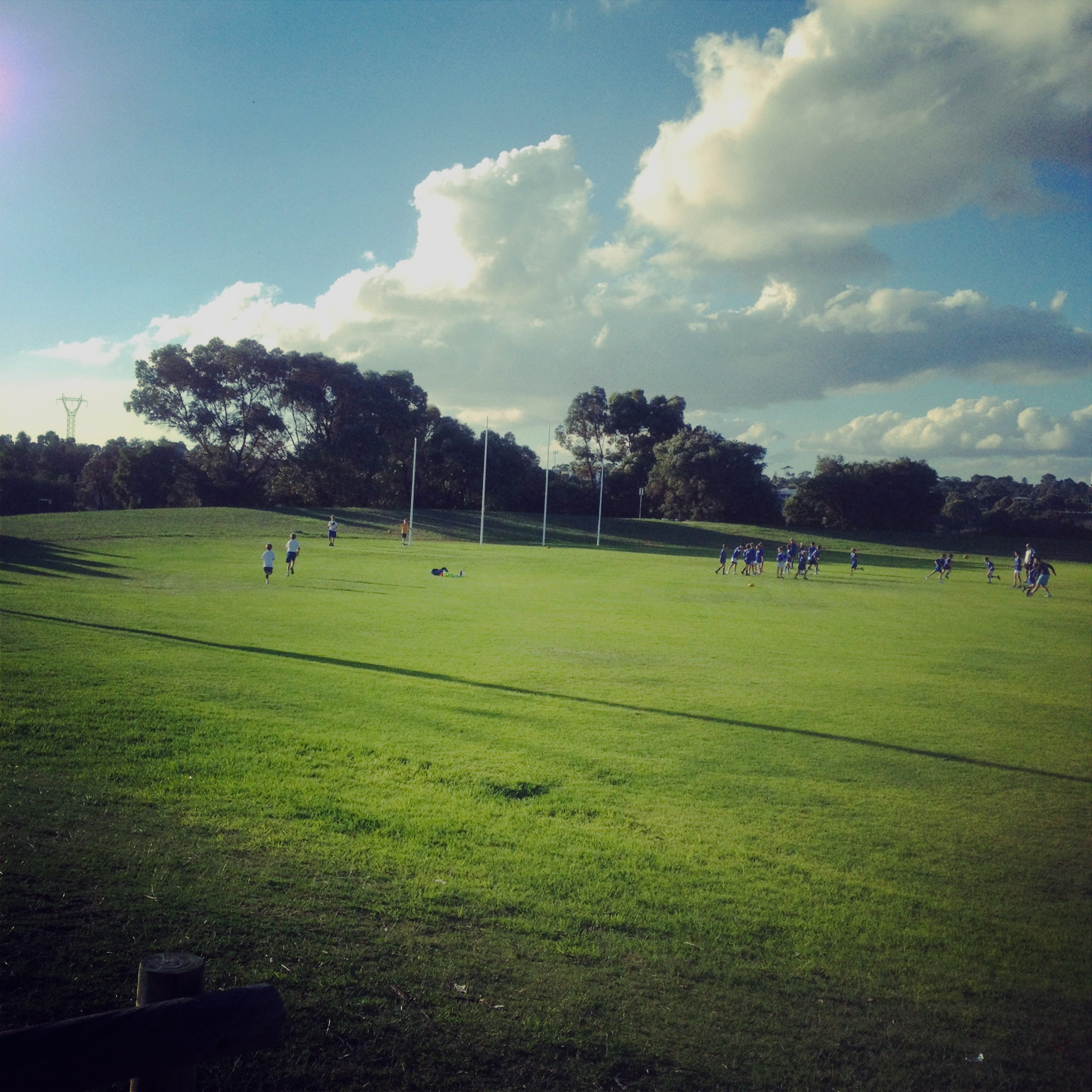
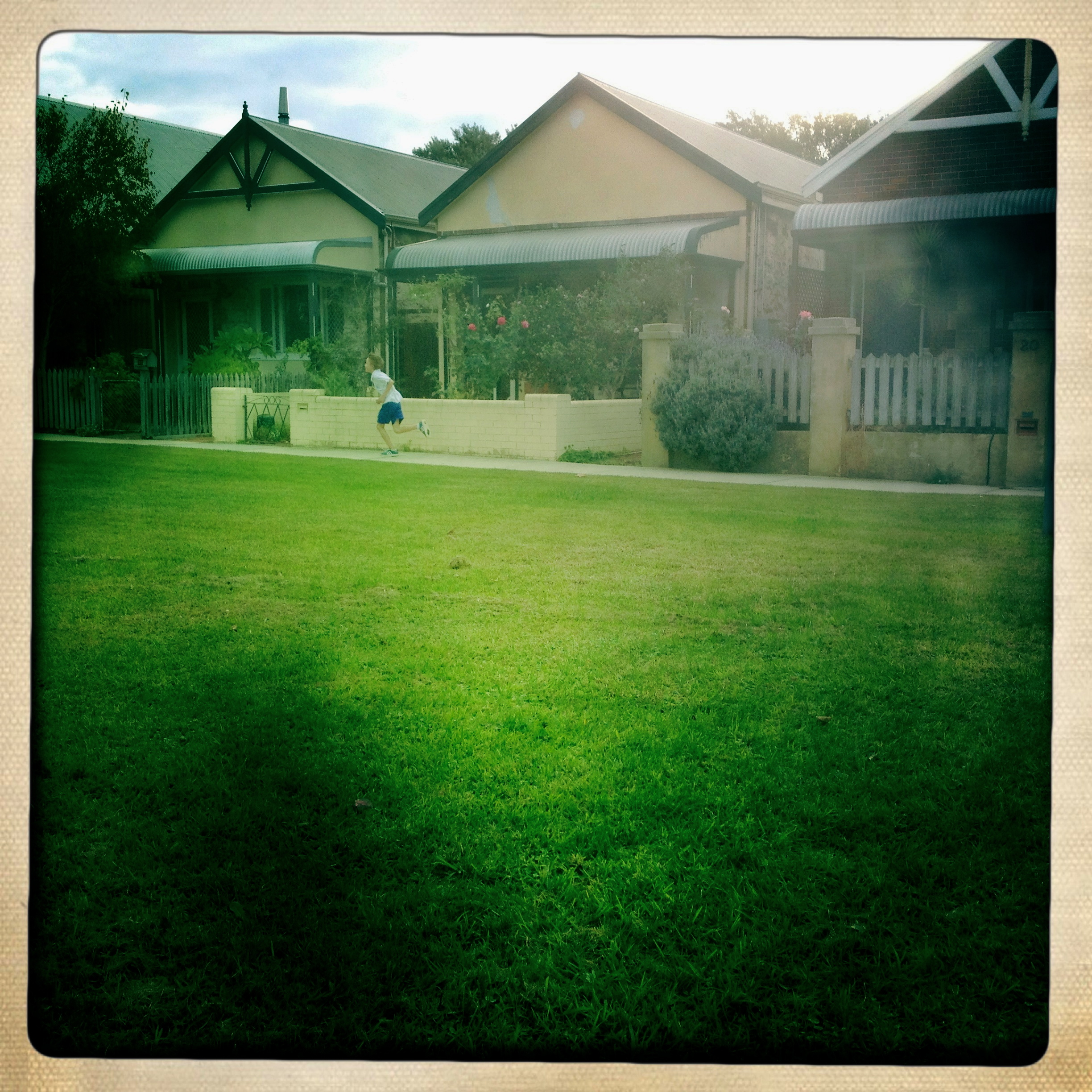
We live on a dead-end. At the end of the road is a park. Three federation workers cottages, built-in 1905, border the grassy reserve where the council has planted paper barks, and then tried to kill them repeatedly by ring barking their base with rampant whipper snippering. They struggle on. The houses have seen many young lives grow within. The wide jarrah boards of the hallways have been indoor cricket pitches. The verandahs have been taken off and put back on again. There is a limestone wall and beyond that the playing fields. There are drunks and homeless, dog walkers and legitimate park users. Over the years the park has seen a lot too – a murder even and much fornication. But we have the mown lawn in front of our houses mostly to ourselves. It is the playground of our children and our hounds. Murphy snorts amongst the fallen fig tree leaves. In the winter I find the last of the sun and sit in it while Jasper kicks the football to himself. The paper barks are his goal posts. He is Ablett, Ballantyne, Betts. Always kicking the winning goal in the dying seconds of the game.

We are awaiting the arrival of other children back from school. Keep a look out Mum, Jasper suggests to me. They will be meandering slowly down the hill.

For the children of our neighbours have become a tribe. Three boys and three girls, including a baby who knows not what she is in for yet.

We are the neighbours. Four couples. Some are nudging forty, others closer to fifty. We all work but some like it less, and do as little as possible. There seems a lot of time for ukulele, banjo, Mad Men, coffee bean roasting, Breaking Bad, foreign language lessons, Pilates class, cervical disc extrusion surgery, banana bread making, vegetable growing and the deep and discerning discussion of the pros and cons of all of the above. At the end of the weekend we converge in the shared space of the red cement driveway. The last house on Shuffrey is part of our tribe. In its front yard it grows the vegetables. Corn has been replaced by Broad Beans. In the summer the large Lemon Scented gum provides shade. Now we seek out the winter sun and try to stay out of the wind. Men are pulled away from their cleaning car meditation and women emerge from the house. No-knead bread has been left to rise. A thermomix is making the béchamel sauce, without the need for stirring. School clothes are flapping on the lines. The mini has been detailed with stickers since her paint job. She now has her Mayfair title back above her bumper. The late seventies BMW 635 is being prettied for sale. The dogs are let out. Stan and Murph have some rambunctious play-fighting to do. I have returned from work in a strikingly unpolished and dirty Subaru. Sometimes there is tea and cake. More often there is beer and wine. A high chair in the driveway; and the baby can be fed spag bog here too.

Sally is arriving home after the young girls’ ballet class. From the cavernous insides of a Prado peel two giggling soft pink prima ballerinas. They have ballet flats and leotards and each has a sparkle on their cheek for their good pas de deux today. Marshmallow pink tutus. Their different shades of blonde are pulled back into identical pony tails. Boys erupt from around the side of the house. They have shooting equipment. Numerous Nerfs. Jasper is the eldest of the tribe, at ten years old, and the ages flow down from there. It is as if he has five younger siblings. He has a younger brother, three years below, and then the twin sisters and another younger brother and finally the baby, crawling. Jasper is the one making up the games, climbing the walls, jettisoning the missiles, putting the tennis racket on the car port roof. The next boy is not far behind. The girls form a tight bond. They like to draw and create. They like to change outfits and help their mothers. The boys are busy spying on them, hiding from them, escaping from them, teasing them, making them cry. The smallest boy, finger nails painted sky blue, would like to keep up with the bigger boys, but they are often too fast for him and sometimes he is left standing in the driveway, wondering which way they went, holding his well loved Tiger and pondering if perhaps he should play with the girls, who after all, are closer in age and not as quick. It is his dilemma.

For us – the parents of the single, oldest boy, we are gifted a bigger family. Jasper has siblings. Almost. He has someone to kick with, to boss, to look out for, to take care of, to be bossed by, to trade with, to be burdened by. He has someone under the duvet with him on the couch as they all watch Robots into the night. Someone snuggling up, someone pushing a bare foot into his ribs. It helps assuage the guilt over not providing him with siblings of his own. He has the neighbours…and the very best of dogs.

Crushing and Pressing

It is nearing the end of Autumn and the weather should be turning cold but it is Fremantle, Western Australia. The sun does not disappoint. We need the rain. We will have to wait. So in the mean time…

Lee has been out collecting olives. With the help of children and parents, the orchard at Booyeembarra has been raked. These trees are only a few years old. To think they can live for centuries, even thousands of years. Their trunks will become gnarled, their branches thick. For now they are mere babies, but already they are bountiful. Despite the sandy soil or perhaps because of it. The branches have been rattled and the olives have been collected in large, colourful plastic tubs. Kilos and kilos of them. Aubergine purple. Firm fleshed. Tips of green.

In the schoolyard they will be soaked in a large wheelbarrow filled with water. Children will sort the sticks and leaves from the olive fruit and, washed clean, they are poured into the crusher.

Taste if you dare; the raw olive is unbearably bitter. I bite into an olive. It has soft white flesh with a pale buttery look, but its flavour is acrid and foul. How the ancient civilizations decided something tasting as smooth and fine as olive oil could be extracted from something so utterly rank is a mystery.

From the community enter Pete – he who has an olive oil making machine. He brings it to the school and sets it up on the sun drenched bitumen. He has a bushman’s hat. And a big smile. He instructs the children on the process. He has taken time out of his life to volunteer at the school and, in his giving, he is getting too. Afterwards he says how much he had enjoyed the day, was heartened to see the children so enthralled in learning, and how the experience has made him feel the planet is in good hands. All this; just by being with the kids.

From John Curtin Secondary College two interested teachers have crossed the road to help. Perhaps it is a chance to be away from the pimple-faced teenagers and relax in the easiness of the bright-skinned pre teens. To less grunts. Where boys are still happier in shorts. Girls still content with tied blue ribbons in ponytails. No lip piercings or tongue studded students giving them hell. Here in the Stephanie Alexander Kitchen Garden project they are learning too. In the sun to boot. Everyone is keen to unravel the secret of the olive.

Encircling the old cement troughs the children huddle around to hear how it’s done. The boys are perched on the window ledge peering down into the small vat. They are all eager to see what the small machine can do. They jostle and push to keep their space. They are jammed up close to one another. There is no personal space. It could be a nit field day. First the washed olives will be crushed, seeds and all, by the grinding machine. Like gravel in a mixer. It is noisy. The resultant pulp is given a tasting. Pete encourages everyone to have a try and cheerfully they do. Ohh man. Spitting. Screwed up faces. Gross. Next, the resultant paste must be mixed for forty minutes. This malaxing the paste, allows the small oil droplets to combine to form bigger droplets and is an indispensable phase. Waiting must be learned too. And outside in the sun with your mates, it is not a bad thing to do. Good things take time. Creating requires patience. Next the pulp is pressed, squeezed till its oil is set free. It is a slow process. The children imagine doing it by hand as once it must have been done. In large containers this liquid is then left to settle and to the surface rises the oil. Green and golden. This is scooped off by the spoonful and tipped into the coffee filter paper lined-funnels to collect the first press oil drip by slow drip. Into brown glass bottles the first spoonfuls of oil slowly collect. Maybe at the next kitchen garden the oil they use will be the one they have crushed and pressed today.

Okay so it isn’t fast and it isn’t easy, but it is completely magical. The oil came from the inedible tasting olive collected free from a park down the road and washed only an hour or so before.

Last week’s gardening crew is in the kitchen making the simple pasta that will be eaten for lunch. Today it is Linguine with lemon, basil leaves and Parmesan. They have zested and grated and squeezed. They have been surprised by the deliciousness of a combination of simple, peasant ingredients. It is earthy. It is fresh. Of course olive oil stars here too.

Then again seated at the long table, the sun ever-present, elbows tucked at their sides, more because of the tight confines than the request for good manners, linguine is eaten and olive oil runs down chins…


Stephanie Alexander Kitchen Garden

This is my first day as a parent helper in the Primary School Stephanie Alexander Kitchen Garden project. I have signed the declaration assuring the school I have no criminal convictions against children. I am allowed in their vicinity. I arrive early. Sun is flooding the north facing verandah and striking the stainless steel bench tops. I read from the white board the menu for today. I am thrilled to think this can happen at school.

Lee is in charge. First names are the norm in the kitchen. We are three mothers and the school Chaplin – about to instruct 29 or so children from the grade 5/6 class on how to get the meal on the table. Jasper is in the group but I can sense he wishes his mother was not volunteering. I remember the embarrassment I felt at my mother signalling across to me when she was on canteen. I remember wishing I could sink through the bitumen to not have her see me and blow me kisses. Luckily for both of us he is not assigned to my group. The menu consists of soda bread, green salad with fennel, broccoli and potato soup, and for dessert, apple sponge pudding.

The kitchen bench has a wicker tray overflowing with the fresh produce. Wonderfully green and fragrant. Fennel bulbs will be shaved with a mandolin slicer. Something even I am afraid of. More greens than most kids see in a week. As yet the produce isn’t grown from the school garden but purchased from the Fremantle Markets. Behind the kitchen, the elaborate garden beds constructed from limestone have been completed and a small section of the class will be assigned to work in it, while the others cook. Then at the end we will all come back together to eat.

The long narrow kitchen has four workstations, colour coded.  The deceptively colourful plastic-looking scanpan knives are not plastic at all and are indeed very sharp. Lucky their first lesson is in how to chop safely. Part of me, that overly anxious bit, imagines cut fingers, bleeding hands, burnt skin, scalds…There is a lesson for mothers here too. One helper will be assigned to work with 5-6 children on one dish.  So in effect there are little hives of kitchen activity huddled around each workstation. Someone has never peeled the tight brown paper-like skin of an onion before. For the first time a girl realises, with tears in her eyes, why she sees her mother crying at the sink whenever she slices onions.

I have been given the job of the soda bread. I have six boys. One makes pizza dough at home. One is keen to do the weighing of the flour. We divide into two groups of three and a couple go off to bring back to our area the utensils we need. You need to know what a sifter is. You need to bring back baking trays and baking paper. Can someone get the bicarb soda? What about the salt? There is commotion. But it is good commotion. A bustle of activity, of sorting how we will do this and who will do what. There is excitement at the idea of producing edible stuff.

For a good while we cannot work the electronic scales to weigh the required 500 grams of flour, until a teacher’s assistant goes off to get an old-fashioned scale from the classroom. Pushing the buttons less often may have helped.  Eventually we have two bowls of 500g flour, 2 tsp. of bicarb and 1 tsp. of salt and the boys have sifted the dry ingredients together. Get your hands in it, I suggest. They are amazed at the texture of the flour. It’s so soft. Do you remember the first time you felt flour? It is finer than sand. It is light like air. It is clean. Now we need 400mls of buttermilk. Ewh it stinks, says one. Make a well and pour it in and then mix. What with? Your fingers. Get in there. That is my instruction. It is a god-awful mess of sticky goo. They have their hands in it and they have almost as much on their hands as in the bowl. There is laughter. There is flour. How this goop will turn into bread is something none of us can believe is possible. But somehow two loaves are constructed. They are very different in consistency and look despite the supposed measuring. They go into a hot oven and then the boys must clean up.

This is new to them. They need a bit of help to work out how to get the caked on flour mixture off the bench. Wetting a cloth is not something they have done before, it seems. They need prodding to wash the bowls. Come back here. This isn’t clean. But the mothers are not to do it.

There is something quite liberating about standing back. Lee has instructed us that it is their job to do the cooking and the cleaning. We are simply their guides. We can leave it to them. Some are setting the long table outside with the cups and plates and bowls. Others are filling jugs of water. Others are still working on their dishes. I look across at Jasper, on task at the  apple sponge making. He has a navy blue apron on. His hair stands on end. He catches me looking and smiles despite himself. A group of three girls stand around the saucepan of soup, each with a wooden spoon watching it cook.

Our soda bread slowly transforms itself from a pile of gloopy slop to a browning rustic loaf. The kitchen now has an aroma; of bakery, of country kitchen, of Grandma’s. The boys are outside and are called back to come check on their loaf; to tap its brown underside and hear whether it sounds hollow. We all agree it is done. It has been some kind of magic. It must be cut while it is hot and it is a difficult job for the boy who does it, but he manages and carries a board of steaming bread outside to the long table.

Lee serves the soup. They love their food. The food they cooked. They love the compliments their friends are giving about their part of the meal. You can see a sense of pride and achievement for something created and then enjoyed as a group. The boys are eating green leaves and saying  – leave us some salad! Some people want more soup. Everyone wants the dessert. It is sooo yummy. It is a small but delicious meal and healthy too.

One group is also assigned the cleanup but everyone must deliver their own used bowls and utensils back to the kitchen and help stack the dirty dishes. The dishwasher is used for almost all of the washing up and the job is over quickly and the kitchen spanking again ready for the next group.

There is time for a cup of tea and then the Year 7 group will arrive and we will make it all again.

And what have the children learned? They have learned to work cooperatively, to create a dish that from its raw ingredients is nothing like the end result. It is chemistry at work. It is biology. It is maths. They have learned about healthy eating and even some table manners. They have talked about the memories that the sharing of special food evokes. They have learned to get their hands dirty and then to clean up again. It is culture and it is fun. Perhaps it will create a happy memory of childhood that later an adult can remember; and what could be better than that?


Gorgeous Boys into Good Men

It is Tuesday afternoon in the middle of May. Time to collect the boy from the entrance of the Fremantle Arts Centre where we meet after school. I am always early and I look at my phone while I wait for him. The Virginia creeper has turned crimson. I take pictures with my phone of clouds and edit them with Instagram. The dog waits patiently too, on the warm bitumen, moving only if he has sat on a trail of ants. His nose is wet and twitching. Waiting for the smell of his boy. Sometimes he is tricked by the shape of another person coming down the hill and he gets up, prematurely, and starts wagging his bum. Then he realises it is not his human and flops back down. Then the familiar slap of his sand shoe. Then maybe the whiff that only a dog can sense. The smell of him hits the Murphy’s nose and the wag becomes sincere.

“How was the test?” It was NAPLAN today. Persuasive writing. The question was; Why cook at home? He was happy with his response. His kicker was that if you got really good at cooking you could become a contestant on Masterchef.

We have football. “Get your boots on.” I have his mouth guard. I have his things ready. It’s what I do.

After footy he is hot, even though it is getting dark and he has lots of bare skin. We arrive home and he is going to go over to the neighbour’s because I am off to a talk by Celia Lashlie; On Turning Gorgeous Boys into Good Men. From our car parking spot outside our fence we can see three dodgy types by the stairs that lead onto the park. Jasper says, Drunks Mum. My neighbour will give Jasper dinner and then Graham will pick him up when he finishes work at 7pm. Jasper is eager to get to the neighbour’s and play with his mate and wants to go over straight from the car. He wants to dump his boots on me. He wants me to hand him the house keys so he can race ahead. But I want him to wait for me, so I can lock my car. After all the drunks might be watching. Also I want him to put more clothes on. “No you cannot go over in your footy shorts and that top. Come inside and change into long pants and a wind cheater.” We have our familiar to and fro. He gets shitty with me. I persist.

It is so mundane and so well-known to mothers. We hate the sound of ourselves, but can’t turn ourselves off. I am thinking why can’t you just do what I want you to do.

He does some storming around but changes into jeans and a sweater and is over the fence and at the neighbour’s. Barely a good-bye. I think, well at least he is warm. I have half an hour before I need to leave to go to the talk. Long enough to heat some left-overs in the microwave, switch off the lounge room light and sit but the window and watch the drunks on the steps by the park. They are twenty feet away but it is as if they are in the next room. Hey, she yells. I sit in the dark with my Malaysian curry left-over on my lap and watch them while I eat. I am forking food into my mouth, and peering from my blackness through slatted cedar blinds, into the growing dusk and cooling night at three drunks on the steps, as if I am watching the television. Hey. A man sits half way up the limestone steps and in front of his splayed legs on the step below is a woman. Prancing about in front of them is a younger man. He is spider-like – perhaps he has sniffed something. He is leaner and taller than the other two. He wears black jeans and a singlet top. He could be in his late teens. The man seated is in a red t-shirt and he has pale skin and a three-day growth. He looks mid thirties. The woman is of an indiscriminate age – somewhere around her twenties or thirties. She has smudgy makeup and a pudgy torso. Her body has lost its youthfulness. She wears black leggings and a low-cut black top that reveals her cleavage and sagging breasts. Hey. The man she has wedged into has his hand across her bare front but is not really fondling her, more just drawing her back into him. Making sure she stays put. She cranes her neck back and around and they start kissing while the lanky man drains some liquid into the funnel of his mouth from the silver bladder from a cask of wine held high. Red shirt is sucking the face of the woman and lets his hand with the cigarette hang down near his side. Lanky man comes round to the base of the steps and eases the cigarette from the hand of red shirt. The couple break off from kissing and yell at one another. Hey. They have a phone between them and are holding it out from them and looking at it. I guess they’re taking a photo. The woman has a green and black checked cap on. Lanky man takes it from her head and she yells at him. Hey. Some tinny music plays from the phone and lanky man dances around in front of them. The couple go back to kissing. Lanky man squats down and watches them, swaying a little on his haunches.

I have to go.

It is getting dark.

The talk is at a posh boys school, full of other western suburb parents of teenage boys. Most of the women are blonde.

Celia Lashlie tells the audience of would-be perfect parents that we need to let go. Over two hours of stories she tells us that we need to help boys find their own intuition and learn to access their own feelings by not riding over the top of them with our mother-need to fill in the empty space. If we ask them a question about how they feel we might need to wait two days for them to answer it, but leave the space for silence. There was a lot of knowing laughter as she held a mirror up to us mothers. Descriptions of women nagging men to put out the rubbish could easily have been from my house. In our desire and want to keep our boys safe we take away their ability to look after themselves. She told the fathers that the boys would walk over broken glass to have themselves seen by them. Fathers; see your boys. She told mothers that we stood atop a box of love. As she illuminated us to ourselves there was that spine tingling feeling and that moist eyed awareness that what she spoke of was wise and true.

When I got home the drunks had gone. The steps were empty and cold, the silver bag deflated and left. I wondered about the parents of the drunks. And who do they parent now?


Fairy Bread

Even though Jasper is turning ten and has grown up in so many ways, he still wants fairy bread for his birthday party.

As he is leaving out the door, on his way to school, I ask him what food he wants me to make for the party.

“Chips. Chocolate crackles. Fairy bread.”

What about the party bags?

“Sour snakes,” comes the reply. Has he got product in his hair? Is that a swagger?

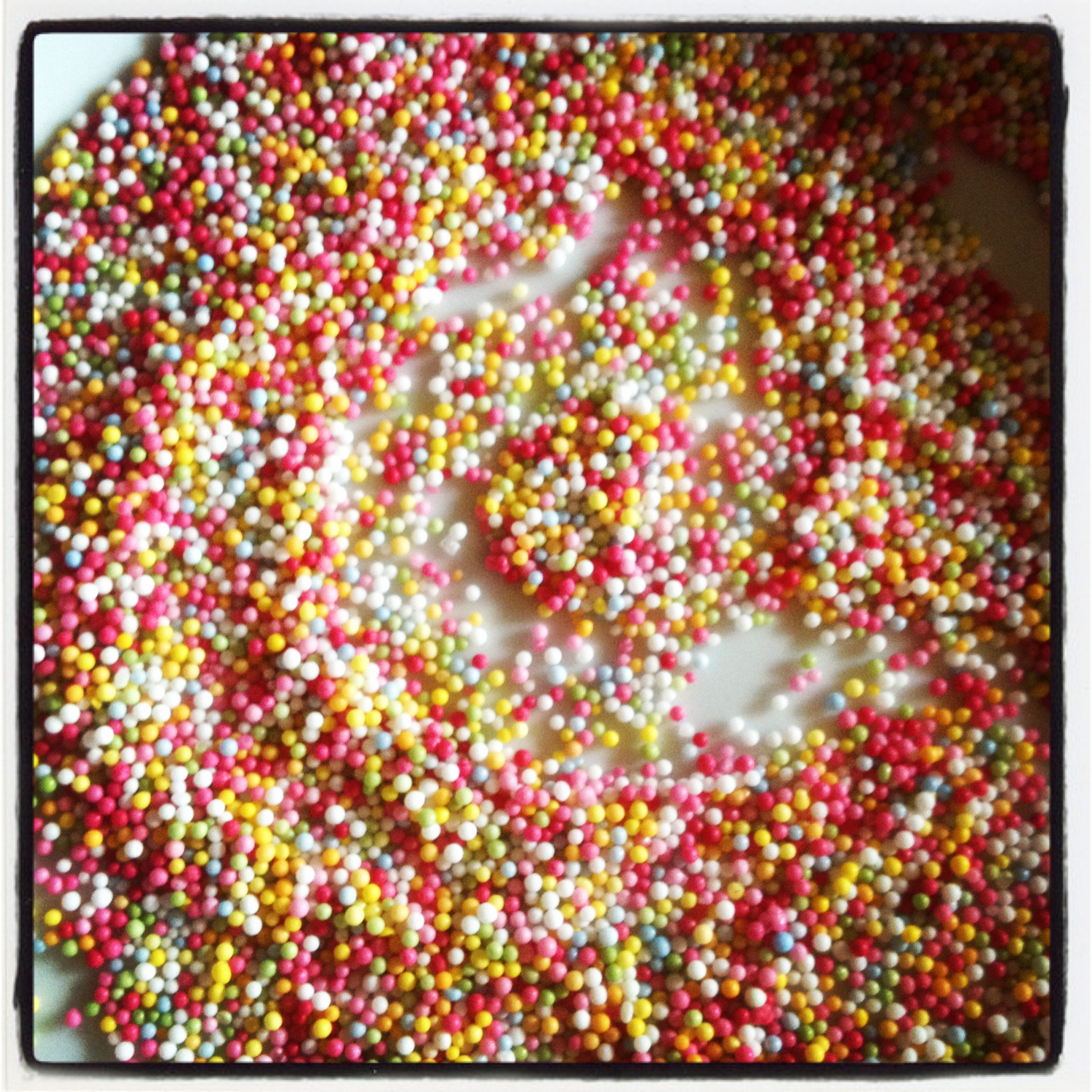
Fairy bread must be made with the whitest of breads. It has no nutritional value. Zilch. It is exceedingly bad for you. It must take years to travel through your intestine, so absolutely free it is of fibre. The bread must be buttered, never spread with margarine, evenly to the crusts (which can be cut off later least the children ingest any roughage whatsoever) and then the bread is tipped over into a dinner plate of hundreds and thousands. The little bits of colourful sugar glue themselves in a single, even layer to the bread, like miniature eggs that only bliss bombs could emerge from, and voila the creation is complete. Sugar on air.

Watch those skateboards fly after that consumption.

It makes me think of my favourite party foods. It was not Fairy Bread. Perhaps my longing was most for the Butterfly cakes that my mother made. Melt in the mouth cup cakes, their tops cut off and dissected to make two wings that sat atop a splodge of fresh cream and finally the whole thing dusted with icing sugar. Even small, we could get them into our mouths in one enormous bite.

Do you remember your favourite childhood party food….


Easter

I make my traditional Norwegian Buns. They are oozing with melted butter and cinnamon sugar. They are Nigella’s – queen of sweets. It is a two-hour job, begun before the house is fully awake. There is the kneading, the rising, the rolling, the rising again and finally the baking. The rings on my fingers are glued to my skin with sticky dough. The stainless steel taps get coated with the stuff. Unctuous. The dishcloth becomes unusable. It is usually a messy affair with lots of flour across the floor but this year it has been better. Uncle Dave comments, Not So Messy, ah. The dog is doing an excellent job, tongue to the floor.

Easter is not a church-thing in our house. Graham barely knows Good Friday is the day of the crucifixion and Easter Sunday is when He rose again. Dead three days, Not bad, says Jasper. How is it that Graham can get the days confused? He is poorly educated in religion. And so too is our son. Neither do we do Eggs or Bunnys. What we do is watch the seasons change. Normally Easter signals the start of cooler nights. There might even be rain. Dew in the morning. A cardigan is retrieved from deep in the drawer. The leaves on the Robinia are dropping. The Western Corellas head North. The dog can wear his “doggy jammies” when he is put out at night. The fan goes into the attic, and down comes the gas heater and the donnas. The sun is still shining, but its heat is toned down. The roses will need pruning soon. The dome of blue is at its most brilliant. Best of all the wind has gone. Still, crisp air. A leaf let loose from its twig, free-falls straight down.

This year the boy is injured. A buckle fracture of the distal radius means he has a blue half-cast on his arm. It is cleverly made by Amanda the OT out in the burbs, with an electric frying-pan full of hot water and a hot air-blower. It has been three days since he tripped in the playground on a ball and came down on his hand. Three days since the phone call from the school where the assistant teacher told me, “he has washed his face and has ice on the injury, but still he would like his mother to come pick him up.” The green stick fracture is barely visible on X-ray. A mere blip on the periosteum. On the third day; the throbbing has gone away and now it is just inconvenient. Or else part of his make-believe armour in a game of Iron Man vs Batman. Reborn as Superhero. Alas; no skateboarding, no Footy, no tennis.

The neighbours have gone South. The houses around us are empty and quiet. Hollow of people. The clothes lines are nude. The bins are already out on the street, waiting. The mini has its car cover on.

My mother telephones in the evening; I’m in Agony. Agony. You must do something.

Her indwelling urinary catheter has blocked. Again. Unexpected. It is something that is happening to her more frequently these days. It is supposed to only need changing every six weeks, but lately it decides it will stop working somewhere around the four-week mark. When it blocks acutely it means her shrivelled bladder, the size of a walnut-shell, is asked to stretch. It doesn’t like it, so unused to being a container. The small muscular organ is not accustomed to filling. Its nerve endings fire off, indignant. It gives her great pain, as her ungenerous bladder expands, and yet the staff at the nursing home are slow to swing into action and get the thing changed. So she rings me. This can’t happen again, she says.

I ring the nursing home but no one is answering the nursing station phone. Perhaps they are eating Easter Eggs. Sucking the chocolate between their teeth.

She rings back. It’s sorted. The catheter has been changed. What a relief. I can hear the return of perkiness. A nurse appeared with a trolley. Hands washed; sterile gloves snapped on. Once the task has been started it is over in three minutes; a nurse has whipped out the old one and threaded up the new. The bag has filled. The bladder has wilted and wizened, back to its peach-stone pip-size. Huddled down into its pelvic bed. Back to slumber.

But it will block again. It is the nature of the thing. The bladder is irritated by the catheter sitting in its lumen and a biofilm (a nice word for gunk) forms around the eyelet of the catheter. Then the drainage gets poor and eventually it blocks, and no urine can drain away into the bag. The catheter needs to be changed for a new one. But it is only a matter of time before that too is coated with the cellular and inflammatory crud that plugs the catheter opening. Bladder failure is what she has. And there is nothing medicine can do to replicate the ingenious functioning of a normal, healthy bladder.

But nurses changing it quickly, when an old woman cries out, I’m in agony, might be a good place to start.


Doing Tax…

My tax return is late. Horrendously so. And so the later it gets the more I want to put it off. My desk is a mountain of papers and receipts. Looking through the bank statements that I have printed off the computer I am seeing entries that remind me of a year ago. In my head I have trouble trying to recall whether my father was alive before or after the end of the financial year. And does it matter? I have my father’s deceased estate stuff to consider too. I have a file of his papers where he made notations in a demented way on bills. Squiggly question marks near amounts owing. PAID writ-large with a flourish beneath it. Success at the post office. Everything paid through the post office. The old person’s only way to pay.

I imagine him in the queue, socks to his knees, pants too high. He is an impatient man and the queue bothers him. Waiting has never been easy for him. Like Blackboard in Mr squiggle. Muttering beneath his breath Hurry up. Not that he has other errands to run on a shopping day. This is the big one. The paying of bills. Finally at the counter, he softens because he needs the assistant’s help. He could easily be screwed. But they know him. He has been coming since the post office became the place where old people pay their bills. When they no longer sent cheques.

He forgets to pay the HBF bill and the health insurance is unpaid. This means that when my mother ends up in hospital because of a turn (she simply sank to the floor like a puppet with its strings cut in the very same Post Office) and she is asked whether she has private insurance and she answers yes and they divert her to the private hospital, she is turned around again because they are Not Financial. When I attempt to sort this fiasco out, over the phone, the insurance company will not tell me how much they owe because of privacy concerns. When I tell the I am a day away, down South on holidays, they are unmoved. I just want to pay their bill with my credit card over the phone but they cannot release the information I need.

My father is driving to the wrong hospital to visit my mother. He is eating pan-fried fish with sliced banana for dinner. The neighbours are looking in on him. He is still in the garden till the sun is going down.

My mother yo-yos between the hospitals till her insurance is sorted out. The private hospital won’t take her if she’s not insured and the public hospital wants her to go to the private hospital if she has insurance as she claims to have. Daddy’s been a member for fifty years, she says.

I hate the insurance company and tell them so when they inquire at the end of our heated phone conversation as to how well they have helped me today. They promise to pass on my complaint but I never hear from them. I hate you, do you hear me. Hate you.

Back in the city, I realise it is time to be their nominee and take in the form to prove I am their enduring power of attorney. Child becomes Parent.

While my mother is in the hospital the neighbours begin a roster system whereby the evening meals are delivered to my father. He is eating well and loves the attention. Evey afternoon he drives to see her. On one of these occasions he rams another car in the hospital car park but ignores it. A bystander sees the white Subaru Forrester crawl away and takes his number down. He gives it to the owner of the damaged car. Later Dad gets a summons about the accident and it becomes clear that he no longer even has a current licence. It too has been unpaid.

Sometimes he stood in the queue and then when he neared the front of it he turned around and walked out.

Now I am doing his tax. In the blue folder with all its pockets I push out the rectangles of paper with his handwriting on them and replace them with my own headings. I notice the poor spelling. The new labels make more sense to me. The last folder has a pocket I label Death. In it I put his funeral bill and wonder if he can tax deduct it. I think of the more expensive Enviro coffin we got him, knowing he was a believer in recycling. But a tax deduction; now that would really please him.

Snezana

She is a new cleaner. Her name is unpronounceable to my mother. It is the word for “snow woman” she tells us. She says, making a gesture at her neck, that her country gets many feet of snow. Snezana – with a saucer of a moon over the z. But she is blonde and so the name makes sense and I can imagine it sticking for my mother. You can call her Snow. She squats down next to my mother’s chair to greet her. When she has emptied the bins and sprayed the bathroom sink and has gone my mother says, “It’s important to remember their names.” She didn’t say that it humanised her to them. But that is what she meant. If she remembers their names it shows them she is not like all the others, who don’t recall their own name, let alone someone else’s. Maybe they will answer her bell, when she rings it, believing she really does need something. Maybe, if she calls them by their names, they will treat her nice. Like she is their captive and she is softening them up, making ready her escape when their backs are turned.

Mother tells me they all have Alzheimers here. And she is right about a lot of them. One man lights up when he sees Jasper and speaks to him in an excited foreign language. He is always in the corridor, with his slippers on, his hands clasped behind his back. He loiters about the intersection of the corridors as if he is on a street corner waiting to cross a busy road. Sometimes he sings softly to himself. He has large, unblinking eyes.

My mother’s nails are beginning to deteriorate. They were strong and clean most of her life. Despite gardening. Often they were expertly painted a soft pink. They are the long slender fingers of a piano player. Is it a sign that she is deficient? She eats two bananas a day. Egg sandwiches every night. But she does tip the protein drink down the toilet. Sometimes I do it for her.

I have to cut the right hand for her. She can do the left herself. I don’t like to do it because it is difficult. The nails seem to shatter as they are cut and she makes out like I am cutting her when I am not. Careful careful. Today she has a reddening at the side of her finger. I go out into the corridor and find a carer walking past. One who cares. She is svelte. Jane was a dancer. She moves like someone coming off stage. She calls the thing on my mother’s finger a whitlow. Mother winces at the cutting of the nail. Her hands are barnacled. Fixomul covers something that has recently bled. The hands don’t hold a pen well these days. They can’t seem to work the battery cage on the hearing aid. They can’t manoeuvre a hearing aid into the shell of her ear. They have lost their strength to do up a seat belt or turn on a tap. They have forgotten about buttons and zippers.

Dutch Doll

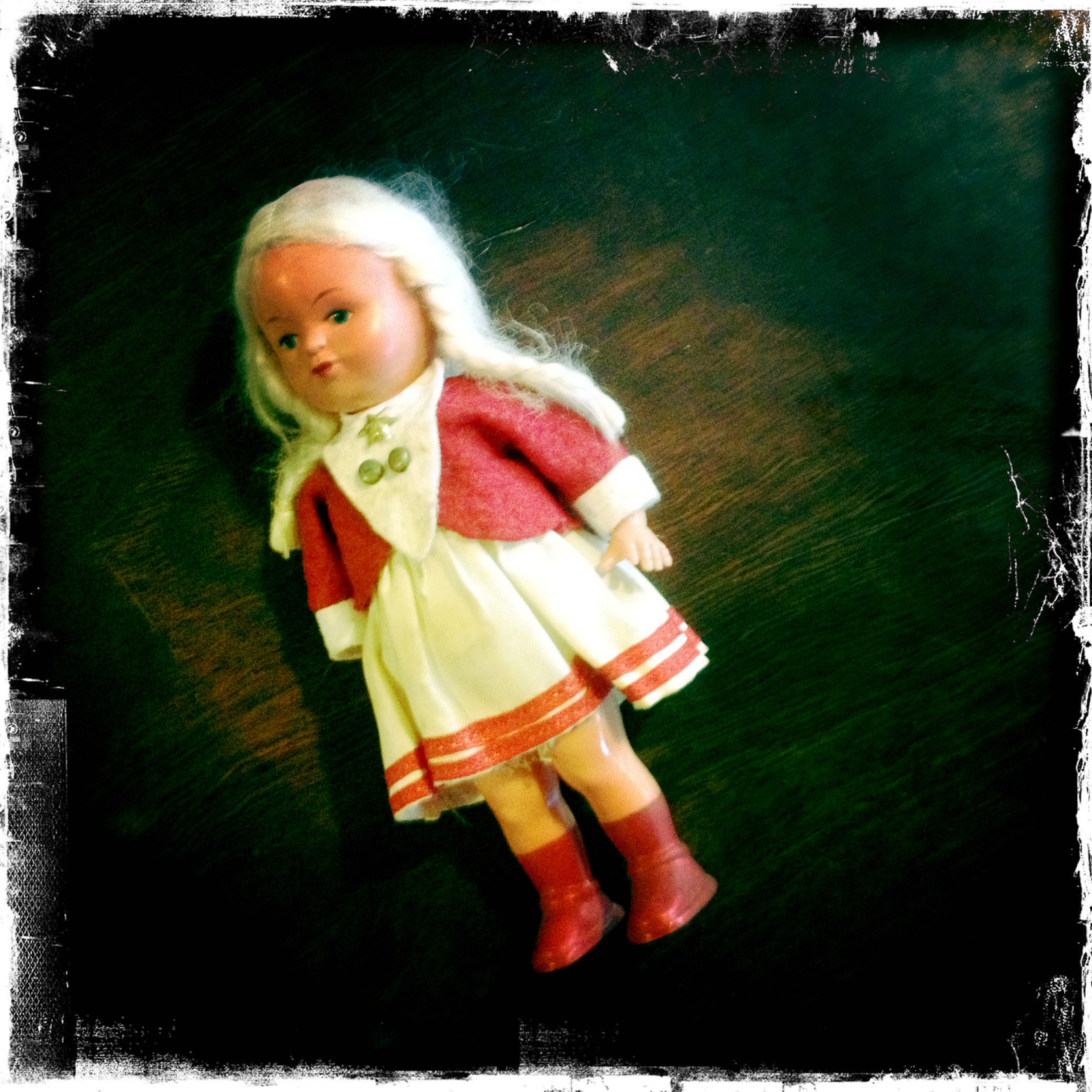
She has white blonde hair. Once she owned a red felt hat, but it has long gone. An arm is missing and a peg, for a wind-up key that no longer exists, pokes painfully from her moulded plastic spine. She has blue eyes and dainty painted lips. I cannot remember what movement or sound she made when her key was turned. How long did that part of her work? She was a precious thing. She stood on a shelf. She was to be looked at. Not fiddled with. In her red boots and her gauze undergarments. Standing looking out, plaits to her elbows.


Skateboarding Dude


Jasper’s collects the Lego mini figures. In fact he collects all sorts. This is why boys need pockets (and their mothers carry around bags with bits of Lego floating about in them) and when vacuuming there is the telltale rattle of a small something being sucked into the bag. Boys hoard. He has a crazy bone collection. He has football cards. He has a pile of rocks, a bucket of seashells, a booty of stick guns, a menagerie of plastic animals, a tall boy covered in stuffed toys and a “car drawer” filled with many, many Hot Wheels.

He has always liked figures that he can hold and play a make-believe game with. This is why the superhero guys were such a big hit. He has Superman, Batman, Green Lantern, Silver Surfer, Iron Man, Bad Iron man, Spider man, Bad Spider man, The Hulk, Flash and a few Wolverines. I could have left someone out. They are battle damaged, hardened through years of heavy playing. They have travelled up North, down South, across oceans in airplanes to distant lands. A favourite Batman has red splotches painted on him in an attempt to mimic blood. He has been through the wars. His cape is torn.

A new guy might give him many hours of satisfying play. Gradually the game will grow tired and the man stored away in the “man drawer.” But he is just resting awhile. Awaiting a new adversary. A new adventure.

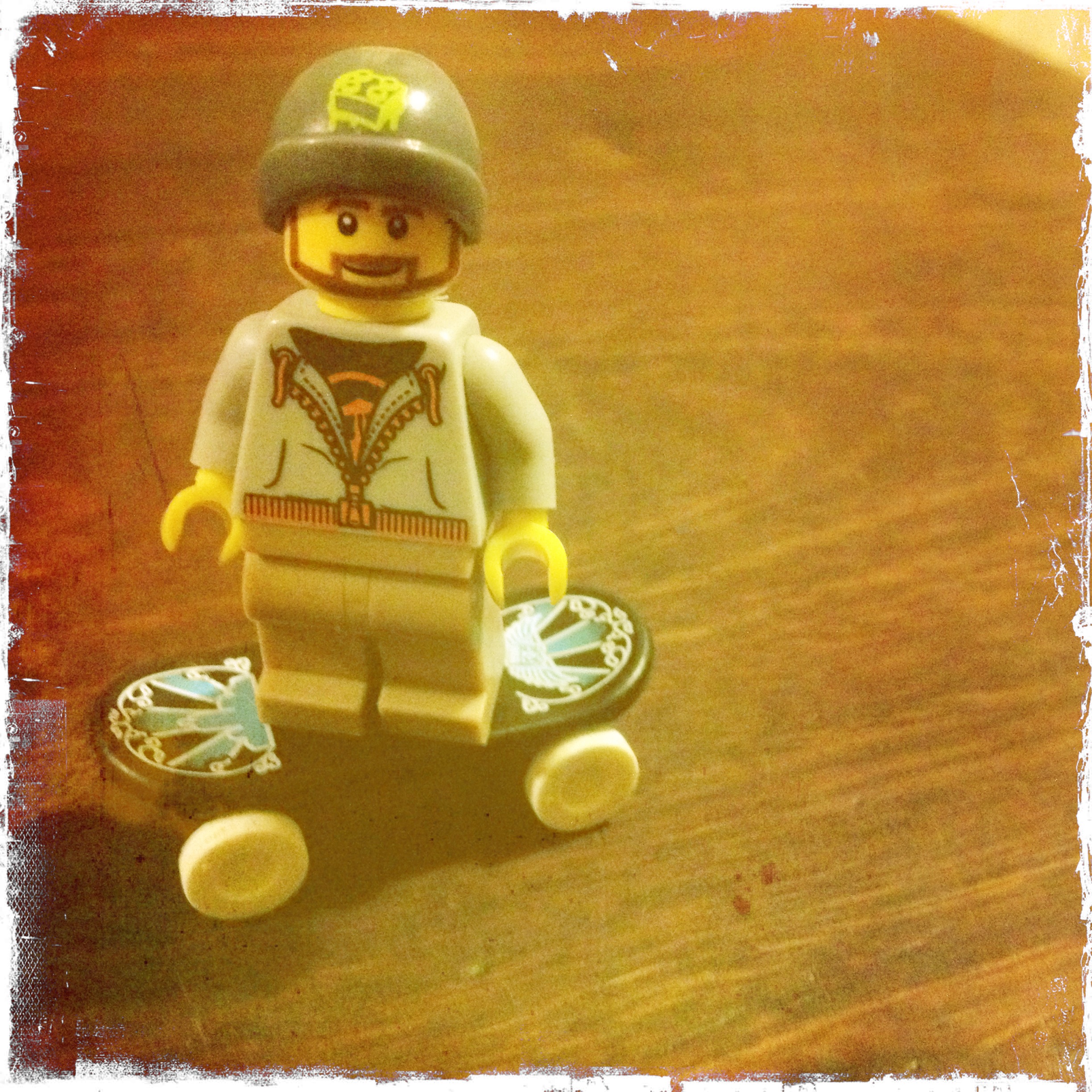
The Lego skateboarding dude has a different head when he arrives in the mail with the catalogue. Black rimmed glasses? He looks neither dudish or cool till he is sourced a new head with the appropriate hipster beard. Hoody zipper half undone to reveal black T shirt. Beanie.  Better, says Jasper. Let’s skate.