Doggy Dementia

winter

Just the other day I euthanised a pooch whose owner described him as having doggy dementia. She came in with him clutched to her. He was a sixteen-year-old little white fluffy who spent his days wandering the house, soiling himself and the floor, refusing to let anyone rid his coat of the tangled matts and deteriorating into a bundle of anxious quivering. She didn’t care that he stunk. She did care that he was in pain. If she could have admitted him to a nursing home for dogs maybe she would have. Maybe not. Recently she had had to go away and she’d left him with her sister. He’d not slept for three days.

Now I am reading Rebecca Mead’s absorbing article in The New Yorker about the advanced-dementia care at Beatitudes and I can’t help but think of the little white fluffy. Dogs get dementia too.

The director of education and research, Tena Alonzo, at the unusual and forward-thinking nursing home says, “All behaviour is communication.” With dogs it is even more so, since we never have a verbal language in common to begin with. We cannot ask them how they feel. To be a vet you must watch and listen. To know dogs is to observe and interpret their body language. To understand the demented human, body language needs to be read too. Alonzo gets the staff to practice interpreting non-verbal queues on each other, by having another staff member instruct them in a foreign language. She also gets the staff to brush one another’s teeth and to spoon feed each other – this is how you come to understand what it feels like to be the resident. The dedicated take to wearing adult diapers – to get a real sense of what life might be like for a dementia sufferer.

Alonzo says, “When you have dementia, we can’t change the way you think, but we can change the way you feel.” This might be true for dogs in distress too. We could always do with a little more empathy.

She describes how a black square of carpet at the entrance to the lift might stop a demented patient entering, since people with dementia have been shown to be unwilling to step onto such a black space, imagining it to be a hole. Reading this I thought – how like the cattle grid at the farm gate. Perhaps as we slide into dementia we are becoming more akin to animals. When Alonzo talks about her own old age – she says, “when I have dementia” knowing that cognitive decline comes to nearly all of us. Most of us will go there.

She says, “one of the things that create comfort for people who have trouble thinking is space. If you are too blocked in you feel frightened.” Think again of the animal that cage guards. Lunging and growling at anyone coming near, but as soon as the gate is opened and freedom is sensed, the animal can be handled.

When a patient can’t seemed to be helped with pain killers and distractions Alonzo says, “we’re going to try chocolate.” Hershey’s Kisses are a mainstay at the nursing home, because “it’s hard to feel very bad when there’s something tasty in your mouth.” We manipulate the behaviour of dogs with food rewards and lures too. Trainers and vets have long used the momentary pleasure of food to minimise distress. Keep feeding as nails are trimmed. Offer a popsicle coated in peanut butter to be licked while a coat is brushed. We can change a dog’s perception of something it is frightened of by repeated pairings of a food reward with the thing that is the dog’s monster. All the puppies I see for vaccination are injected, mostly without ever feeling the needle, as long as they are distracted by some tasty dog treat. As patients slip into deeper dementia it is as if the primitive structures of the brain take over. There is pleasure and pain. There is fear and anger. There is flight and fight. These core parts of the brain are similar across all animals so that in the end, when we are old and have lost our cognitive function, we are not so different from a frightened dog. Or horse, or cow. We may no longer be able to operate on a high intellectual level, but we still feel. Emotion lives on, sometimes stronger, unchecked, unleashed. Patients are described as “resisting care” when really they are like the dogs who are objecting to being restrained for grooming – they just want the man-handling to stop. In the nursing home the supply of pleasurable food helps avoid conflicts and makes people feel good, just as the only thing that could quell the white fluffy’s pacing was roast chicken from the corner store.

I think about how vets have learnt a lot from paediatric dentists. Today in the dentist’s there is no fear. It doesn’t even smell the same. Fuzzy green toys hang from the lights. Toys are handed out after the clean is done. The child’s dentist is so very different from what he was like when we were little. No white coat. Now they know how to distract and comfort rather than force and bully. The nursing home is changing too. It is no longer acceptable to bomb patients with antipsychotics (developed for schizophrenia) just to make them easier to handle for staff. Rather than becoming obtunded on Haloperidol, something as simple as Panadol may be all the patient needs to feel less pain and become more cooperative. It is better to lower the bed, so there is less harm in falling, than restrain people to their mattress. People need to maintain dignity, just as animals need to feel calm. It’s all about the kind of handling. You can take them gently by the hand and lead them or you can put a collar on them and pull. Which one do you do?

Just as humans are afflicted with dementia, our pets also suffer from cognitive decline. They seem to do the same things as our human relatives do. They mix day and night. Sundowning for dogs.They wander the corridors and holler for someone to help them. They don’t know where home is. They stand in corners. They forget who their relations are. They hear non-existent noises and bark at them. They are in pain.

Seeing others. Feeling like others. When we work well, at whatever we do, isn’t it because we recognise the emotion the other is feeling? Be it animal, be it human. We aren’t as different from other animals as some humans would like to think. Connectedness. When we strive to understand what another is feeling we make great steps to knowing ourselves.
 

Pollan in the kitchen…

fresh

Michael Pollan knows a thing or two about food. He has been writing about eating and the dilemmas of making food choices for some years. He has thought about the moral choices, the health choices and the political choices. But strangely, until recently, because he didn’t really cook that much, he forgot about the soul. Since reconnecting with the basics in his kitchen he has come full circle and discovered there is power and real creativity in cooking. Getting ingredients and making a meal from scratch anchored him to the planet and what the planet needs from its guardians. It gave him connection. We cannot simply keep taking.

In his latest book “Cooked” he writes, the single most important thing we could do as a family to improve our health and general well-being – was to cook. Something as simple as cooking for your family might also end up making the western world’s food system healthier and more sustainable too.

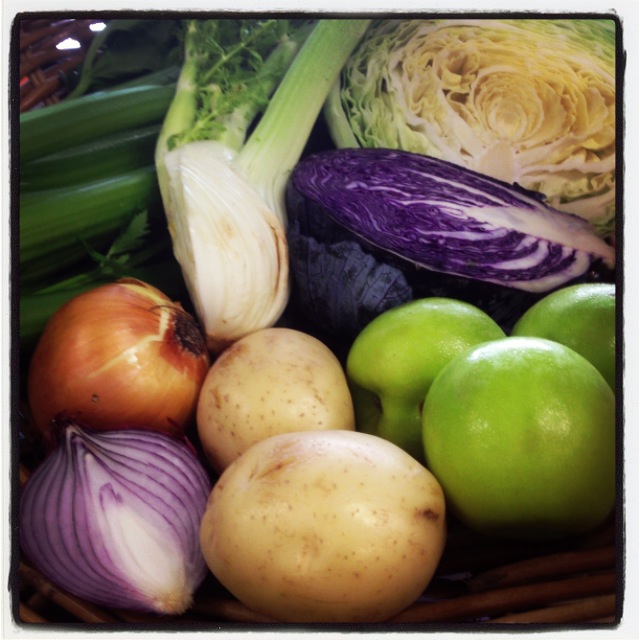
Wouldn’t Michael Pollan be impressed with the SAKGP. It would be right down his alley. In the kitchen today a child knew instantly that the white bulb with the fuzzy green top was fennel. And how come it smells like licorice? All senses alive. Unlike the six-year-old American children who, when asked by Jamie Oliver, what were the names of various common vegetables, stared blankly back at him, unable even to recognise a tomato from a potato. Their food comes packaged or frozen or wrapped in paper and delivered out through a hole in the wall and then wolfed down in the car.

The wonderful thing about the kitchen is the noise. Engaged and cooperative. Happy noise. It has been six weeks since this class cooked so there is a buzz in the air. The routines are a little rusty. Are you a Melting Moment or an Afghan? What group are you in? If you are in the garden this week we need to tend the worms. Children are busy. Some prefer the garden. Others want to cook. Some (believe it or not) are actually good at cleaning up. Some one grazes a knuckle with the grater. Yes, cooking is sharp. Stoves are hot. Onions sting your eyes. Swimmers goggles hang beside the bench for those who can’t take it.

A salad of winter vegetables is made from finely sliced cabbage, both green and purple, and apple and carrot. Then fennel too. The dressing is honey and mustard. But let’s not stop there. Let’s collect fresh herbs from our garden and pluck the leaves from the stems and add them too. Then we pound some pepitas in the stone mortar to add a crunch to the salad. Lets sprinkle it with poppy seeds.

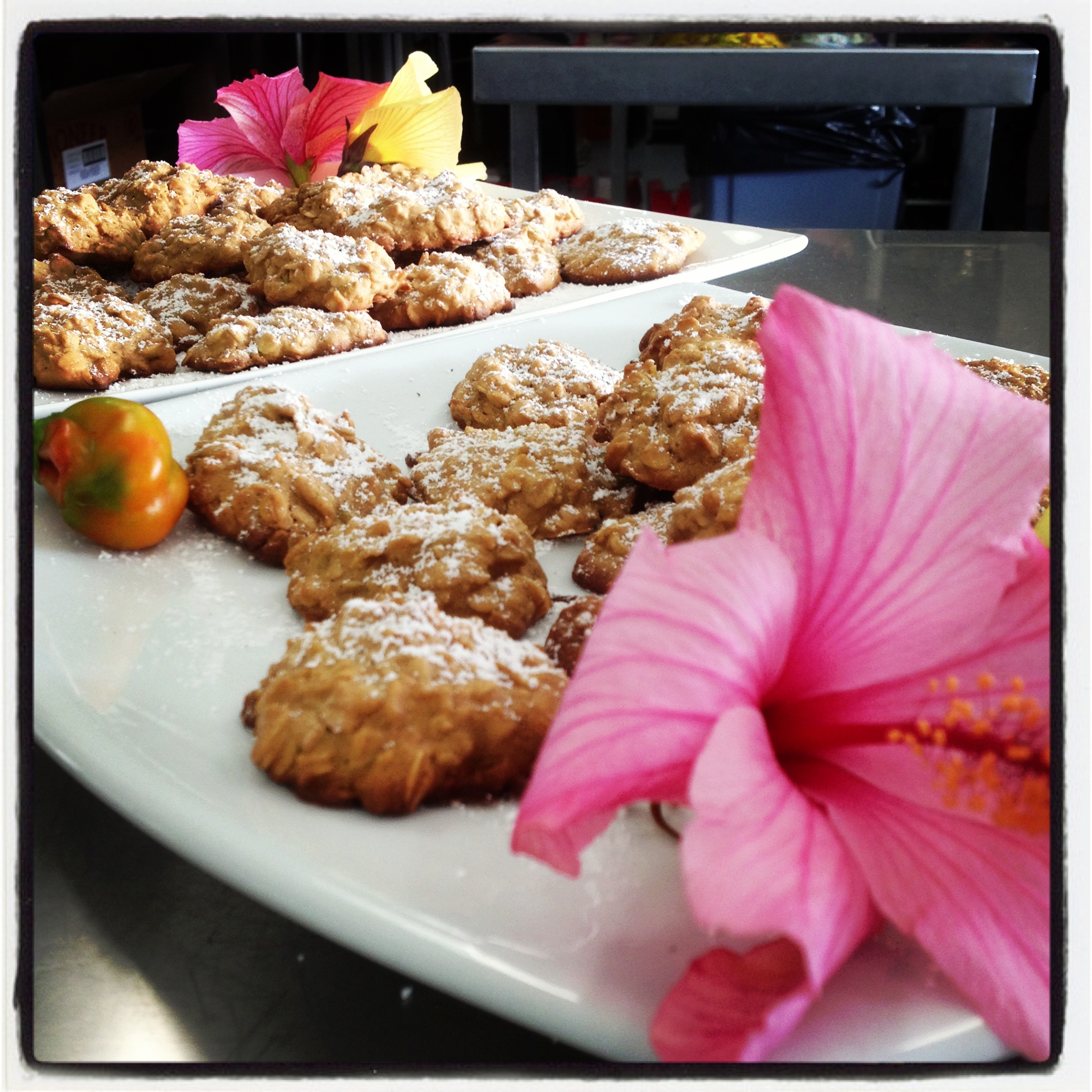
For afters are oatmeal biscuits with cinnamon and brown sugar. Cleaning up is to be done before a biscuit is taken and whisked away into the playground. The kitchen aid does the creaming of the butter and sugar. One boy thinks that because his home doesn’t have this machine he will be unable to replicate them. Just use your hands, assures Lee. Squish it. Let the butter come to room temperature. Then, just as if the butter and sugar were play dough – it will come out just the same. The mother agrees. She could never lift down the machine from a high cupboard when she was little and did the creaming with a wooden spoon. It can be done. And less washing up. Lick your fingers.

Back by the worm farm the boys are sifting through with gloved hands and extracting the garden rubbish that has been incorrectly placed there. It means getting close to bugs. Telling the less brave that the bugs can’t hurt you. Despite their mutated look. Cockroaches and slaters have taken up residence and are stealing the worms’ food. Girls are skittish about getting close to the insects but after some encouragement they too have their hands in the dark rich organic matter. Everyone is learning to try stuff they would not normally do.

The mother on oatmeal cookies is using a spatula to scoop every last skerrick of mixture to form the biscuits. Witness the children hoping mind control will make her stop short. The hyenas stand by, pining for a spoon to lick or a dirty bowl to run a finger round. There will be barely a morsel. They watch as the temperamental oven manages to bake the clumps of muddy mixture, turning them darker and crisp, and emerging almost as tasty as the uncooked dough. Yes they would try this at home – with or without the help of a mixer.

And as Pollan says, what he learnt about cooking is this; “that cooking gives us the opportunity, so rare in modern life, to work directly in our own support, and in the support of the people we feed. If this is not “making a living,” I don’t know what is. In the calculus of economics, doing so may not always be the most efficient use of an amateur cook’s time, but in the calculus of human emotion, it is beautiful even so. For is there any practice less selfish, any labour less alienated, any time less wasted, than preparing something delicious and nourishing for people your love?”

biscuits

Head cold meets Knitting

Jasper's Knitting


Jasper says, “I wish I could knit on the couch while the TV is on, like you do…”

“I can teach you. What do you want to knit?”

“A beanie.”

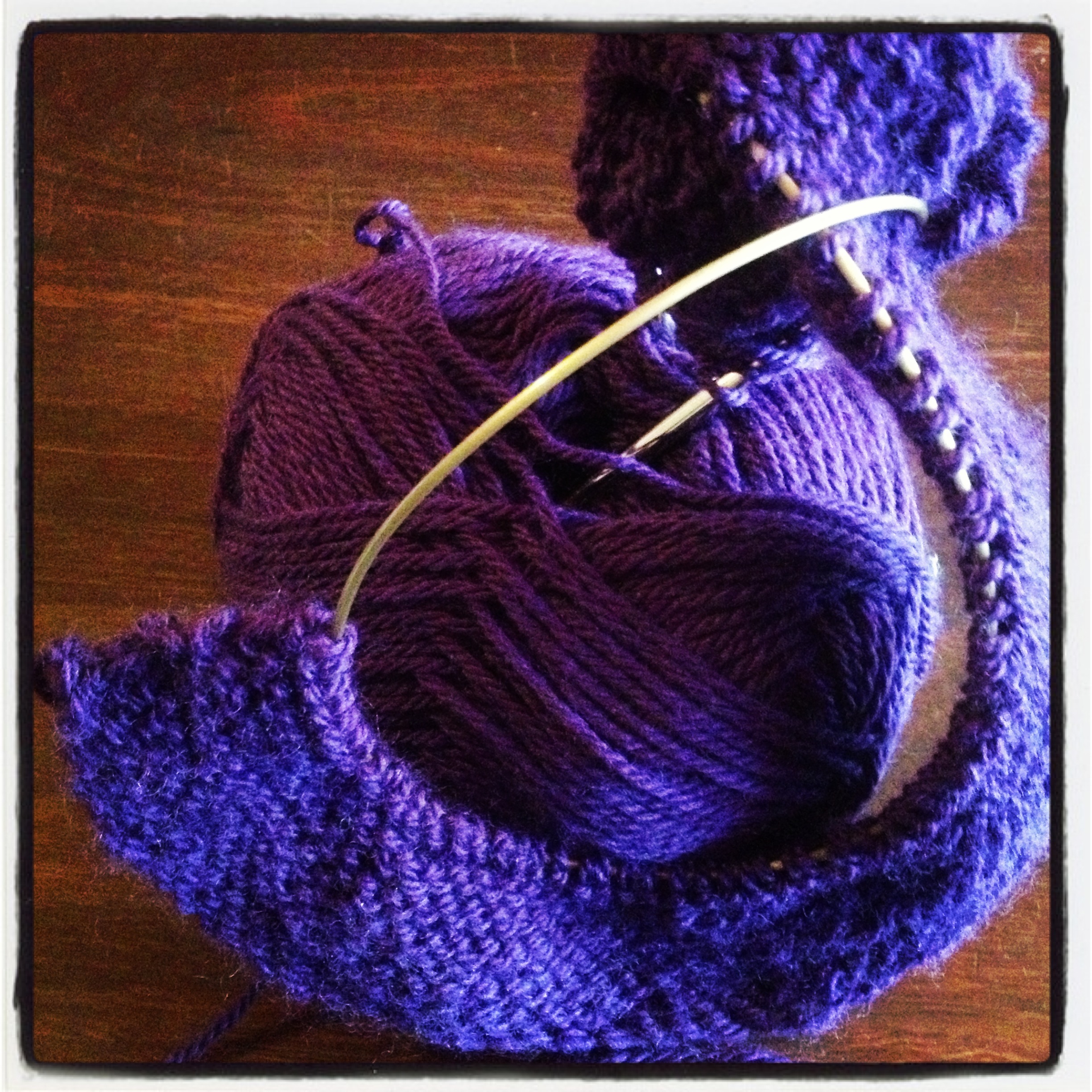
A free-off-the-web beanie pattern is downloaded. A spare ball of wool is located from the cardboard box beneath the bed. Ninety stitches are cast on. I show him how to knit a stitch.

It is not easy for boy hands. The task is delicate and dainty and very much a sitting still activity. But he is inspired by it. It is repetitious. You get better at it quickly. The thing you are making is growing before your eyes. Be it slowly. Lucky to have knitting when you are at home with a head cold. When the outside is beautiful and still and clear and crisp. But you have a sore throat and a runny nose and a heaviness to your head. And just inhaling the air is making you cough. No outside for you.

Mistakes are plentiful. Bumps where bumps should not be. Holes where holes are not. But knitting is forgiving. Just keep going. A wonky stitch will not ruin the thing. It is a good lesson for him to learn – the boy who hates smudges on paper, or creases on books. The boy who adjusts his singlet and then takes it off. Who checks the used-by-date on his Mocha milk before purchase. A knitted beanie, I tell him, doesn’t need every stitch to be straight. You will see. A few gaps here and there add character, Fremantleness. It will be better because you made it. Because it grew from you. From your industrious hands.

It struck him, momentarily, that knitting was a thing girls did. He sees no males do it. When we searched online for men and knitting the only knitting males involved themselves in was speed-knitting, their hands moving like machines. Needles like drum sticks. How to ruin knitting – turn it into a competition. But something about knitting overrode the girl-thing.

And then there is the sheer joy of a mind-numbing activity. I don’t think enough people appreciate the peace that comes with doing the same thing over and over. Like the person who doodles flowers or stars. Runners get it. Like the swimmer doing lap after lap. Swimming and knitting and meditation and breathing. All the same.

Dogs know the power of repetition. They know the joy of monotony and predictability. They strive on routine and regularity. It mends the mind. Awash in oodles of serotonin, my dog spends all day on the couch. He needs no surprises. He wants for no deliveries, or new friends. At 2.30 pm he begins to predict the school pick up time. He shuffles and rises when he hears me ready myself to leave the house. It is not all he gets but it is one of the predictable walks he longs for. He stretches and arches and shakes off. He will pee on at least three of the Stobie poles. He will mark the dustbin on the corner. He will drag his butt on the braille-for-the-feet street crossing. Knowing him completely is part of his charm. His presentation of his Kong on greeting. His knitting-like nature. Day after day. If he were ill, it would be immediately obvious.

The activities that quieten my mind always seem to have a repetitious nature to them. Like scrubbing the sink. The squirt of the Jiff. The way it doesn’t lift the grime without some effort. Not like on the commercial. One wipe and it is gone. It does require scrubbing. But that is part of it. If wiping were all you wanted, you would not be at the sink with a scourer.

Typing. Tea drinking. Knitting.

To Test or Not to Test

GATE

Testing.

Who likes doing tests?

To see how much you know. To see how much you don’t know. To stare down a bit of white paper and be confused and angered by a question that, to your eleven year old self, makes no sense and is boring. Boring equals hard.

Is confidence built by doing well in a test?

Is confidence lost by doing poorly? Where does confidence go when it is diminished and trod on? What can we do to enliven it again?

What are we testing when we test boys? Their ability to sit still, like girls. Girls are good at tests. They are good at writing neatly and making borders around their work. But some boys like to move to think. Some boys like to throw a ball while they talk. Some boys like to skate. Some boys are messy.

Failure is supposed to help us succeed later. But in the moment failure is just that. It is flattening. It deadens us to that feeling that is success. Success seems slippery. Others have it. Not us. Skipping ahead, around the corner, the girl in the colourful skirt with the pretty curls. The boy child – his body sags and his shoulders push earthward. Shoes laces dragging undone, since doing them up just wastes time that could be spent running. They will come undone once more. The nature of shoe laces. Ugh another test.

And to have to miss Hockey because of a test. No reward seems good enough. He harps on It’s so unfair. My bargaining begins – Star Trek movie and a mint choc bomb perhaps.

And what is gifted anyway? Gifted – handed to you. Unearnt. Something someone else gave you that you played no part in? Gifted through good genes. Gifted and Talented exam. GATE to the parents who, like me, might have signed their child up, hoping for a spot in an elusive school. Saying GATE somehow seems less irksome than gifted and talented. And so if you don’t get in, then you are Not gifted and Not talented. Just a regular eleven year old kid with no interest in a test on quantitative reasoning and abstract thinking. Just an ordinary kid who must go to an ordinary school with ordinary teachers. Only 2.5% of kids can be labelled Gifted and Talented, so it’s a stretch to get in.

The acronym GATE is apt. Maybe WALL would be even better. For most students the GATE is locked and high and barbed. The GATE is not open wide or welcoming. It is latched and chained and bolted. Combinations and passwords and special handshakes required. It is the beginning of difference. Is eleven too young to begin to know? Maybe this is the first real gate they have come across. You have always held the door wide for them. Perhaps you are discriminated, as I am, by steps and stairs and steep driveways. Or maybe it’s the colour of your skin and the curl of your hair that prevents your inclusion. Maybe you can’t relate to people or you relate too much. Maybe English is not your first language. You live in the wrong part of town. Maybe you are a woman.

This afternoon, after school, I must ask him to sit and look at the sample questions so the exam paper does not come as a shock tomorrow. I need to tell him to not rush the paper, in the hope he can leave the room early. Only guess if you really don’t know and have no time to try to work it out. I already know it will be a battle to get him to look at the samples. When the sun is shining and friends are meeting at the park it is less than alluring to ponder a puzzle your mother looks pained to make you do.


Nearly Mother’s Day

mum

Last Sunday I accused my son and partner of forgetting it was Mother’s day. It wasn’t. I had the day wrong.

They said, it’s next week. I said, google it. They did. They were right. Maybe they had thought of it after all. All my indignation had no where to go. A little sharp pin inside.

She is looking out at me while I type this. A fading black and white image of my mother holding Jasper as a chubby baby. So briefly chubby. Now a stick thing. Wears a fitbit and counts his steps and flights of stairs and burns through calories.

She has on her photo smile. Slightly strained, but real none the less. It’s all about the eyes. Smiling happens there.

How she loved being a Grandmother. Even though she couldn’t lift him. She once told me she pushed him around the backyard in the wheelbarrow.

I can’t recall her last Mother’s Day. Blended with the mundaneness of ageing. Days determined by the menu. Fish on Fridays. A good day decided by who’s on night duty. Which carer she likes, on which day. Oh Carol is on holiday. How will she survive? I would have bought her a nightie from Suzanne’s or Myer. I would have taken her mandarins and peeled them for her. I would have cut her fingernails on her right hand. She would have complained about me hurting her as I did it. And when I finished she would tell me they weren’t short enough. I would have made her practice wearing her hearing aid. We would have watched some pre-lunch news. I would have opened her bed side drawer and thrown away the scrunched-up tissues and the mandarin pips. I would have tried to chuck out other things but she would have prevented me.

I think of visiting there – just to say Hi to some of the kind staff. Carol, Marie, Jane. But then the week goes by and I have not found the time. I never look at the mandarins in the grocers. What would I do once I got there? Poke my nose in the room, that is not hers any longer, to see another frail bird in the bed? To have my nostrils reminded of the smell of old people. See, that unlike Mum, they prefer the curtains open to the garden and the sun.

I am not sure what it is I feel when I remember her. What is this emotion of missing? Wishing more for them? Wishing for more for ourselves? It is an unsatisfying emotion. All this unresolved wishing. It goes out from you and leaves a hollow feeling behind. In the end you resemble a husk, after all the wishing is done. What can she be thinking, wherever it is that she is now? I want to wrap a blanket about her thin arms and hold her. I want to feel her soft curls. I want solid. I want strong. I want words that work, but words are failing me here. I feel all her longing for me and for my happiness. She had a way of devouring me. Again there is the act of disappearing, of taking away. I could never love her back with the same intensity that she felt for me. Piano playing fingers reaching for me. Even now I feel it.