Pollan in the kitchen…

fresh

Michael Pollan knows a thing or two about food. He has been writing about eating and the dilemmas of making food choices for some years. He has thought about the moral choices, the health choices and the political choices. But strangely, until recently, because he didn’t really cook that much, he forgot about the soul. Since reconnecting with the basics in his kitchen he has come full circle and discovered there is power and real creativity in cooking. Getting ingredients and making a meal from scratch anchored him to the planet and what the planet needs from its guardians. It gave him connection. We cannot simply keep taking.

In his latest book “Cooked” he writes, the single most important thing we could do as a family to improve our health and general well-being – was to cook. Something as simple as cooking for your family might also end up making the western world’s food system healthier and more sustainable too.

Wouldn’t Michael Pollan be impressed with the SAKGP. It would be right down his alley. In the kitchen today a child knew instantly that the white bulb with the fuzzy green top was fennel. And how come it smells like licorice? All senses alive. Unlike the six-year-old American children who, when asked by Jamie Oliver, what were the names of various common vegetables, stared blankly back at him, unable even to recognise a tomato from a potato. Their food comes packaged or frozen or wrapped in paper and delivered out through a hole in the wall and then wolfed down in the car.

The wonderful thing about the kitchen is the noise. Engaged and cooperative. Happy noise. It has been six weeks since this class cooked so there is a buzz in the air. The routines are a little rusty. Are you a Melting Moment or an Afghan? What group are you in? If you are in the garden this week we need to tend the worms. Children are busy. Some prefer the garden. Others want to cook. Some (believe it or not) are actually good at cleaning up. Some one grazes a knuckle with the grater. Yes, cooking is sharp. Stoves are hot. Onions sting your eyes. Swimmers goggles hang beside the bench for those who can’t take it.

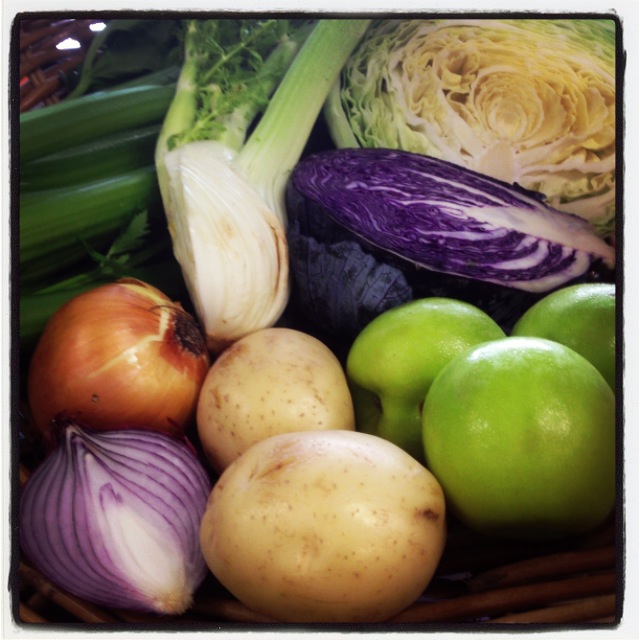
A salad of winter vegetables is made from finely sliced cabbage, both green and purple, and apple and carrot. Then fennel too. The dressing is honey and mustard. But let’s not stop there. Let’s collect fresh herbs from our garden and pluck the leaves from the stems and add them too. Then we pound some pepitas in the stone mortar to add a crunch to the salad. Lets sprinkle it with poppy seeds.

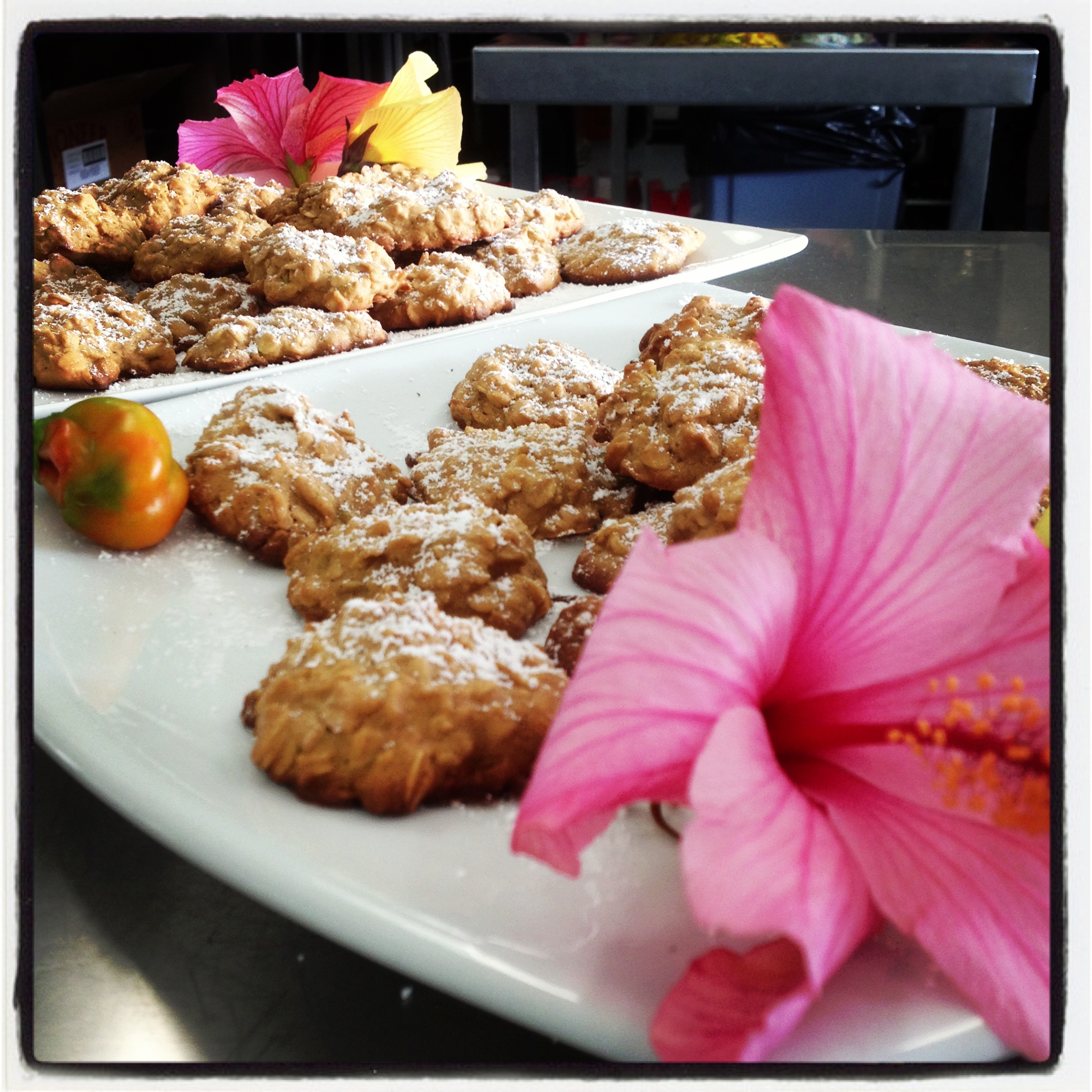
For afters are oatmeal biscuits with cinnamon and brown sugar. Cleaning up is to be done before a biscuit is taken and whisked away into the playground. The kitchen aid does the creaming of the butter and sugar. One boy thinks that because his home doesn’t have this machine he will be unable to replicate them. Just use your hands, assures Lee. Squish it. Let the butter come to room temperature. Then, just as if the butter and sugar were play dough – it will come out just the same. The mother agrees. She could never lift down the machine from a high cupboard when she was little and did the creaming with a wooden spoon. It can be done. And less washing up. Lick your fingers.

Back by the worm farm the boys are sifting through with gloved hands and extracting the garden rubbish that has been incorrectly placed there. It means getting close to bugs. Telling the less brave that the bugs can’t hurt you. Despite their mutated look. Cockroaches and slaters have taken up residence and are stealing the worms’ food. Girls are skittish about getting close to the insects but after some encouragement they too have their hands in the dark rich organic matter. Everyone is learning to try stuff they would not normally do.

The mother on oatmeal cookies is using a spatula to scoop every last skerrick of mixture to form the biscuits. Witness the children hoping mind control will make her stop short. The hyenas stand by, pining for a spoon to lick or a dirty bowl to run a finger round. There will be barely a morsel. They watch as the temperamental oven manages to bake the clumps of muddy mixture, turning them darker and crisp, and emerging almost as tasty as the uncooked dough. Yes they would try this at home – with or without the help of a mixer.

And as Pollan says, what he learnt about cooking is this; “that cooking gives us the opportunity, so rare in modern life, to work directly in our own support, and in the support of the people we feed. If this is not “making a living,” I don’t know what is. In the calculus of economics, doing so may not always be the most efficient use of an amateur cook’s time, but in the calculus of human emotion, it is beautiful even so. For is there any practice less selfish, any labour less alienated, any time less wasted, than preparing something delicious and nourishing for people your love?”
biscuits

Head cold meets Knitting

Jasper's Knitting


Jasper says, “I wish I could knit on the couch while the TV is on, like you do…”

“I can teach you. What do you want to knit?”

“A beanie.”

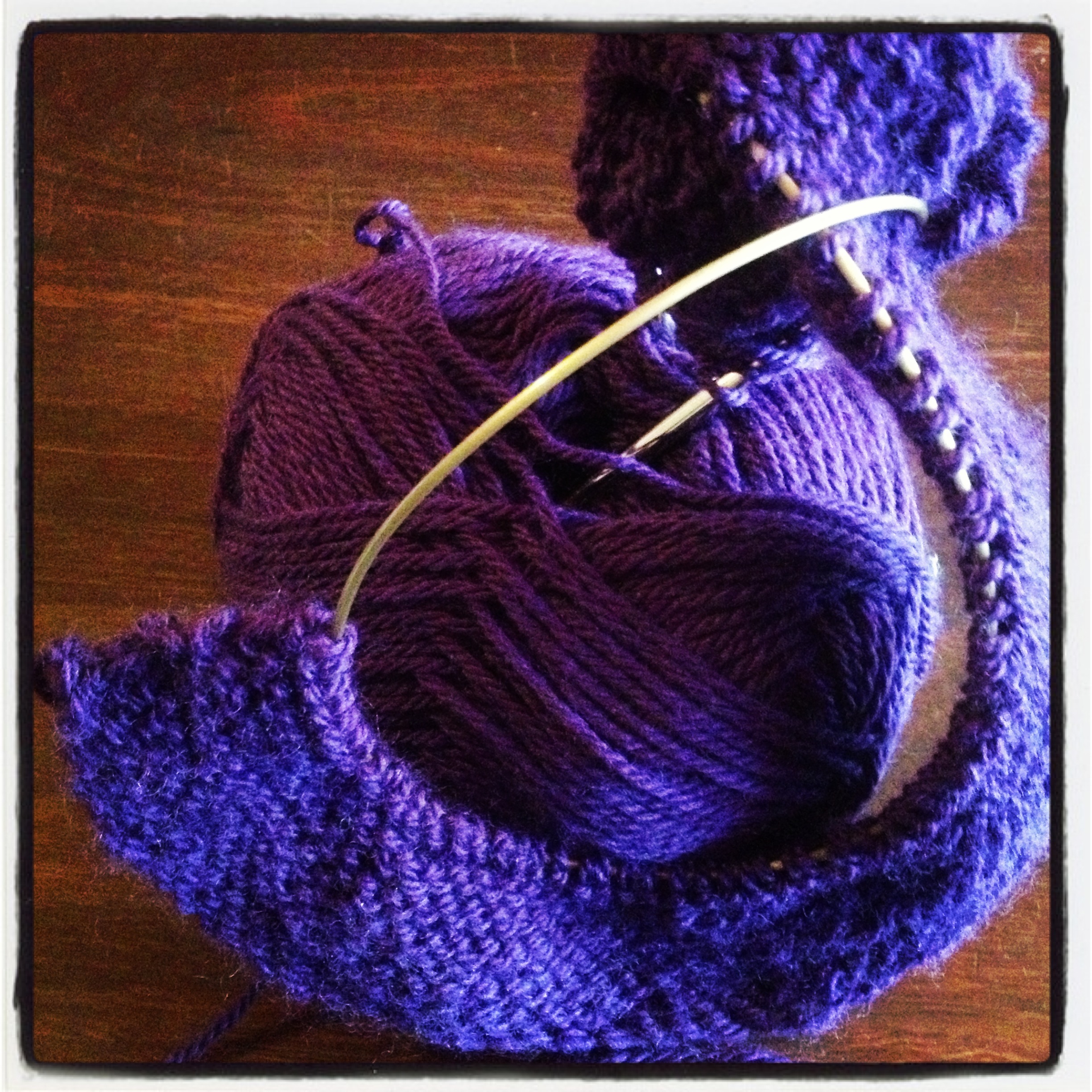
A free-off-the-web beanie pattern is downloaded. A spare ball of wool is located from the cardboard box beneath the bed. Ninety stitches are cast on. I show him how to knit a stitch.

It is not easy for boy hands. The task is delicate and dainty and very much a sitting still activity. But he is inspired by it. It is repetitious. You get better at it quickly. The thing you are making is growing before your eyes. Be it slowly. Lucky to have knitting when you are at home with a head cold. When the outside is beautiful and still and clear and crisp. But you have a sore throat and a runny nose and a heaviness to your head. And just inhaling the air is making you cough. No outside for you.

Mistakes are plentiful. Bumps where bumps should not be. Holes where holes are not. But knitting is forgiving. Just keep going. A wonky stitch will not ruin the thing. It is a good lesson for him to learn – the boy who hates smudges on paper, or creases on books. The boy who adjusts his singlet and then takes it off. Who checks the used-by-date on his Mocha milk before purchase. A knitted beanie, I tell him, doesn’t need every stitch to be straight. You will see. A few gaps here and there add character, Fremantleness. It will be better because you made it. Because it grew from you. From your industrious hands.

It struck him, momentarily, that knitting was a thing girls did. He sees no males do it. When we searched online for men and knitting the only knitting males involved themselves in was speed-knitting, their hands moving like machines. Needles like drum sticks. How to ruin knitting – turn it into a competition. But something about knitting overrode the girl-thing.

And then there is the sheer joy of a mind-numbing activity. I don’t think enough people appreciate the peace that comes with doing the same thing over and over. Like the person who doodles flowers or stars. Runners get it. Like the swimmer doing lap after lap. Swimming and knitting and meditation and breathing. All the same.

Dogs know the power of repetition. They know the joy of monotony and predictability. They strive on routine and regularity. It mends the mind. Awash in oodles of serotonin, my dog spends all day on the couch. He needs no surprises. He wants for no deliveries, or new friends. At 2.30 pm he begins to predict the school pick up time. He shuffles and rises when he hears me ready myself to leave the house. It is not all he gets but it is one of the predictable walks he longs for. He stretches and arches and shakes off. He will pee on at least three of the Stobie poles. He will mark the dustbin on the corner. He will drag his butt on the braille-for-the-feet street crossing. Knowing him completely is part of his charm. His presentation of his Kong on greeting. His knitting-like nature. Day after day. If he were ill, it would be immediately obvious.

The activities that quieten my mind always seem to have a repetitious nature to them. Like scrubbing the sink. The squirt of the Jiff. The way it doesn’t lift the grime without some effort. Not like on the commercial. One wipe and it is gone. It does require scrubbing. But that is part of it. If wiping were all you wanted, you would not be at the sink with a scourer.

Typing. Tea drinking. Knitting.

Nearly Mother’s Day

mum

Last Sunday I accused my son and partner of forgetting it was Mother’s day. It wasn’t. I had the day wrong.

They said, it’s next week. I said, google it. They did. They were right. Maybe they had thought of it after all. All my indignation had no where to go. A little sharp pin inside.

She is looking out at me while I type this. A fading black and white image of my mother holding Jasper as a chubby baby. So briefly chubby. Now a stick thing. Wears a fitbit and counts his steps and flights of stairs and burns through calories.

She has on her photo smile. Slightly strained, but real none the less. It’s all about the eyes. Smiling happens there.

How she loved being a Grandmother. Even though she couldn’t lift him. She once told me she pushed him around the backyard in the wheelbarrow.

I can’t recall her last Mother’s Day. Blended with the mundaneness of ageing. Days determined by the menu. Fish on Fridays. A good day decided by who’s on night duty. Which carer she likes, on which day. Oh Carol is on holiday. How will she survive? I would have bought her a nightie from Suzanne’s or Myer. I would have taken her mandarins and peeled them for her. I would have cut her fingernails on her right hand. She would have complained about me hurting her as I did it. And when I finished she would tell me they weren’t short enough. I would have made her practice wearing her hearing aid. We would have watched some pre-lunch news. I would have opened her bed side drawer and thrown away the scrunched-up tissues and the mandarin pips. I would have tried to chuck out other things but she would have prevented me.

I think of visiting there – just to say Hi to some of the kind staff. Carol, Marie, Jane. But then the week goes by and I have not found the time. I never look at the mandarins in the grocers. What would I do once I got there? Poke my nose in the room, that is not hers any longer, to see another frail bird in the bed? To have my nostrils reminded of the smell of old people. See, that unlike Mum, they prefer the curtains open to the garden and the sun.

I am not sure what it is I feel when I remember her. What is this emotion of missing? Wishing more for them? Wishing for more for ourselves? It is an unsatisfying emotion. All this unresolved wishing. It goes out from you and leaves a hollow feeling behind. In the end you resemble a husk, after all the wishing is done. What can she be thinking, wherever it is that she is now? I want to wrap a blanket about her thin arms and hold her. I want to feel her soft curls. I want solid. I want strong. I want words that work, but words are failing me here. I feel all her longing for me and for my happiness. She had a way of devouring me. Again there is the act of disappearing, of taking away. I could never love her back with the same intensity that she felt for me. Piano playing fingers reaching for me. Even now I feel it.


Red Hen

Image

Jasper is cleaning out his bedroom. He is decluttering. He is exhuming the detritus of a ten-year old because soon he will be eleven and eleven-year olds have moved on from Little Golden Books, and Dr Seuss.

Anything you don’t want just put in a pile because I will go through it, is my plea.

Because to me books are treasures. They are more than words on paper. Of course. A story, a sentence. It worms inside, to the heart of you. There are books that he loved, and then there are books that I loved, and hence read endlessly to a toddler who cared little about what was being told as long as he could turn the pages.

There is something special about a loved book – one you’ve read out loud to a child so many times that its words have worn a track through your brain. Like a single lane walking path through a wooded forest. Grass woven flat, as hard as concrete. Pine needles beneath your feet. Your mouth shapes the words before your eyes have read them. The pictures are so familiar. Like old photographs etched in your memory. The smell of a winter stew cooking as the sun goes down. The rumbling sound of a Kombi pulling into the drive. The tilt and flow of language.

Will you help me plant this grain of wheat?

Not I! said the duck…

Then I will plant it myself, said the Little Red Hen. And she did.

The industriousness of the Little Red Hen was always remarked upon. All that planting, reaping, carrying, turning flour into dough and baking was done without any help from the duck, the cat, the goose or the pig.

The selfishness of the “Not I’s” saw that they ended up with no bread. How right things were in the world of the Golden Book.

So I keep the Golden Book. First published 1954. I keep it for myself. Maybe one day I will read it to another small child. Maybe one day Jasper will unearth it in my old possessions and find himself on the forest path.

Cleaning out my parents house I find similar kept treasures from my childhood. Dolls’ clothes. Hand made babies’ dresses. Christmas decorations made in kindergarten from toilet rolls and cotton wool balls. My mother kept a book I had loved as a child. It was tucked away in camphor and would not have been looked at for years. Probably it had been forgotten about it many years previously. But there would have been a time when she held it over the garbage bag for Good Sammies and hesitated before dropping it in. She would have looked through it and remembered my delight in it. It would have brought a smile to her face. She had kept it as I am keeping the Little Red Hen now. It was so familiar when I found it, like I had looked at it only the day before, but it had not been seen or thought of for forty years. I turned the pages and found the favourite picture I had puzzled over. It was the story of a princess, but the pictures were not drawings, but photographs of dolls dressed in real fabric and with doll house sets. In one picture they sat at a table eating a royal meal and the food in the pictures must have been life-sized, since on a plate is a single pea that seems the size of an apple for the princess. This wrongness appealed to me. Everything else miniature and perfect, but the food. And I would wonder at the people who made the book. Did they run out of ideas? How did they imagine the princess would eat such a pea? What would an apple-sized pea taste like? How would I make the princess a meal?

With Jasper’s mountains of work and drawing there is always the question of what to throw away and what to keep. How many pages of scribbling can you really want? For a whole term at Montessori Jasper would bring home cardboard boxes glued together into towers and present them as if they were sculptures. We kept none. I squirrelled away a favourite blanket, a pair of booties, his wrist band from the hospital where he was delivered. I have not kept teeth or hair. And yet the book feels more powerful than some of these other treasured things because I can hear its magical song. Reading it aloud is a meditation back to mothering a toddler. When reading aloud at the end of the day signalled the respite that would soon be yours when he was in bed. There is a sighing to the reading of the story. It is short. It is complete. The tale needs no explanation. The little Red Hen; she had no help, she did it herself.

golden books

Stillness

sky

It is the perfect ANZAC day.

No wind.

A sky as grey and warm as an army blanket.

The leaves in the trees are motionless, as if they too know there is a need for a sombre earth.

I shirk from what it can mean. I would prefer we need not remember. I don’t like flags. Especially waving ones. I would like to be certain we are not glorifying. Instead why not mourn our failure to learn from what has gone before. March for Peace.

But. Maybe. If you have loved a solider and seen them sail away across a silver sea. Watched them turn to a speck. Felt the tug of their distance. And they have not come home, then today is something. Like medals, locks of hair, a remembered song. You loved them and they are lost.

The jets break the silence. So much louder when there is no air moving but them. They boom. They crack open the sky. They remind us war is anything but silent. Messy, bloody, dirty. Not like this still and perfect day.

A bugle is beautiful. How does he form the notes?

The reverence of ninety-three thousand football fans makes you hold your breath, while he hums a tune through pursed lips.

If only we could remember.

Mad Mother

brain drawing

In my attempt to not embarrass him, I keep my cool.


There are stairs at the entrance to the sign-in area for the GATE visual arts testing all-day workshop. Deliver me from evil. This is not supposed to be a test of a parent’s resolve, or a parent’s coolness under pressure. We have already waited as a herd of uninformed, uninstructed parents with our stressed and unenthusiastic eleven-year olds – asked to do a whole day of testing during the holidays to get into an arts program at the public school of their choosing. Everyone would rather be somewhere else (like still in bed) as opposed to at this seventies High school that resembles more a detention centre than a place of learning.


They have an arts program here too, but amongst the grey shoddy brick and the moth-eaten grass, I feel distinctly unartistic.


We follow the mistaken directions of a janitor in a fluoro vest. By luck we find a ramp that allows us access to the sign-in area where the two women are perplexed we had issues. A pin-striped suited man says he wasn’t informed someone would be attending in a wheelchair. I am a parent, I say. I need to drop my child off and pick him up. I presumed the school would be accessible. It is a government school, is it not? In the year 2013. As a community we are interested in equal opportunity and access, aren’t we? Isn’t it your job to check things are equal for all? I am speaking to people who have never encountered a problem with stairs. It never crossed their minds. Legs like racehorses. And when I suggest maybe some better signage for the other souls who stood about with us wondering where to go, she says, yes we had the same issue last year. I feel Jasper at my side willing me to shut up.


I don’t want to shut up. I want to tell pin-stripes how it is. Blonde bob too. I have the urge to push my point. To be understood. Be in my seat for a moment, looking up at you from the height of a ten-year old, and feel my rage, my frustration, my sadness, my awkwardness. Jealousy. In the end my voice a quiver. Just to get my son to the test.


He is there now. Breathe. And I am in the State Library that I still call the Alexander library – where around tables bunches of students work in groups of four or five. Through thinking doors. Entering a vacuum. Ahh books. Students are plugged into music, others have their phones by them to keep an eye on their social networks. During their short interludes of study they are silent, but mostly time is spent idly chatting, files open, pens down. Denim-clad legs all a jiggle. From the mezzanine level there is the shrill cry of toddlers and babies. Libraries are not silent spaces anymore and it seems nobody expects them to be. A dirty homeless man makes use of the nice surrounds and finds himself a comfy chair to settle down in. He carries on a conversation to himself.


I am in the medical section – pouring over neurology texts trying to make sense of the limbic system and the brain. I draw it, as best I can. I wish for coloured pencils like the ones Jasper might be using. I remember anatomy and the feared neuroanatomy lectures. How is it that something as squidgey as jelly, as unctuous as mucous, be so complex? I read about the primitive brain. The one we share with other mammals. A rat in a cage. A red light flashes and then the rat receives a shock through the floor. Next time the red light  flashes the rat  anticipates the shock and so now simply the appearance of the flash results in fear from the rat. You know how when you smell the antiseptic in a doctor’s surgery? This is how I feel about the sight of stairs when my child needs to be at the top of them and we are at the bottom. It is primitive. It is amygdala-based. It sets physiological events rolling and I have to rein them in with the cognitive powers from my higher brain. In the end we are all just brain chemistry.


I head out on the street to find lunch. I am not hungry, just conditioned to seek food at this time. If I were Graham I might wait till I had an appetite and it was the inconvenient time of three o’clock. The bain-maries would be empty or else diseased. I eat half the sandwich and leave the rest beneath the paper napkin. I should have asked them to remove the cheese. I’m not really fond of seeded mustard. I go back to the library past some book shops. I am drawn inside to their smell. I pick them up, finger the covers, read their opening lines, think about purchasing because I love the way that word follows that one, the perfect sentence, but think of my house and the way it risks being subsumed by tomes.


On the incline heading back to the library a woman wants to push me. She offers help. I decline it. She says, “it looks hard – the pushing.” It is. Shrug. But. I can do it. We hang on, at least I do, to the things we can do. Having her push me would be worse than she realizes. A stranger on the handles of my chair, her breath behind me. Like looking at a flight of steps. Only Jasper, and Graham, take the handles of the chair and push on an ascent. They sense the need. There is no call for them to ask, for me to accept. To some a marathon is the street. The pole vault a six inch kerb. A steep driveway is my Alpe d’Huez. I shuffle to the front of the chair to get an inch taller to reach a neurology text from the top shelf. I could ask some one. Instead I stretch. How long my arms have become.


Two girls sit opposite each other – grilling the other on the epidermis. Do you know what a mast cell does? She takes her red plastic sandals off – they are jellybeans like the ones we wanted in the seventies. Her feet could be sweaty. She folds her legs beneath her on the chair. Her heels in her buttocks. Her brain makes them do it. Her spinal cord too. Effortless beauty. I watch them. Leg envy. Maybe we don’t need to know all the fancy stuff, she says. Who cares that mast cells release histamine? Somehow I think she will need to know. Next question. Name the two stages of wound healing? To think there are only two.

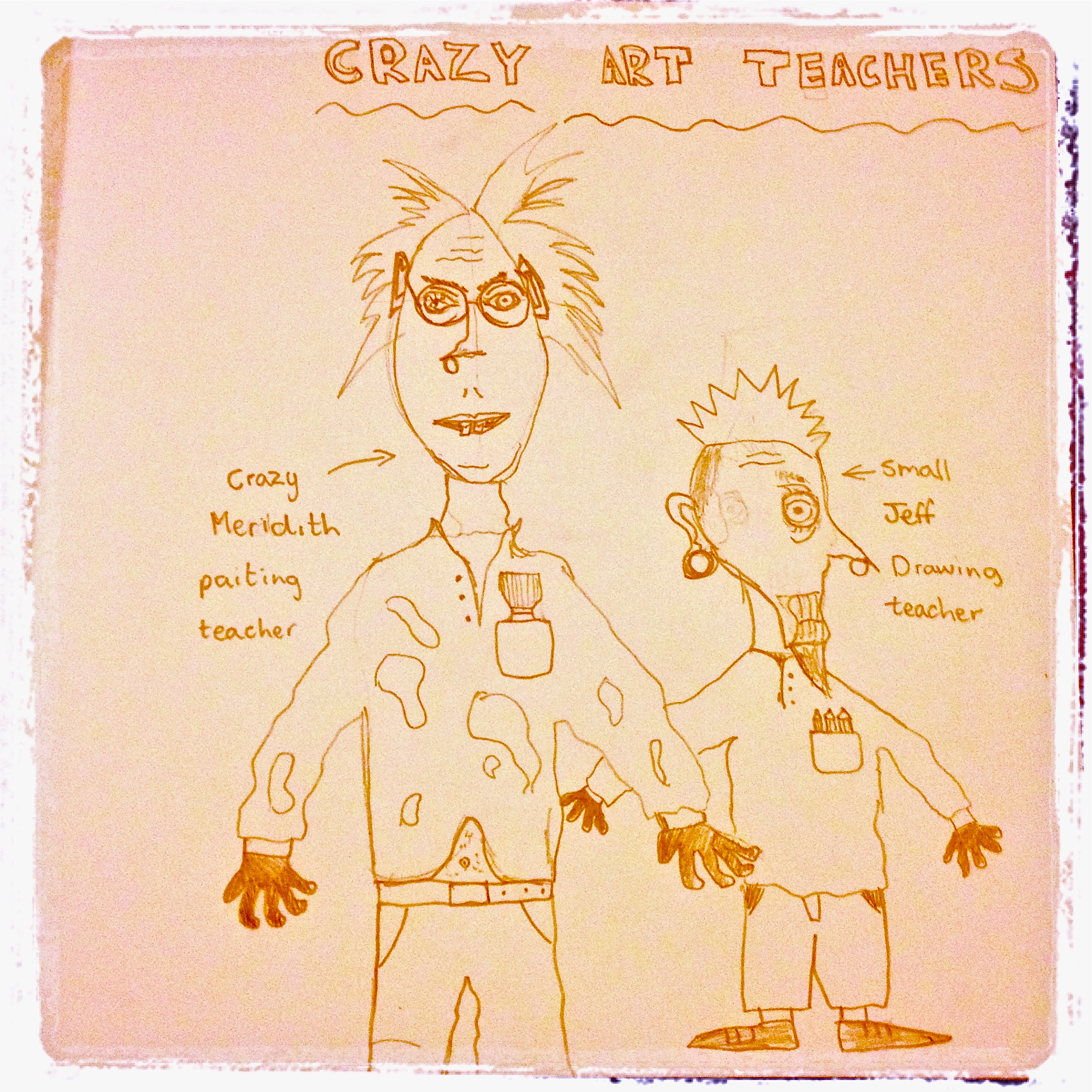
Jasper's art teachers


Stephanie and The Purple Garlic

purple garlic

When Stephanie joins the kids (from East Fremantle Primary and Singleton Primary schools) in front of the gathered audience at Garden Week, everyone is a little nervous. After all, she is a legend. Her program is responsible for teaching some 35 000 Australian primary school kids how to grow food and cook it. She has earned her reputation through hard work.

She is more silver than silver. She has her large beads. Her expressive eyebrows.

She talks to the audience while the kids around her cook. She knows she can leave them to it. She hovers behind, but not obtrusively. She says she tries not to be bossy. As mothers, we all know how hard that can be. She compliments a child on his knife skills. She shows some others how to cut the rib out of the silver beet, but also has suggestions on how to use it. She crisps up the sage in the butter because it can’t be merely wilted, it needs to crack like dry leaf. I am pleased to think that kids are learning this.

The Singleton Primary students must be as nervous as the East Freo kids are – they wash their silver beet twice. No one would want Stephanie to taste sand or grit in their dish. It’s hard to get the temperature just right on the fancy outdoor kitchen. She says you could call her primitive, but she prefers to see the flame over which she is cooking.

While the zucchini colours she expounds the virtues of local extra virgin olive oil and one of our students tells her of how we made it ourselves last year. We know, first-hand, from our own experience of pressing the fruit, that there is nothing added to the final product. It doesn’t require chemistry or a factory. No emulsifiers. No animal has suffered in the process. Stephanie describes it as as simple as fruit juice.

While the kids rub the toasted bread with the raw garlic, Stephanie tells us how we must avoid the bleached and imported kind. Buy locally grown Australian garlic – purple – not bleached or sprayed to stop it sprouting. Its papery mauve skin like tissue paper – veined like spider webs through ageing skin. Each clove so moist that when it is crushed beneath the blade of a knife, garlic juice wets your palm. Try growing it your school gardens, she says, as borders to the other plants.

Our students pick some edible flowers to decorate the plate and Stephanie says how important it is to serve the food at the table. Zucchini Bruschetta with preserved lemon, goats cheese, garlic and sage. Have a bit of time to admire it for yourself in the kitchen and then take it to the table for everyone else to feast their eyes on. Don’t dish it out in the kitchen. Let it be seen, complimented on and finally enjoyed. She opens her arms out wide to the audience. See what these kids can do…


Hockey Dogs

sponge cake 2

Hockey training takes place on an oval in Fremantle. It is a multi-use oval with cricket nets and clubrooms shared by both the cricket and the hockey fraternities. For the cricket families it would be a refuge from the heat. Somewhere to get a cool drink and away from the sun. For the hockey mums it offers warmth and dryness.

The building is made from dark brown brick from the seventies or eighties. A building made when we watched Countdown and listened to ABBA. The textured masonry makes you think of a thick slice of chocolate sponge cake. It makes you long for a hot cup of tea. Inside old wooden honor boards with names in gold lettering line the walls. An asterisk beside a name signals the person is deceased. There are the ubiquitous stacks of stackable plastic chairs. Many families have spent hours huddled in here while young ones take to the turf. Already I can imagine being inside when it is cold out and the Juniors are playing, regardless of the weather.

Parents drive up with kids who exit high cars like horse-riders leaping off steeds – gripping mesh bags with their armour (shin pads and mouth guards) – hockey sticks like lances brandished by jousting knights. (Do you sense already I have sat here too long?)

Most parents leave. They have stuff to do. So do I. I could grocery shop. At least I could get toilet paper. I could clean my house. Instead I stay to watch. The children must run down the steep embankment to the field. It’s the kind of steepness you can’t walk down. It makes you run, like you are falling over yourself. The field is marked up with hula-hoops and cones for dribbling and pushing a hockey ball around. I watch from the upper bank by the car park and the charity bins, by the side of the chocolate sponge cake wall. An old swing set waits to be swung on.

Other cars pull up and dogs pile out. They are as exuberant as any child. Some dogs come to the park with owners on foot from nearby houses. It’s that time of night – dog walking time. Some owners bring plastic tennis ball throwers while others bring a tug rope. Some bring just their pooch (and a pocketful of yellow poop bags).

In one afternoon – a puppy dachshund, a Siberian husky, a newfie, two bostons, a bunch of poodles, a border collie, a blue stuffy, two whippets, a pit bull.

The dog walkers take to the perimeter. These are dogs used to the hockey. They don’t go for the ball. They’re not spooked by hoards of teenage girls, ponytails bobbing, running up and down the banks for fitness. The dogs have eyes for one another and perhaps their own ball. Politely, they sidle up and do the nose to tail greeting. They prance off. They ask another dog for a game of chase. A play bow is offered. Invitations are made. There is zooming and frolicking of the most infectious kind. Smile-inducing dog play. In a corner of the park a man flies a kite and the poodles are off and over; launching themselves into the air, barking, necks arched backwards and noses pointed up, wondering what that strange bird in the sky is doing so damned high.

As the sun begins to dip the swallows are out flying low across the grass hoping for an insect. They make for good chasing. They are, of course, uncatchable. It has never stopped a dog. If you have the energy to run, then run. If your legs hold out, keep running. Never give up, no matter that thing you are aiming to catch is a bird. Ceaseless trying – is a dog’s great attribute.


hockey dog 2


Pomegranate Jewels in The Kitchen Garden

Pomegranate

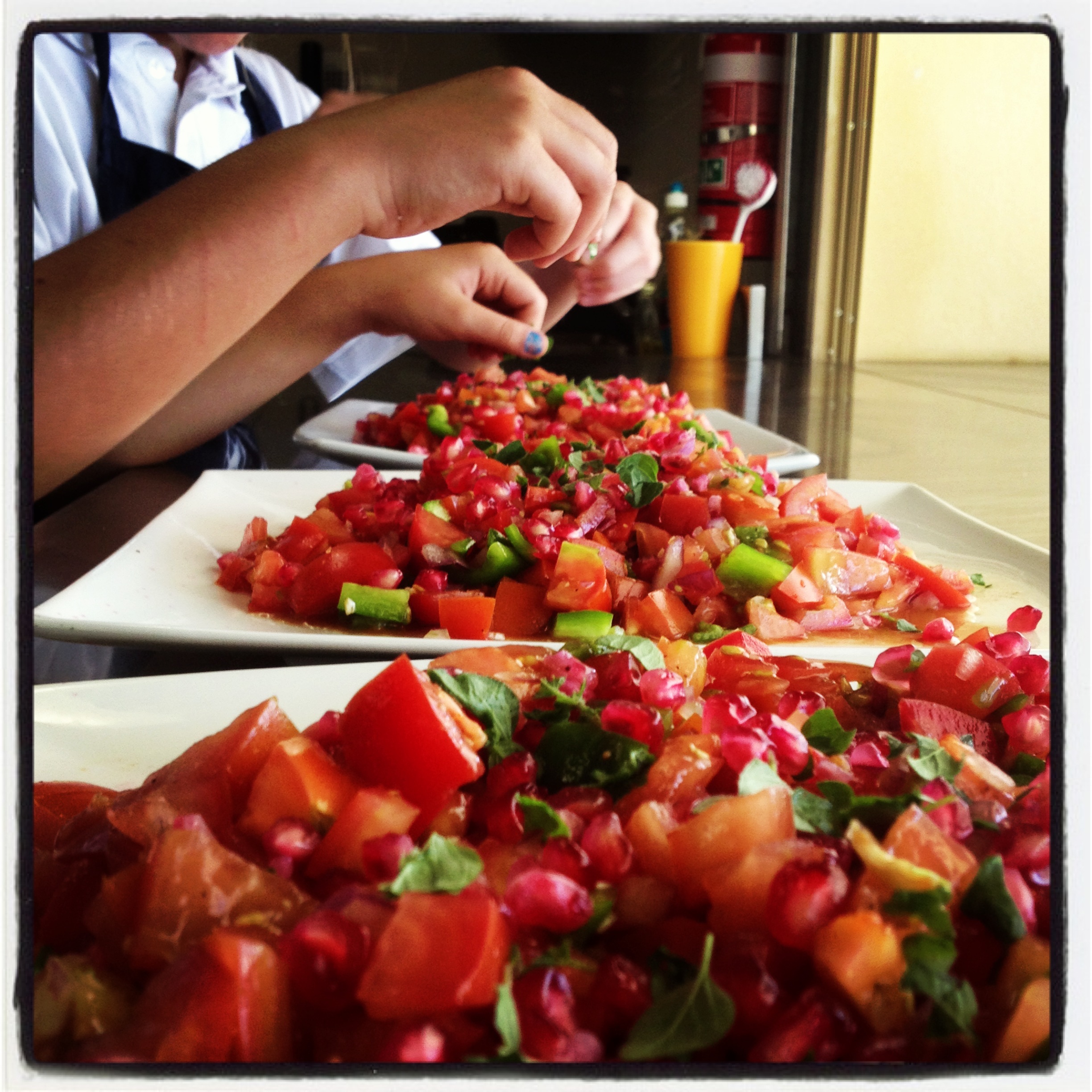
The glistening beads pop in your mouth. Melded with tomato and herbs they add sweetness and a firm texture. Little bursts. No one can quite believe the little red gems are as delicious as they are. They are an ancient fruit. They seem the kind of thing you might search for in the desert. The saviour that you stumble upon when, blistered and thirsty, you finally make it to the oasis. They come from a hard-shelled case. Of course it is fiction that each and every pomegranate holds the exact same number of seeds. But still, imagine. Its brittle matte surface defies the beauty underneath. It is a fruit I remember from my childhood garden too. Sometimes we cracked one on the red cement path, or used a tool from the many hanging on the wall in the garage – when Mum wouldn’t let us inside because she was vacuuming, or mopping or just because. And so we were outside and we were hungry. We could eat Gooseberries too – cocooned in their lacy lantern. The kind of fruit you don’t buy. Like lemons and figs and passionfruit – every good garden needs to supply its own.

In the Kitchen Garden it is time to cook. Long crusty baguettes are sliced on an angle and toasted in a frying pan. Then they are rubbed with a crushed garlic clove. Five times is the agreed number of rubs for each slice. The zucchini is sliced and cooked in a little extra virgin olive oil till it takes on some colour. Each crispy piece of bread is spread with the mixture of cream cheese and sheep feta cheese (our budget version of goat’s cheese). The zucchini slices are laid on, like fish scales, and topped with a sprinkle of diced preserved lemon rind and a crumbling of crisp sage leaves cooked in butter.

Bruschetta…

Our tasty main is Risotto with leek and yellow capsicum. A fearless mother takes on the task – despite it being the Death Dish on Masterchef. She’s unfazed. She gets her students in a preparatory huddle – they will make the best Risotto ever! It is a winner. A truck load of parmesan. Very cheesy. When not enough jobs remain the students find ways to garnish the dish with slices of radish.

At the communal table a child seeks my permission to lay his healing hands on my broken spine. He has the class reputation for healing headaches. Why not? Give it a whirl, I say.

When all the dishes and washing up is done – there are biscuits with raisins squirrelled back to the playground – turning to blur and dust in a pocket when a game of soccer rounders seems more pressing.

These days the year 6/7 group move around the kitchen with precision and speed. They know their work space. They have yet to work out the ovens, but either have I. Mostly they know where stuff is, although there is always a contingent of boys who need to ask for the item right before their eyes. Today I am about the clumsiest in our group as I nearly lose my grip on a slippery bottle of olive oil and send it to the floor. I save it in the nick of time. Kids are beginning to be confident around sharp knives and have mastered the skills meal-making requires. They no longer avoid the messy or tedious jobs. Well mostly. They work as a team to get the food on the table. Then they enjoy it mixed with conversation and pride. They know there is cleaning up to be done. They know the scraps need to be recycled and sent to the compost. If only we had some chooks. There are girls so keen on tomatoes that they scoop up the leftovers. The kitchen is ready for the next group. There might even be time for a cup of tea between classes. Funny how they think the tea towels might dry in a wet pile…

risotto

Melting Man

Blues N Roots

The man on stage is nearing seventy but he wears the same outfit he has worn on stage for forty years – tight black jeans and no shirt. He is as sinewy as ever but his skin has the weathering of an old man. Think melting wax. He has the energy of someone half his age, younger. There is a brightness in his deep set generous eyes. He loves it, this thing: performance. His stance disguises his ill-made spine and awkward movement. He can twist his legs. He can ping in the air. He can still rock it. His hair is damp dark blonde tendrils. His pants need hitching up again and again. Sometimes his stomach moves as if an alien is about to burst forth. He invites the audience to the stage. His minder, nearly as old and wizened as he, does some protecting. But Iggy is still picked up, hauled around. Where does the lout want to take him? People sense this is their moment to touch him. They reach out. Some are pushed away. Everyone struts their stuff. If you get on stage you want to show off. You turn your arse on the audience and wiggle it. You don’t want to get off either.

I remember how Dylan would not let them put his close-up image on the large screens. He seemed vane, awkward with age. He hid beneath a big hat. Not Iggy. Not a hider. Every vessel under every bit of chest skin is on show. Every arm pit hair. Everything up close. Even from a distance you feel his sweat land on you.

Later Iggy climbs down to join them in their mosh pit. Again everyone is about touching him. Feeling the skin and the hair. You could taste him if you wanted to. He says Bless you and he means it. The audience is his saviour. He asks for the lights to be turned on them. He wants to see them. Bless You. He takes you passenger. He climbs back on stage, his hand down the front of his pants.

But Iggy is punk. Some Blues N Roots fans have wandered home. Too much sun. The audience is thinner. There is space about the lawn. Red cardboard checkers the lawn. Some choose to be witness to this spectacle and watch to say they saw him. A Punk God. Up close it is still heaving. They are the fans that have come for Iggy, despite the other bands in the line-up. They don’t want crooning to by Chris Isaak. They don’t care for Pretty Woman. They would rather die than get Down, Down with Status Quo. They want hard, raucous, real. They want Iggy.